

Forget Spinach, This Is The Southern Leafy Green That Belongs In Your Pasta Dishes
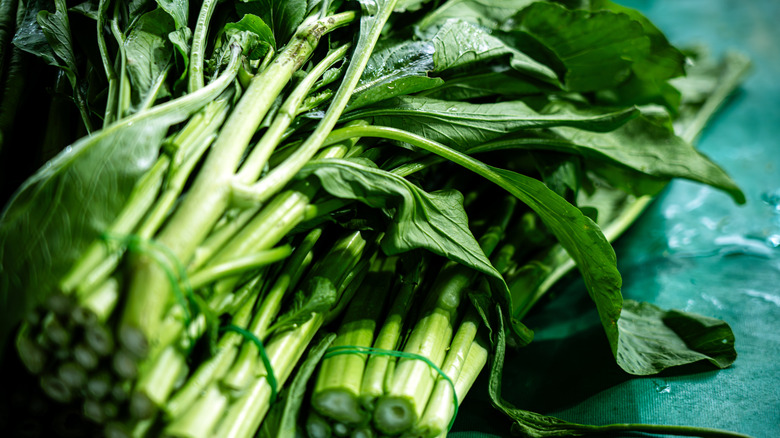
Collard greens hold a unique place in American food culture. Hardy and able to withstand poor farming conditions, collard greens — or simply collards — came to symbolize resilience and perseverance as one of the limited and inexpensive crops available in the 1800s American South. Often simmered with scraps of meat and vinegar, collards are an integral part of the important history of soul food, but they also, perhaps unexpectedly, shine in classic baked pasta dishes.
Collard greens are historically known for being cooked slowly over the course of several hours, which creates potlikker — a broth that is the happy and hard-earned byproduct of cooking greens down. But collards can also be incorporated successfully into dishes that are a bit quicker to get to the table. While spinach is a go-to and well-worn idea for adding greens to pasta, collard greens are an abundantly more toothsome and hearty option. Tender spinach leaves break down too fast in a baked pasta dish, but collard greens can withstand a great deal of heat while adding a depth of earthy flavor. In fact, the lengthier the cooking time, the more tender collards become, which is why baked pasta dishes are an ideal vehicle. Not to mention that collards are rich in nutrients like calcium, iron, vitamins A, C, and K, and fiber.
Collard greens hold up in various pasta dishes
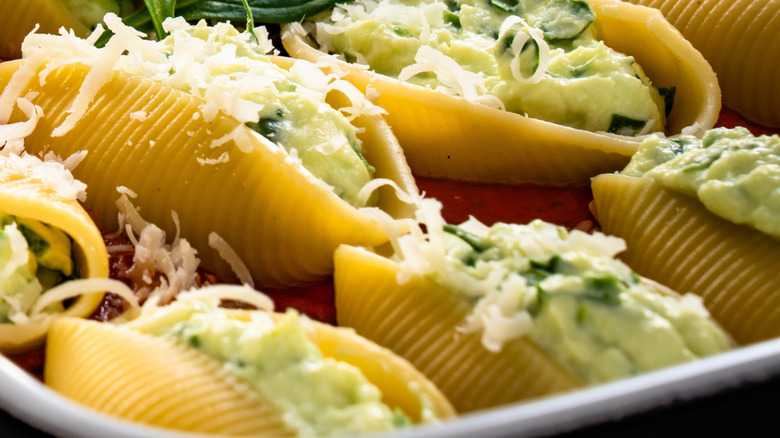
Adding collard greens to lasagna or stuffed shells as part of the filling is a terrific option since creamy cheese mellows out bitter collards and the combination comes together in a complementary and gooey way after a stint in the oven. The addition of collard greens also serves to make baked pasta more satisfying and filling as a main dish. Just make sure to blanch the collard greens before baking — raw (or even undercooked) collards can be rather unpleasant.
If you would rather combine collards with a more conventional tossed pasta preparation, you can fix the bitter taste of collard greens by time treating them: Cook them for at least few hours before adding to your pasta dish. Cooking the greens down with meats, such as smoked ham, vinegar, and spices, such as oregano and thyme, is a timeless option for good (and tasty) reasons. You can then twirl the cooked pasta with the cooked collards and shower it with some grated Parmesan cheese to finish. Or, give your collards a flavor boost by leaning into a bit of hot sauce, which can counter any bite from the greens. If you like the idea of a pasta dish with sturdier greens, but can't find collards, kale or chard are other tasty viable options.