

10 Easy Ways To Make Kale Instantly Tastier
We may receive a commission on purchases made from links.
It takes a special kind of person to like kale, and that's not something that we say very lightly. While the historically bitter vegetable has seen a rise in popularity in recent years — coinciding with the manufacture of "Eat More Kale" t-shirts — it still elicits the same response as Brussels sprouts: The folks who really love it will let you know, and so will the folks who hate it. It's not nearly as mild-tasting as spinach, romaine, or butter lettuce, and it requires a little more preparation and forethought into deciding how to cook it to make it tasty, which is what turns many people off of it.
The fact of the matter is that many people may not like kale because they haven't had it prepared well. After all, if you eat it straight from the plant, you'll quite literally be in for a bitter awakening. But the good news is that many of the ways to make kale taste better don't require a ton of legwork — just an understanding of what ingredients can help to soften both its flavor and its texture. We got some expert insight from David Davidov, recipe creator for The Cooking Foodie, and Danny Freeman, author of "Italianish: Modern Twists on Classic Italian Flavors." They shared some of their top tips for cooking with kale, as well as simple ways to balance its flavor. Together, we can all Eat More Kale — and enjoy it, too.
1. Massage the kale before cooking with it
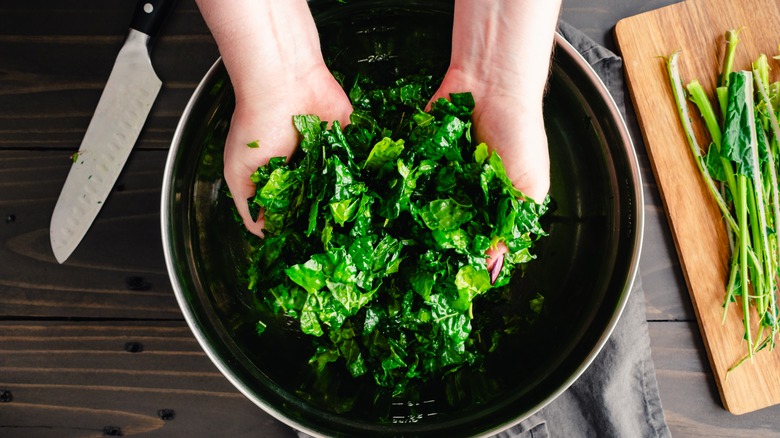
Everyone likes a good massage — including kale. "In my experience, massaging kale is the simplest way to transform it from tough and bitter to soft and enjoyable," says recipe developer David Davidov. Though you're not dimming the lights, lighting some smelly candles, and grabbing your cucumber slices. Instead, this process refers to rubbing the kale leaves together with ingredients like oil, lemon juice, and salt to tenderize them before you cook with them. Davidov explains that even a few minutes of rubbing the leaves helps to soften them, ensuring a less woody and texturally unpleasant eating experience.
You'll want to start by removing the hard, woody stem in the center of the leaf. Then, you can use the tips of your fingers to work the marinade into the leaves. It's important to only massage the leaves for a few minutes; if you're kneading them like bread dough, you could be making them mushy. This tip is also best for dishes like salads, where you plan on eating the kale relatively soon after it's massaged. If you're shredding, chopping, or pureeing your leaves (for something like a pesto or a smoothie), you don't need to massage them. Moreover, if you plan on letting your salad sit dressed in the fridge for a couple of hours, you won't need to put in any elbow grease; the acid from the dressing will do the softening for you.
2. Try roasting the kale for a caramelized flavor
One of the reasons why people really don't like kale is because its flavor is sharp and bitter. However, you may not have gripes with kale itself — just how it's often prepared. If you're a newbie to this leafy green, you may want to try cooking it in a way that masks this bitterness, rather than accentuates it.
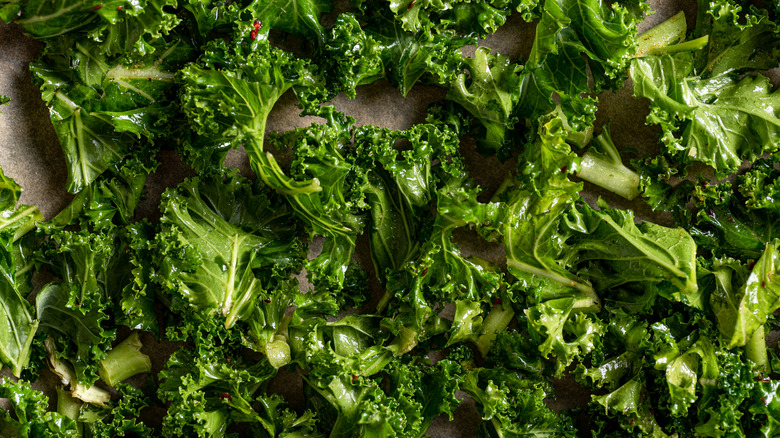
"If someone refuses to eat kale, I always tell them to try roasted kale first," says David Davidov. "It caramelizes, gets crispy on the edges, and loses most of its bitterness." He recommends roasting the leaves in the oven for about 10 minutes before tossing the leaves in a coating of oil and aromatics before returning them to the oven to finish. "It pairs beautifully with lemon zest, Parmesan, tahini, or toasted nuts," he says.
This hack is relatively easy to do and only requires a sheet pan (though, you may also want to try it in your air fryer once you get the hang of it). Once your kale is roasted, you can serve it as a side dish — paired with a simple dressing — or add a sprinkle of the dry pieces atop your grain bowls or soups. Since roasting also makes its texture crunchy, you may consider using the kale leaves as a substitute for lettuce on sandwiches, too.
3. Pair kale with punchy aromatics
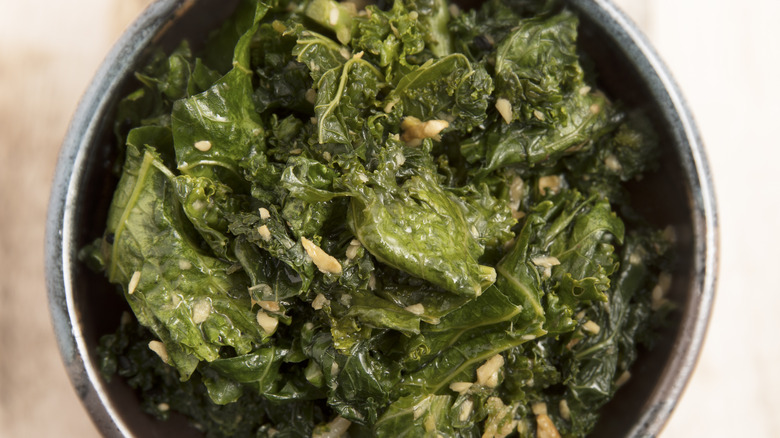
The secret to making kale tastier is all about pairing it with ingredients that make it shine. The vegetable can be a little bit of a bully if it's given too much power, potentially even turning the entire bite bitter. Aromatics will help counter this because their taste and aroma are strong enough to stand up to the kale and put it in its place.
"Garlic is number one for me," says David Davidov. "Raw, roasted, sautéed, it all works." When he prepares kale in a salad, he likes to use a garlic dressing because it transforms its flavor profile. Think a kale Caesar salad with garlic both in the dressing and as a seasoning on homemade croutons. You also might want to consider adding garlic to the roasted kale, per cookbook author Danny Freeman's suggestion, or sautéing the veggies down with fresh chopped garlic to give it a flavorful punch.
Besides garlic, our experts also highlighted some other aromatics that can elevate kale across dishes. "Onion, shallots, chili flakes, ginger, and even scallions bring brightness and soften kale's earthy flavor," says Davidov. Freeman shares that he likes to add red pepper flakes to his kale before roasting. Not only will this add a subtle pop of color, but it will also offer a delectable aromatic complement, and can help hide any bitterness.
4. Brighten the bite with spicy ingredients
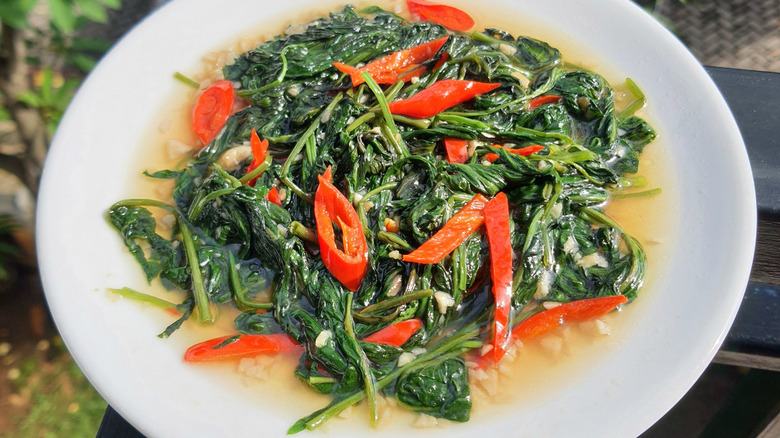
Besides aromatics, kale also pairs really well with spicy ingredients. The leafy green has a very earthy and slightly bitter profile that can be neutralized by heat. The peppery undertones of the green may even help amplify the spice, depending on which one you choose to use.
There are many ways to add spice and heat to your kale that are subtle. Both of our experts suggest adding a warming ingredient to the kale before roasting; David Davidov suggests a pinch of chili along with garlic, black pepper, and olive oil, while Danny Freeman suggests making a beeline for the roasted pepper flakes. You can also make a spicy salad dressing for your kale, integrating international ingredients like harissa, gochujang, or your favorite hot sauce. Besides giving a complementary flavor to the kale, these warming ingredients can also help balance some of the other ingredients in your recipe, like fats and sweeteners.
Of course, you can always make kale taste better by pairing it with thinly sliced chiles as well. If you're sautéing kale as a side dish, consider tossing in Fresno or serrano chiles, or even jalapeños for just a little bit of brightness.
5. Don't neglect the fat
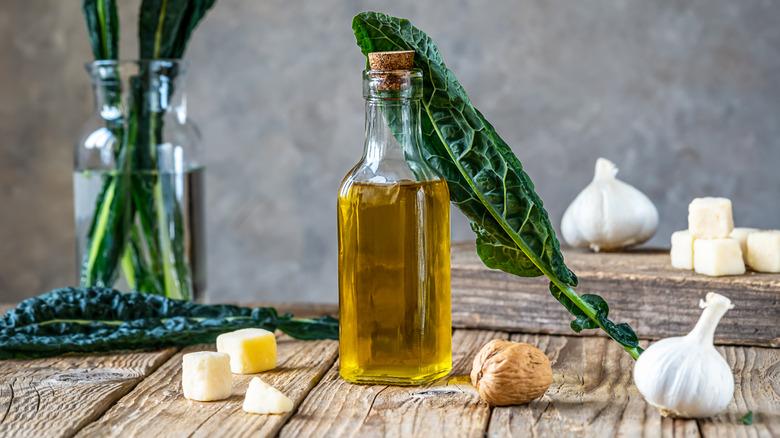
Fat is an important conduit for flavor — anyone who has added a pat of butter to their stack of pancakes or a slice of warm toast would know that. In that same vein, pairing the right fat with a bitter leafy green kale is key to unlocking its flavor, and it may also have nutritional benefits as well. Vitamins K and A (technically beta-carotene, which is a precursor to vitamin A), which kale is very rich in, are fat-soluble vitamins, meaning they are absorbed best when paired with fat.
There are many high-fat ingredients that you can pair with kale to both add flavor and increase nutrient absorption. If you're sautéing it, for one, you may want to add a little butter or olive oil to the pan. The leaves will soak up that flavor and fat as they cook. David Davidov also recommends other fats, like Parmesan, tahini, and avocado, as well. Parmesan offers both salt and fat and would be excellent in Danny Freeman's suggestion — a kale pasta dish with sausage. Even the sausage would add fat and flavor. "Cook the sausage with some onions, garlic, and red pepper flakes, then add the kale towards the end — the flavor will mellow and be masked somewhat by the sausage, so you won't get that strong, bitter kale taste," he says.
6. Add it to a smoothie to disguise its flavor
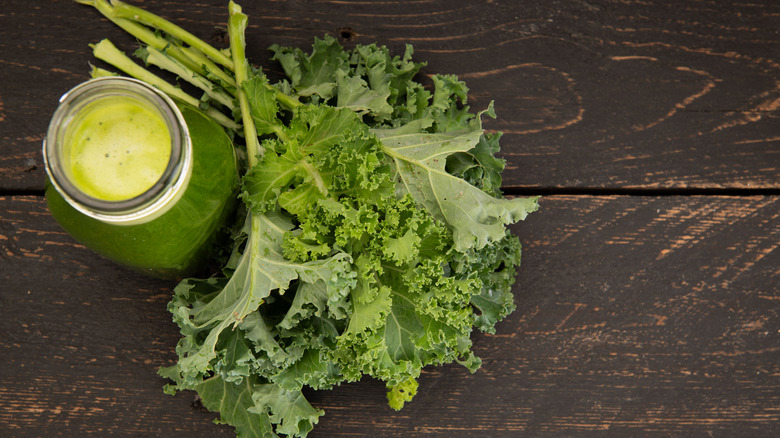
If your aversion to kale is strong, and trying to mellow out its flavor with a tasty dressing or a sprinkle of cheese won't do, you may have to get creative. Luckily, one of the easiest ways to use kale will have you hiding its flavor entirely: adding a couple handfuls to your favorite smoothie. David Davidov explains that adding kale to a smoothie will mellow out both its texture and flavor. As long as you're very deliberate with the ingredients you add to your blender — seeing as a shake with just kale and milk will probably still taste like kale — you'll be well on your way to a nutrient-rich breakfast or snack.
Sweet and bright ingredients will easily mask kale's bitterness. Think fresh or frozen berries — raspberries, strawberries, and blueberries — for sweetness and nutrients. If you're using out-of-season produce and need a little extra sweetness, feel free to add a drizzle of honey or maple syrup as well. Kale is also balanced with acidity, so think about adding some cubed pineapple, orange juice, tangy Greek yogurt, and the like.
7. Use acid to counteract its bitterness
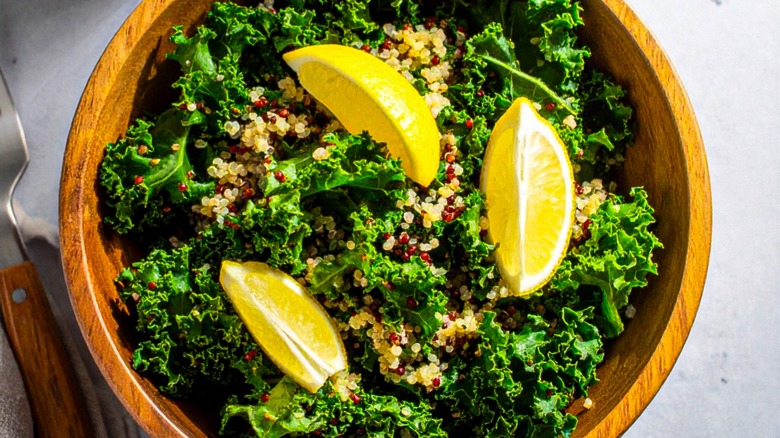
Fat may be a conduit for flavor and nutrients, but acid plays an equally important role in elevating the flavor of a bitter green like kale. Danny Freeman explains that you can use vinegar or a dash of lemon juice to massage your leaves (in lieu of a fat like olive oil); the acidity will help tenderize the veggies and make them easier to eat. He goes on to explain that while he has a soft spot for olive oil, he likes to play with the different types of vinegars. "Red wine vinegar, rice wine vinegar, balsamic, and others can all work," he says. David Davidov explains that the fat will soften the texture of the kale, while the right acid will right the bitterness. "Together, they turn kale into something people actually enjoy eating," he says.
Like fats, there are numerous ways to introduce acidity into your recipe. If you're making an autumnal grain bowl with kale, roasted squash or sweet potatoes, quinoa, and the like, you may want to try a simple apple cider vinaigrette. Or, if you're opting for a light Mediterranean soup with kale and chicken, consider adding a spritz of lemon juice before serving. You don't even have to stick to liquid acids either; a tangy slaw, kimchi, pickles, or preserved lemons can add brightness and life to an otherwise bitter green.
8. Turn it into a sauce
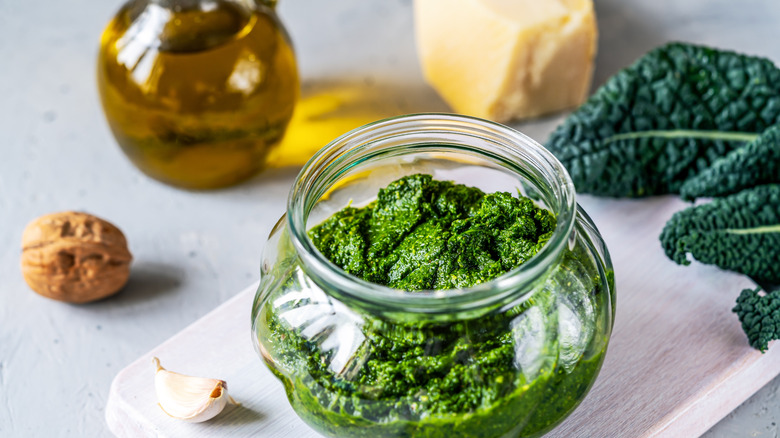
Still not sold on the whole idea of eating a kale salad? We totally get it. In that case, you may want to try hiding its flavor by adding it to a sauce. Kale pesto, for one, is a sauce made for people who really don't like the taste of kale on its own. Not only will it make for a nutrient-packed pesto, but you can also mask its bitterness by pairing it with complementary ingredients like Parmesan, pine nuts (or walnuts), olive oil, and garlic. Getting the right ratio of kale to basil is the tricky part, as you want to use the kale to add bulk to the sauce, but not so much that its flavor eclipses the gentle, herbaceous undertones of the herb. A 2-to-1 ratio of kale to basil would be a good place to start, but you could potentially stretch your basil with a 4-to-1 ratio instead. If basil isn't your thing, stick to a kale-only recipe and add a touch of maple syrup if you're working with a particularly bitter crop.
You can also pair kale with a fat by adding it to your mac and cheese sauce. The key is not to overcook your kale, as it can taste sulfuric. Blanch the kale quickly before adding the leaves to your sauce ingredients (you can do the same for other cream sauces, including Alfredo and béchamel, too) for optimal color and to curb its bitterness.
9. Mix it with a softer green in a salad
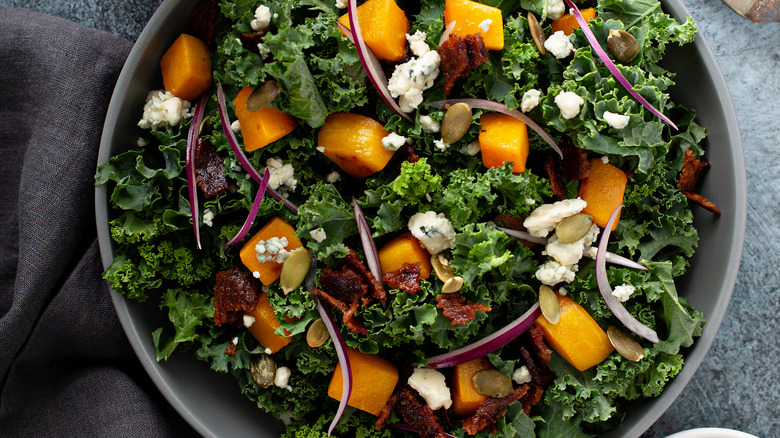
Kale has a very assertive flavor, and sometimes, you have to pair it with blander ingredients. While a salad that's made entirely of kale may be overwhelming, one cut with a milder-tasting green, like spinach or lettuce, wouldn't be as offensive to the palate. Spinach is easy to bite through and offers a mildly earthy flavor, while butter lettuce is crisp, even softer, and more neutral in flavor, which will make it an excellent pairing for a sharp or overly bitter type of kale.
You can also cut your cooked recipes with other types of greens, too. Swiss chard has a little bit of bite to it, but it softens more than kale when it's cooked. If you're making a braised dish with kale, consider adding collard greens to it, or sauté your kale leaves with a handful of mustard greens for a sinus-clearing pop of flavor.
10. Add a sweet element
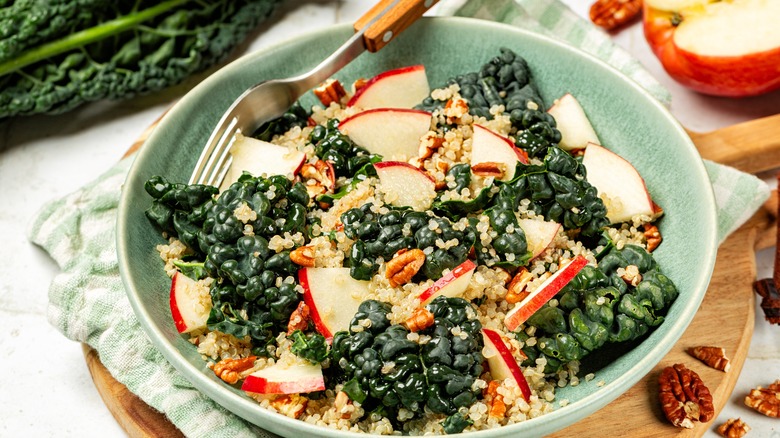
The last of the ingredients that you can add to your kale to balance its flavor is sweetness. Though Danny Freeman says that he's heard of someone making kale chocolate chip cookies before, we wouldn't recommend going that far (at least, not yet), seeing as there are many ways to add sweetness to this bitter green without resorting to dessert. If you're preparing a dressing, for example, be sure to add a splash of honey or maple syrup to it. The sweetness will not only counteract the bitterness of the green, but it will also balance out the fat and acidity of a well-made salad dressing.
You don't have to only stick to liquid sweeteners, either. "Sweet elements work incredibly well: dried cranberries, apples, roasted sweet potato, honey-mustard dressings, or even a touch of maple syrup," says David Davidov. Freeman notes that he likes roasting his kale with sweet potatoes, butternut squash, and/or carrots; not only are they hearty and filling, but they can add sweetness without making your dish too saccharine. "I begin the other vegetable first, then add the kale towards the end. Pair it with aromatics," he says.