

What Makes Florida's Spiny Lobster A Hidden Seafood Gem
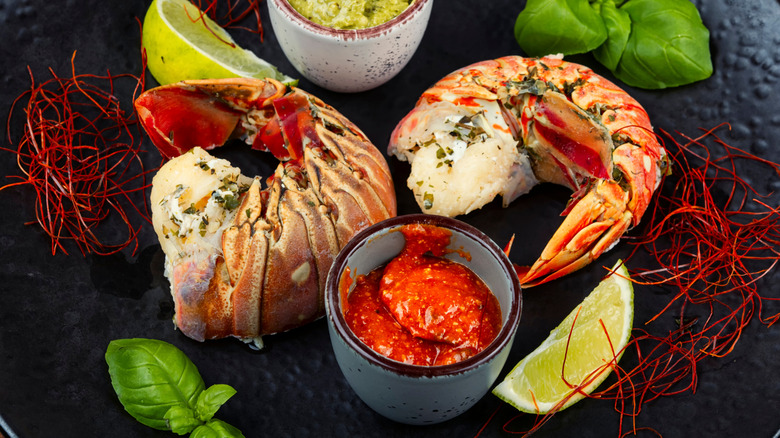
Most of us think of lobster as the star of mouth-watering lobster rolls, or the perfect thing to dip into a rich, buttery sauce. While Maine lobster is a go-to choice for these meals, there's a whole other category of lobster that deserves its due: spiny lobsters. Also known as rock lobsters, spiny lobsters differ from Maine in a number of ways. For starters, these guys are native to the warmer waters around the Caribbean and Gulf of Mexico. Their tail meat is firmer, we don't usually eat the claw meat, and the flavor is described as briny rather than buttery.
For exclusive insight into the hidden culinary delights of spiny lobsters, Chowhound spoke to renowned Michelin-starred chef and Florida native Jeremy Ford, who recently opened Salt + Ash at Hawk's Cay Resort. "Florida's spiny lobster is a completely different experience from the cold-water Maine lobster people are used to," Ford says.
According to Ford, what sets the fish apart is its sweet, clean flavor and snappy bite. "Warm-water lobsters store less iodine, so the meat tastes naturally sweet with a mild ocean salinity." In addition, the fish also has a unique coastal identity. "It tastes like Florida — the Keys, the reefs, the warm currents," Ford says. Ford's restaurant, Salt + Ash, specializes in a wood-fire cooking approach to seafood, which he says leads to perfectly juicy, caramelized spiny lobster.
How to bring out the best in spiny lobster
According to Jermey Ford, one underrated benefit of choosing warm-water spiny lobsters is how they're caught. "Florida's spiny lobster fishery is almost entirely trap-caught by small-boat fishermen," he says. This gentler method means less stress on the animal, which helps to preserve texture, and also has a high level of sustainability.
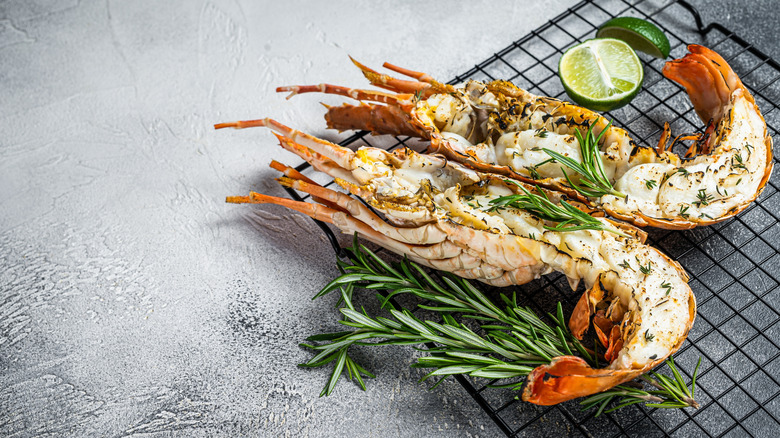
That said, spiny lobsters are delicate and taste best when prepared slightly differently from cold-water lobsters. "Because the shells are thinner than Maine lobster, they cook faster and take on fire more directly," Ford says. "When treated with respect — quick blanch, split, and kissed over wood — it keeps that signature sweetness." Ford is particularly partial to splitting and grilling spiny lobster tails brushed with brown butter over a wood fire. Other cooking methods he recommends are poaching in an aromatic butter, serving the fish in a roasted shell broth, or chilling and slicing it for crudo. "The firmness makes it incredible thinly sliced with yuzu kosho and olive oil," he says.
Overall, Ford says, the important thing to keep in mind when trying spiny lobster for the first time is that it's not Maine lobster. "That's the beauty. Expect a firmer texture and a milder, sweeter flavor." If you're at a restaurant, ask where your lobster was caught before ordering. At home, opt for simple, gentle cooking methods that bring the lobster's delicate flavor without overcooking the meat.