

The Dishware Item No One Remembers To Clean (And The Proper Way To Do It)
As most people already know, keeping your kitchen clean and sanitary is crucial to preventing foodborne illness, as well as the spread of germs among your family members. That means not only disinfecting counters and using science-backed methods to more effectively clean your dishes, but also paying close attention to all those surfaces and items that often get overlooked. While the dusty tops of cabinets and refrigerators are the most recognized culprits, there are specific dishware items that get overlooked even more often, and harbor even more germs: salt and pepper shakers.
Though innocuous in appearance, salt and pepper shakers present a lot of potential for the spread of dirt and germs. Many of us store them right next to the stove to keep them handy for seasoning food as we cook, placing them directly in the "splash zone" for getting spattered with grease, starchy pasta water, and possibly even raw chicken juice. They're also touched frequently by multiple people, risking the spread of communicable diseases, which is just one reason many restaurants no longer provide salt and pepper on their tables.
Keeping your kitchen cleaner (and your family safer) is a simple matter of disinfecting your salt and pepper shakers regularly. You can do this with food-safe disinfectant sprays, such as hypochlorous acid, whenever you clean your kitchen, or after seasoning things like raw chicken. It's also good to get into the habit of giving them a thorough scrubbing inside and out whenever they need to be refilled.
Getting your salt and pepper shakers sparkling clean
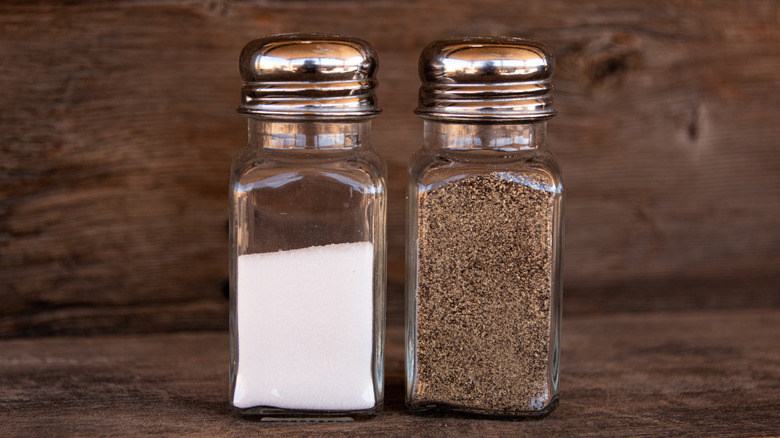
Though many salt and pepper shakers are technically dishwasher-safe, they're also usually fairly small, making it difficult to wash them easily or safely in the appliance. It can be tough to ensure they won't slide through wire baskets and break, and even if you do secure them, the openings may be too small to guarantee they're fully rinsed, clean, and dry. Additionally, these little shakers take just minutes to handwash, so the extra effort isn't too much of a hassle.
Since salt and pepper granules often get stuck between the lid and body of your shakers, it's best to unscrew them over a paper towel to catch the mess. Brush away any granules that stick, and set the tops and bottoms aside in pairs so you can easily tell your salt and pepper shakers apart later on. Next, scrub each set thoroughly with a small bottle brush and hot soapy water. Pay close attention to the corners inside each shaker and the holes in each lid. Use a toothpick to open up clogged holes.
Rinse both shakers very thoroughly in warm water to remove all soap residue (no one wants soapy salt), and dry them inside and out with a lint-free microfiber cloth. Let both shakers air dry for several hours to ensure all moisture has evaporated. Latent moisture can cause salt to clump and make your black pepper moldy, so it's important that your shakers are bone-dry before you refill them.