

The World War II Ingredient Swap That Changed The Way We Eat Breakfast Forever

Whether added to fluffy morning pancakes to make them beautifully rich and moist, or used to spoon‑baste a piece of steak for a mouthwatering, juicy finish, butter is a kitchen staple that makes every bite worthwhile. Americans love butter so much that the U.S. ranks among the top 10 butter-consuming countries in the world. The country produced over 2.12 billion pounds of butter in 2023, with California accounting for nearly a third of butter output in the United States.
But butter wasn't always as easy to find as it is today. During World War II, dairy was so scarce due to rationing, labor shortages, and the need to prioritize resources for troops and allies, that it forced people to find an alternative for this beloved breakfast ingredient: margarine. The difference between margarine and butter is that the latter is a dairy product made from churned milk or cream, while margarine is a dairy-free, plant-based product made from vegetable oils.
Although margarine also faced shortages during the war, it was still cheaper and more accessible than butter. At the height of the conflict, butter availability dropped significantly to just 5 pounds per person per year. With so little butter available, margarine became the go-to substitute in households across the country, and maintained that dominance for more than three decades.
Butter held its spot in US kitchens for decades
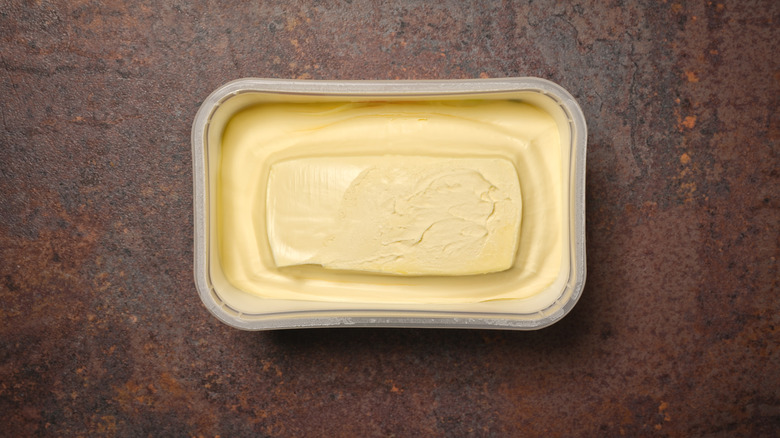
While butter's availability dropped during the war, margarine's surged to 11.1 pounds per person annually, which made it a regular ingredient in home cooking. Because the two products were so similar, Americans began relying heavily on margarine instead of real butter when baking and cooking.
Margarine's reign held strong for years before consumption finally starting to decline in the late 1970s. A more dramatic drop followed in the 1990s after a sudden wave of media coverage alerted the public to scientific warnings about the product's effects on consumer health. According to the National Library of Medicine, several studies linked artificial trans fats to heart disease. The dairy industry quickly seized on this and initiated an aggressive campaign that claimed trans fats made margarine worse than butter's saturated fat, and the initiative ultimately shaped margarine's bad reputation.
By 2005, butter reclaimed its place as the preferred spread despite costing nearly four times as much as margarine. Today, many margarine options are free of trans fats and made with healthier unsaturated oils like canola or olive oil, which can promote heart health and help manage cholesterol.