

Ovens Heat More Slowly In Cold Weather: Should You Bake Food Longer?
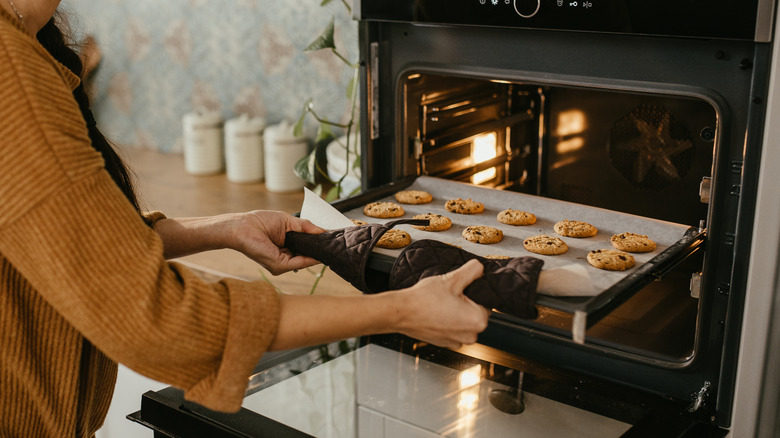
The days are shorter, the nights are longer, and there's nothing as comforting as a hot, soul-warming winter casserole. You might find, however, that it seems like your favorite cold-weather dishes take a bit longer to heat up in the winter — and it turns out, you're not imagining things. It can take your oven longer to fully heat up when your kitchen is on the colder side, so you might not be able to get your go-to winter casseroles, pasta bakes, and holiday treats on the table quite as quickly as you can when you're using your oven in the summer months. That being said, it's not likely that you'll need to bake them for a longer period of time once your oven is preheated and ready to go.
Thankfully, there are a few things you can do to mitigate the difference between cold- and warm-weather baking. The first is obvious: give your oven all the time it needs to fully preheat before you start baking. To help the process along, you can turn the heat up by a few degrees in your kitchen, or you can turn on a space heater. Another smart move, no matter what climate you live in: invest in an oven thermometer to help you check your temps every time. Oven display temperatures aren't always correct, and keeping an eye on the actual temperature inside it can provide the insight you need to get the crispy cookies, crunchy pie crusts, and perfectly-done casseroles you want.
More things to keep in mind when you're baking in cold weather
Giving your oven time to raise to the right temperature is not the only thing you'll need to do to help your winter baking endeavors turn out just right. First, make sure your room temperature ingredients are actually at room temperature — around 70 degrees Fahrenheit. If your flour or sugar are especially chilly, put them in an oven-safe dish and pop them into your preheating oven for a minute or two to bring their temp up. To bring eggs up to room temperature when your kitchen is chilly, you can place them into a hot water bath (the hot water from your kitchen tap is fine) for a few minutes. If you're baking bread in winter, you'll also want to increase the temperature of the water you add to the flour to make up for the chill in the air — when the air temperature in your kitchen is below 70 degrees Fahrenheit, heat your water to about 100 degrees before adding it to your dough.
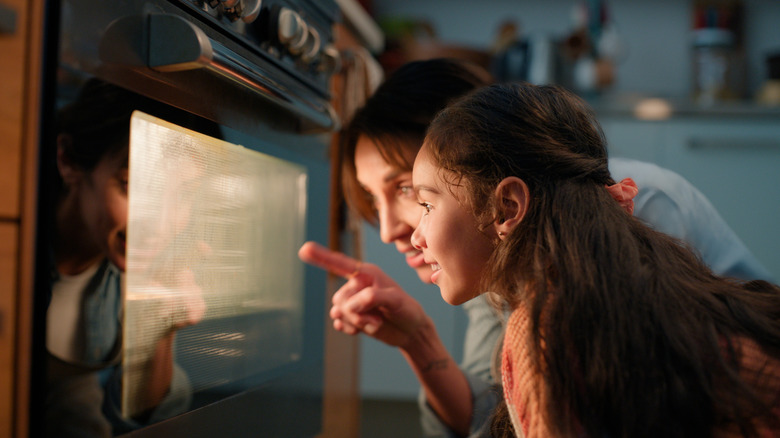
In addition to getting your ingredients up to room temperature, it's key to leave your oven alone once the baking process starts. Opening its door to check on your food is one of the most common kitchen mistakes — it can be an especially disastrous choice if you're baking a cake or other item that needs time in the heat to rise. Instead, set a timer and leave it alone. If you have to peek, make good use of your oven's light function and take a look with the oven door closed.