

How Coffee Grounds Can Help That Struggling Tomato Plant
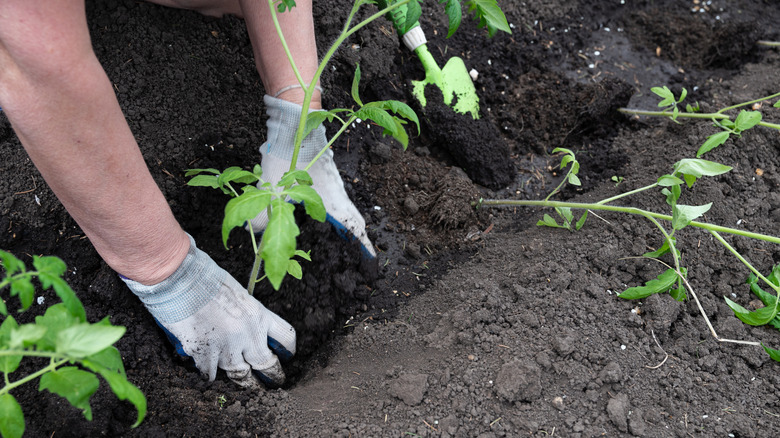
The wonderful thing about having a garden — big or small — is that you can use unexpected ingredients from your kitchen to fertilize. A great example of this, and one tip all tomato gardeners should know, is that tomatoes simply love coffee grounds. You can easily use spent coffee grounds as a soil amendment to attract beneficial organisms and deter pests for struggling tomato plants. If you have an area set aside for compost or a compost tumbler, adding coffee grounds to the mix can introduce highly desirable nutrients. When it's eventually ready, you can add to your garden to help your soil pH, but keep in mind that building compost into usable fertilizer takes months, if not years .
Introducing spent coffee grounds to young tomato plants, either through compost or sprinkling over the soil, will provide a healthy amount of nitrogen, iron, calcium, zinc, and other essential nutrients that tomato plants crave. Late-stage tomato plants love phosphorus and magnesium for fruit ripening. Just make sure you're using your grounds correctly.
After they're used, coffee grounds become dense and almost sludge-like. You can easily put down a layer that's too thick if you're dumping a large amount of grounds. When adding used coffee grounds to your garden, don't just plop the filter full of grounds at the base of your plants and call it a day.
How to properly apply coffee to your tomato garden
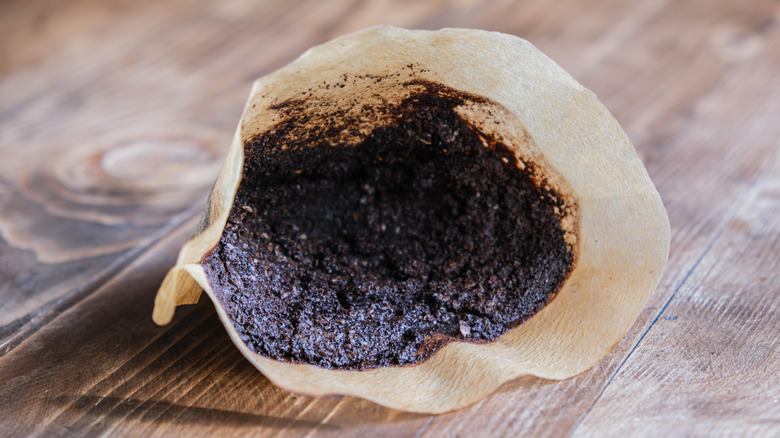
Some people advise against using coffee as a top dressing, as a layer of coffee grounds even less than 1 inch thick can hinder plant growth and impede drainage. But you can let them dry out on your kitchen counter or outside in the sun, then sprinkle the grounds evenly across the base of your plants. This works best if you already have a base of straw or wood mulch over the soil, because the grounds won't overwhelm the soil's density, allowing water to be absorbed and reach the roots.
If you have room for a compost operation, coffee grounds can be used more effectively if mixed into a compost pile or drum. Most experts recommend incorporating 10% to 20% of your coffee grounds into compost, which can then be mixed into your soil. It may take a little more patience, but the whole compost cocktail is far more nutritious for your plants. You'll know if your tomatoes are happy by the eye test. If they're dark green and thriving, you're doing well with the coffee grounds. If you're overdoing it, the leaves will turn yellow.
Managing pests and allies with coffee grounds
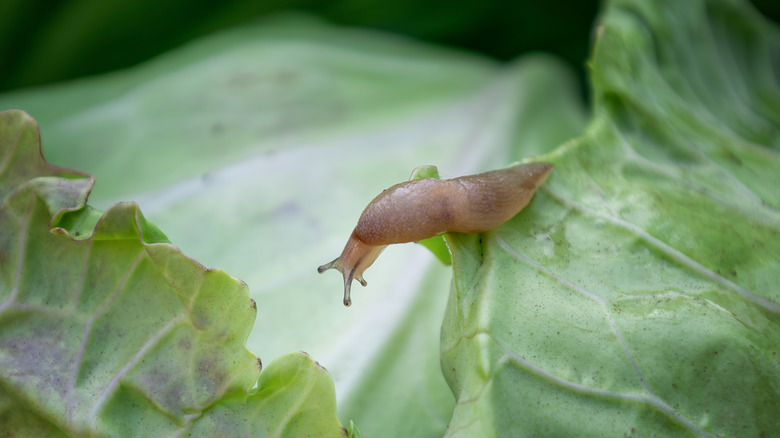
Beyond amending your soil and providing your tomato plants with the nutrients they need, coffee grounds can also repel some of the most annoying garden pests, such as slugs and snails. You can even use coffee grounds as a natural mosquito repellent to keep bites at bay while gardening. Coffee grounds applied to the garden can also deter aphids, but remember not to overdo it to the point your soil has no drainage or you're putting far too much nitrogen in it.
If you're a fan of earthworms crawling around your garden soil (and you should be, as they leave their extremely nutritious worm castings around), know that worms love coffee grounds and feed on them. The best part is that they'll take the grounds deep into the soil, providing nutrients near the roots of your plants. So raise a cup of coffee to your garden — it certainly will appreciate it.