

The Best Cut Of Beef For Pot Roast According To Julia Child
We may receive a commission on purchases made from links.
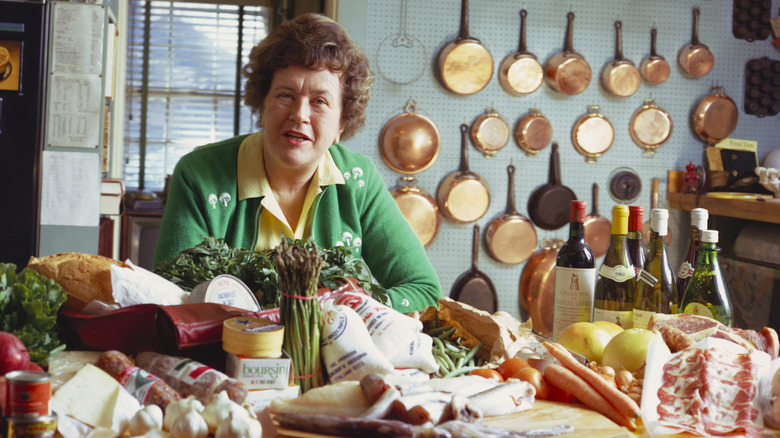
Homemade pot roast is one of America's most beloved comfort foods. Many of us can remember the aroma of slow-braised beef filling the house on a lazy Sunday growing up, and to this day the dish is a staple that never goes out of style. So perhaps it's no surprise that Julia Child wrote a recipe for pot roast in her iconic cookbook, "Mastering the Art of French Cooking." Despite her reputation for teaching complex French techniques to home cooks, she was also a big fan of dishes made with simple ingredients, like pot roast (you really only need three ingredients for an easy slow cooker version, after all). And as Child often reminded her audience, the key to any great dish is starting with the best piece of meat. Her preferred cut for cooking "Pìece de Boeuf Braisée"? The rump pot roast, which is better known today by the name bottom round.
Many home cooks might not realize that one of their favorite foods is built on a classic French cooking technique, but to truly understand pot roast, and thus how to choose the right cut of beef, it helps to know a thing or two about braising. This is a slow method of cooking where the meat is partially submerged in broth or stock and then gently simmered for several hours until it's tender. The goal is to break down the tough connective tissue, so you need to choose a cut that's got a lot of collagen, which slowly transforms into silky gelatin.
Why bottom round is best
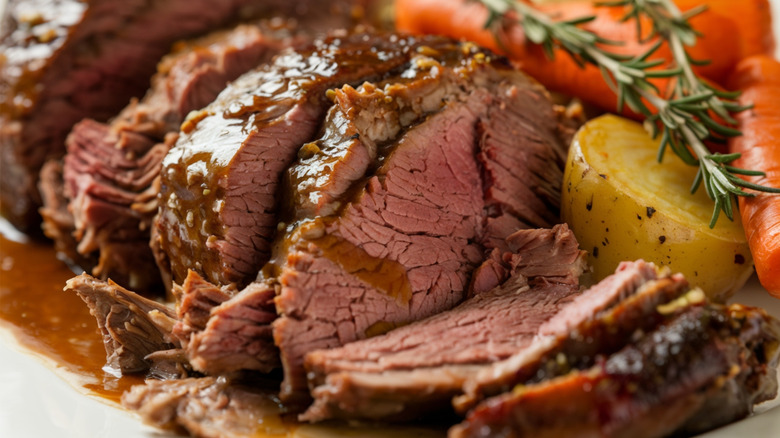
There are a couple of reasons why bottom round (aka rump roast) was Julia Child's first choice for making pot roast. This cut comes from the hind leg of the cow, which is a naturally hard-working muscle, so it has plenty of connective tissue. At the same time, it also doesn't have a lot of marbling, which is fat stored among the fibers of the meat. Marbling is super important for juicy steaks, but braising works better when the meat has more collagen than fat. This is because as the meat slowly cooks, the fat will render away into the cooking liquid rather than stay locked in the meat. The bottom round has the best of both worlds, with tons of collagen and only around 5 grams of fat per 3-ounce serving.
Fat and collagen aren't the only story, however. The bottom round also has a strong, beefy flavor, much more so than milder cuts like tenderloin, so it retains a rich, meaty taste even after hours of slow braising. Perhaps best of all, it is still one of the cheapest cuts of beef you can buy today, making it accessible for home cooks who want to tackle one of Child's classic recipes without breaking the bank. And who knows — once you master her pot roast, you might even be ready to take on her other braised masterpiece, the iconic coq au vin.