

Can You Use Clorox Wipes To Clean Kitchen Countertops? What To Know
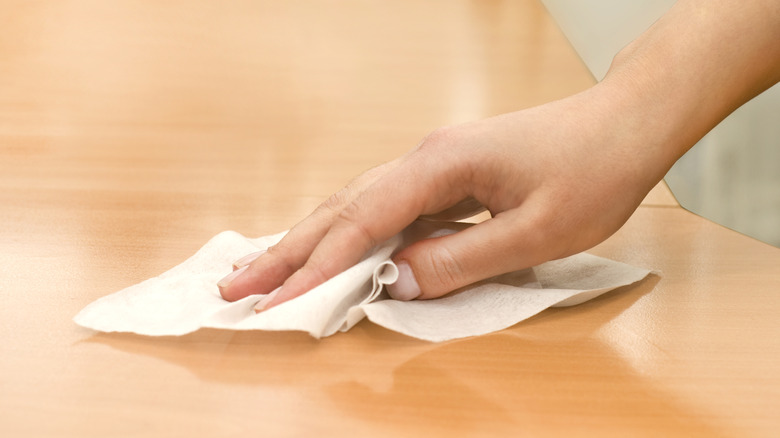
Keeping your kitchen countertops clean and sanitized is non-negotiable. These are the surfaces where all your family's food is prepared, and neglecting a spill of raw chicken juice or egg white can lead to someone getting sick from a foodborne illness. The problem, however, is that not all countertops are created equal. One type of wipe or cleaning product might be safe for glass, but not okay to use on many types of natural stone surfaces like marble, granite, soapstone, or quartzite. Since there is no such thing as one-size-fits-all products, it's time to talk about your Clorox wipe habit.
Yes, they're convenient, but can you use them to clean your kitchen countertops? If you have hard, non-porous countertops like laminate, sealed or finished wood, stainless steel, and most solid surfaces like Corian, yes (at least, in small doses). Natural stone surfaces like quartz and granite, however? It's a no-go.
Despite their name, Clorox wipes and other similar products generally do not actually contain any chlorine bleach. That doesn't mean they don't have any harsh chemicals, though. Instead of bleach, most contain cleaning agents and a non-bleach antibacterial solution that kills germs. The problem, however, is that most of these chemicals can break down the protective sealant coating on the surface of your countertops over time, especially for counters made of stone. Not sure if your counters are sealed? Better double check, because if not, it's one of the most common granite countertop mistakes you can make.
How to clean and sanitize natural countertops
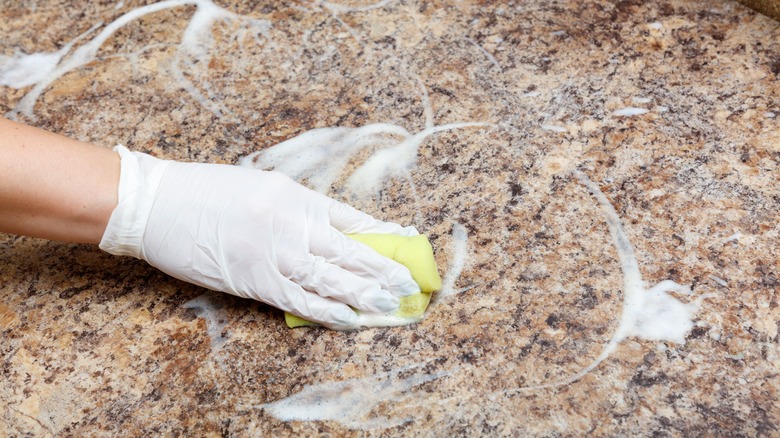
Once the sealant is damaged from cleaning, your countertops become vulnerable to staining, which can be permanent. Some wipes also have citric acid from lemon juice, which you should never use on natural stone counters because it can etch the surface and they'll start to look dull over time.
The good news is that you already have the perfect cleaner for granite and quartz countertops right in your kitchen: soap and water. Most mild liquid dish soaps are safe to use with a hot water and a non-abrasive sponge or cloth. Just be sure to avoid any soaps that contain harsh chemicals or antibacterial agents, as they might not be safe to use for these countertops. This routine alone should eliminate most bacteria hiding on the surfaces, as well as everyday spills and grime. If you want an extra layer of protection, you can also spray a solution of 70% isopropyl alcohol directly on the countertop, let it sit for about five minutes to kill any germs, then wipe it away with a paper or cloth dish towel.
The bottom line is, most of us keep Clorox wipes around because we want cleaning to be simple, but keeping your kitchen surfaces clean doesn't have to be complicated. Just make sure to find out what works for the materials you have. With a little forethought, your counters will stay looking like new for decades — or at least until the next remodel!