

The Little-Known Secret To Making Cheap Steak Taste Expensive
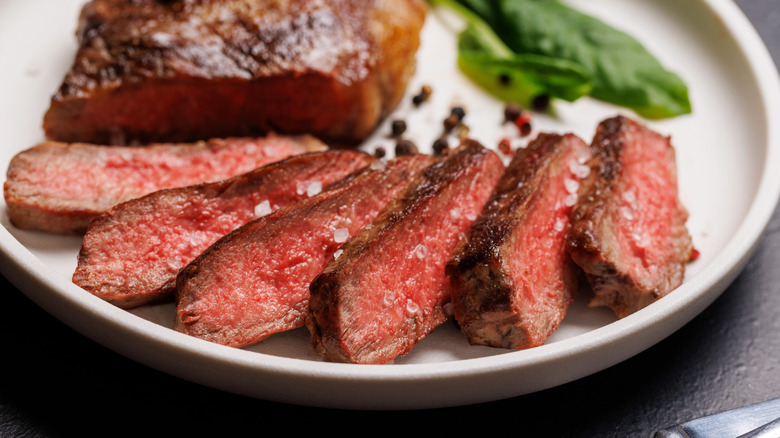
Although overrated cuts of steak like filet mignon get a lot of attention, there are plenty of more affordable choices that can taste just as delicious with the right treatment. An overcooked filet is never going to be as flavorful or juicy as a perfectly seared sirloin, for example. To learn the secret to making a wallet-friendly steak taste restaurant-quality, Chowhound spoke exclusively with Dagan Lynn, executive chef of Beef. It's What's For Dinner., a brand program run by the Beef Checkoff that focuses on promoting all things beef. His biggest tip for home cooks is to marinate your steak of choice and make sure it rests after cooking.
When you opt for cheaper cuts like sirloin or chuck eye, preparation is the most important factor, Lynn shares, to ensure you get a tender, tasty steak. "In the end," he says, "it's possible to make any steak delicious with the right techniques that enhance and complement the cut's natural flavors and qualities!" His recommendation is to marinate already-tender cuts with a dry rub for about two hours and firmer tough cuts that have more collagen for six to 24 hours, to help render them more tender and to boost flavor. Lynn's power move is to "marinate bottom round steaks in a mixture of red wine vinegar, water, olive oil, minced garlic, thyme, and red pepper overnight." He says it's a simple move that can make a cheaper cut feel more luxurious.
Finishing touches to ensure a juicy steak
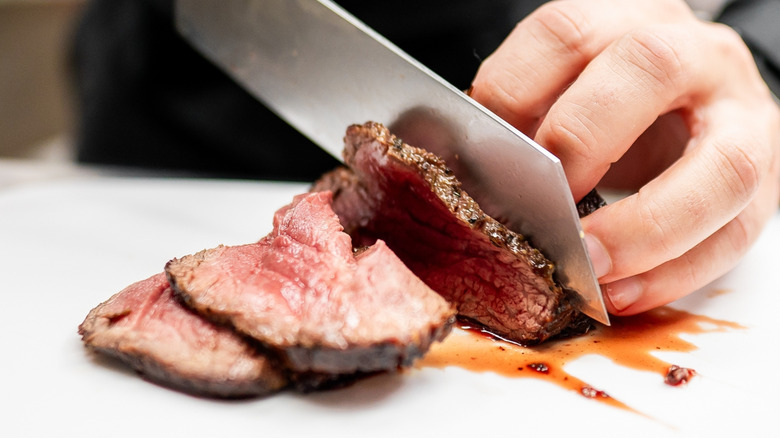
Once you've tackled the preparation, Dagan Lynn emphasizes the importance of resting meat after cooking. How long should you rest your steak after cooking it? Lynn supports the industry-standard of resting steak for at least five minutes. Resting steak allows all of that hard-earned juice that's forced to the center of the steak during cooking to redistribute through the meat, leaving each and every bite moist and flavorful. One of the most common mistakes everyone makes when resting meat is to cover it in foil. It's better to let meat rest uncovered on a warm plate or cutting board. But cut it too early, and you risk the tastiest bits being left behind.
Just as important, Lynn advises paying close attention to the direction in which you slice. "You want to cut across the grain," he says, "or perpendicular to the direction of the fibers, to maximize tenderness." Avoid piercing the protein too much, however, because otherwise, the juice will just escape. Lynn recommends using tongs to hold the steak while you cut it, so the tongs of a fork don't ruin your hard work. "My other secret" he confides, "is to thinly slice the steak once it's done so you ensure a tender bite."