

Why Bay Leaves Belong In Every Kitchen — Even If You Don't Cook With Them
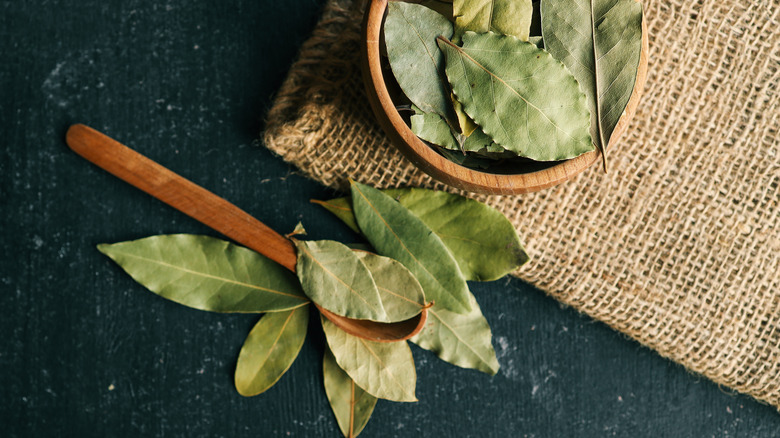
It's strange to think that a single leaf can make a difference in a dish's flavor, but when it comes to bay leaves, they most certainly do. Whether you use them to add a subtle bitter note to long-simmering stews, soups, and braises; mix them into marinades for meat and fish; or simply toss them into that big jar of pickled cucumbers, green tomatoes, and cauliflower you're preparing; bay leaves are incredibly versatile. Keep in mind that adding them early to your dish as it cooks is the way to correctly use bay leaves in your cooking, as it gives them time to release all of their flavors.
But what many people don't know is that bay leaves, which come from the Mediterranean bay laurel tree (Laurus nobilis), are good for much more than just cooking. Now, this might catch you off guard, but they're actually surprisingly effective pest repellents. While eating bay leaves is perfectly safe for humans, they contain over 50 aromatic compounds and essential oils. One of them is a compound called eucalyptol, which gets its name from the eucalyptus tree and can also be found in the cannabis plant, basil, rosemary, and sage, as well as other aromatic herbs.
This colorless terpene is used in many popular mouthwashes, personal products, and cough suppressants. It's also utilized as a flavoring agent in foods and candies. And most notably, it also appears to be toxic to insects, particularly weevils. This makes bay leaves unexpectedly useful when it comes to keeping those nasty pests out of your kitchen.
How to use bay leaves to naturally deter pests
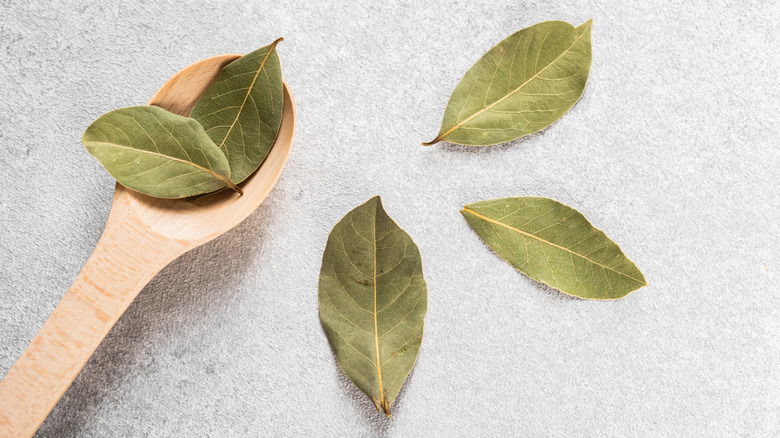
Naturally, one of the first rules of good kitchen hygiene is keeping the space free of insects such as moths, weevils, cockroaches, ants, aphids, or small rodents. An easy tip to say goodbye to such pantry pests is to place dried or fresh bay leaves in your drawers, on your shelves, and literally anywhere around your kitchen.
That said, if you don't mind a little minty, herbal aroma in your flour, grains, or rice, you can toss a few bay leaves in there too. However, if the scent is too strong for your liking and you'd rather not have it inside your dry goods, you can put the leaves around your cupboards instead of inside the containers. If you'd prefer a slightly different approach than randomly scattering bay leaves all over your kitchen, then simply boiling some water, throwing a couple of bay leaves inside, and mixing in some baking soda is another effective alternative. This easy DIY solution can also help you get rid of any unpleasant odors in your kitchen.
In case you don't have bay leaves at home, there's always the option of mixing some eucalyptus oil and water together, and making a great pest-repelling spray. It will work wonders considering that some eucalyptus oil can contain even up to 91% eucalyptol, according to the National Library of Medicine. Once you've stocked your kitchen with enough bay leaves, try slipping a few in your closet, too. It will not only deter pests but will also leave your clothes smelling fresh and clean.