

This Forgotten Root Veggie That Was A Favorite During Victorian Times
We may receive a commission on purchases made from links.
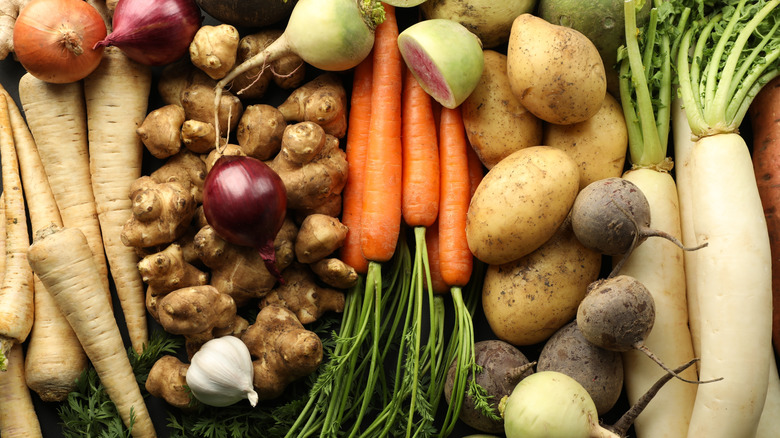
Word on the street is that taste buds are taking an unexpected blast to the past, and people are curious why a root vegetable that is mostly unheard of is making a comeback in mainstream grocery stores. If this is your first time hearing about a root vegetable called salsify, join the club. However, it turns out this vegetable was extremely popular during the Victorian Era and served as a staple nutrient source that was also prized for its versatility. It appears that, unlike a number of old-timey drinks that no one enjoys anymore, this unassuming root vegetable is prepared for a culinary comeback. Plus, it pairs well with the most underrated root vegetable, according to Gordon Ramsay.
So, what exactly is salsify? Salsify is a type of root vegetable known by other names you also may not have heard of: It's also called oyster plant or vegetable oyster, so named because of its notable oyster-like flavor, particularly when cooked. Another name it's known for is oat root. It resembles a long, slender, tapered structure like a carrot, while the top features a grassy stalk similar to the appearance of the green parts of green onions. The tasting notes of salsify include traces of licorice, artichoke, and asparagus.
Ways to prepare and serve salsify

Before its recognition as an edible root during the 1700s, salsify was grown just for its various color flower heads. The root vegetable appeared in a mid-19th century book, "Mrs. Beeton's Book of Household Management," which was a mainstay at the time for all things in the household, cooking included. In the book, Mrs. Beeton recommended scraping off the dirt and washing the vegetable before cutting it into even pieces and tossing into boiling water. As it's boiling, you can add butter, lemon juice, and salt; that's it. Keep the mixture at a gentle boil until the vegetables are nice and tender, then drain and serve with a seasoned white sauce.
That said, salsify can be enjoyed in a number of delectable ways. You can braise them in a savory sauce, roast them (and discover why roasted vegetables taste sweeter) alongside other root vegetables for an autumnal medley, or even puree them into a silky sauce. Take it up a notch and make a low-carb take on pasta by swapping out traditional pasta with ribbons of salsify whose peels have been removed. Interestingly, it's not just salsify that is experiencing a culinary renaissance. Other formerly bygone vegetables, like Fenland celery, which is reportedly nuttier and sweeter than conventional celery, is also gaining popularity and seeing a boost in sales. Seemingly, customers are embarking on a journey through history to rediscover and revive that history on their plates, often with a contemporary twist.