

The Old-School East Coast Blueberry Dessert That Gives Cobbler A Run For Its Money
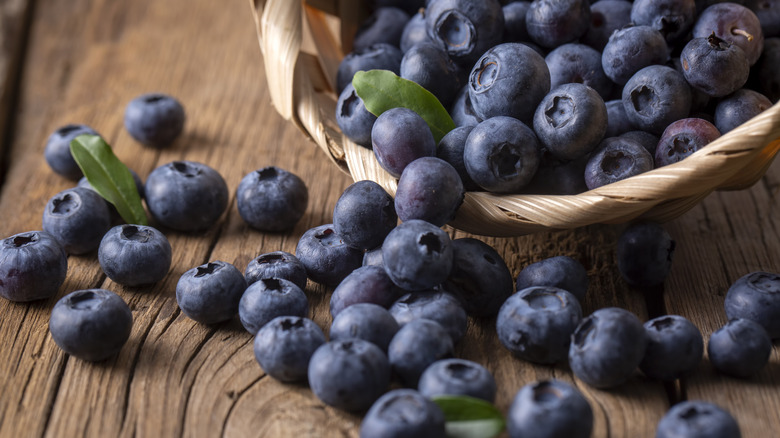
There is a sound to blueberry grunt that cobbler, crumbles, and crisps just cannot make. It is the lazy hiss and gurgle of berries surrendering to sugar in a cast-iron skillet, a sound so satisfying it supposedly gave the dessert its name. Grunt is cobbler's less-polished New England cousin. It is more flannel shirt and less Sunday bonnet. While cobbler sits tall and proud in the oven, grunt does its thing on the stovetop, under a lid, where biscuit dough gets steamed instead of baked. The result is not crusty, not crunchy, but cloud-soft and jam-slick, the kind of dessert that sticks to your heart instead of your teeth.
The blueberry grunt likely traces its roots to the kitchens of early British settlers and Acadian families along Canada's eastern coast, where thrift met ingenuity. It was a homespun way to turn whatever fruit the season offered — saskatoons, apples, or the prized tasty wild blueberries — into a bubbling pot of sweetness. Wild blueberries gave the dish its fame, small but bursting with flavor, the kind that stains your fingertips and fills the room with a tangy perfume. Instead of baking, cooks let the fruit simmer under clouds of biscuit dough in a covered pot, listening for the soft, bubbling "grunt" that signaled perfection. There was no performance in it, just the quiet satisfaction of something warm, blue, and honest after a long day of work by the sea.
Why blueberry grunt still grips the New England imagination
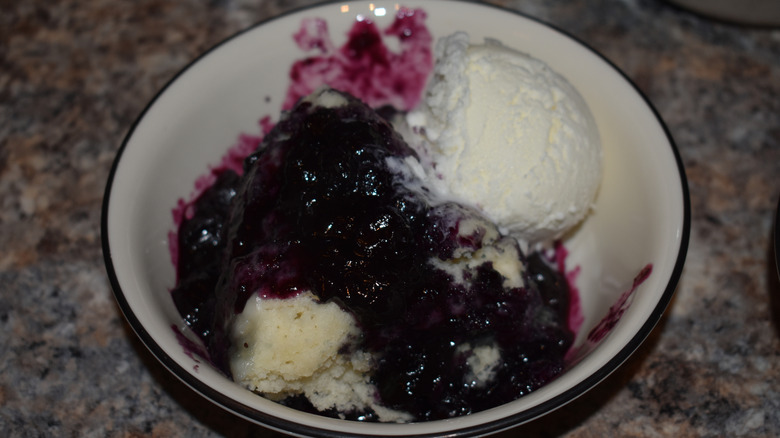
Blueberry grunt has endured not because it is fancy but because it refuses to be. Every spoonful tastes like a refusal to modernize, a sweet rebellion against clean plating and lattice perfection. It is the dessert equivalent of a sea shanty as it tends to be rough, rhythmic, and meant for sharing. New Englanders keep it close to their hearts because it feels honest. The dough is never quite even, the syrup always a little unruly, and the blueberries always remind you that nature does flavor better than any factory.
The grunt survives because it is adaptable. Too many berries? Grunt. No oven? Grunt. Too humid to bake? Definitely grunt. The recipe moves from stove to campfire to beach cookout without losing its swagger.
Spoon it warm with vanilla ice cream, or cold from the fridge the next morning when the syrup has thickened into something close to blueberry jam. It is not a cobbler, and it does not want to be. Cobbler has its neat layers and browned crust. Grunt just sits there, blue and glorious, humming its own wild tune. And that is precisely why it wins.