

The Healthiest Vegetable In The World And How To Incorporate It Into Your Meals

We all know by now that every type of kale provides nutritional benefits, but it might come as a surprise to find out it's a different member of the cruciferous family that tops the list as the world's healthiest vegetable. The U.S. Centers for Disease Control and Prevention has actually assigned scores to produce based on the level of vitamins and minerals present, creating a list of Powerhouse Fruits and Vegetables. According to the list, there is only one perfect powerhouse that scores an exemplary 100, and the honor goes to the unassuming microgreen watercress. Spinach, beet greens, chard, and kale all trail in behind with scores in the 80s or below.
So what is it about watercress that makes it so healthy? The freshwater green is high in both potassium and calcium, and gram for gram more vitamin C than is found in oranges. It is also rich in vitamin A and has more than 100% of the recommended daily intake of vitamin K, which is excellent for bone health. In addition to the vitamins and minerals, watercress is also extremely high in antioxidants, the compounds that can help prevent oxidative stress and may also help prevent diseases including cancer, diabetes, and heart disease.
While watercress leaves may look delicate, the flavor is anything but. The leaves actually pack quite a zesty punch, similar to the peppery taste of arugula, making them perfect for adding to salads and sandwiches, but can also be incorporated into many more dishes, either raw or wilted.
How to incorporate watercress into your diet
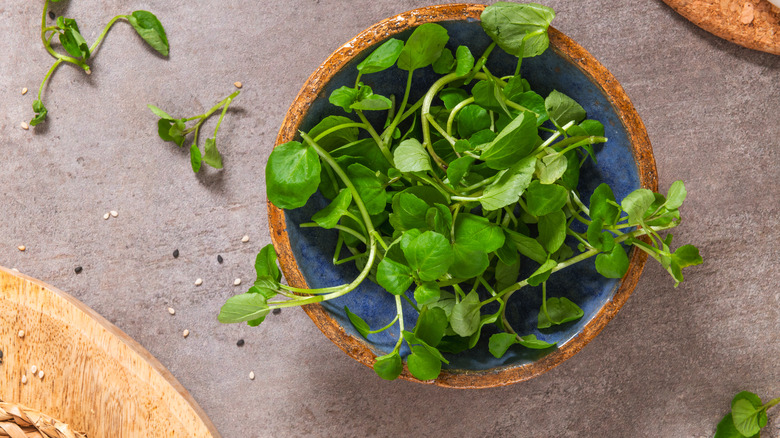
The spicy flavor of watercress makes it ideal for mixing in with other more neutral greens in a salad to give it a subtle bite. If it turns out the bite is not so subtle after all, there are ways to fix the bitter taste in watercress: try tossing it first in lemon juice or a vinaigrette to brighten the flavor a bit. The more mature the leaves, the spicier they will be, so cooking mature leaves can help to soften the spice. That said, if you are cooking it, know that it doesn't take long for watercress to wilt, so it can always be thrown in near the end of whatever dish you are incorporating it into. This will also help to preserve the nutritional benefits of the leaves.
Because of its zest, watercress works wonderfully with richer, fattier flavors. Try tucking the leaves inside a decadent grilled cheese or using them as garnish on grilled meat or pizza. Watercress can also work to spice up a typically more neutral dish like cream of potato soup, or to give mashed potatoes a flavorful bite. For added nutritional boost in the morning, try folding watercress into an omelet in lieu of, or along with, spinach. The leaves are also perfect for making pesto, as blending watercress with cheese and nuts will temper the spicy notes and create a vibrant green spread with a fresh flavor; perfect in the spring when warm weather hits and watercress season begins.