

Here's Where You Should Be Storing Pomegranates
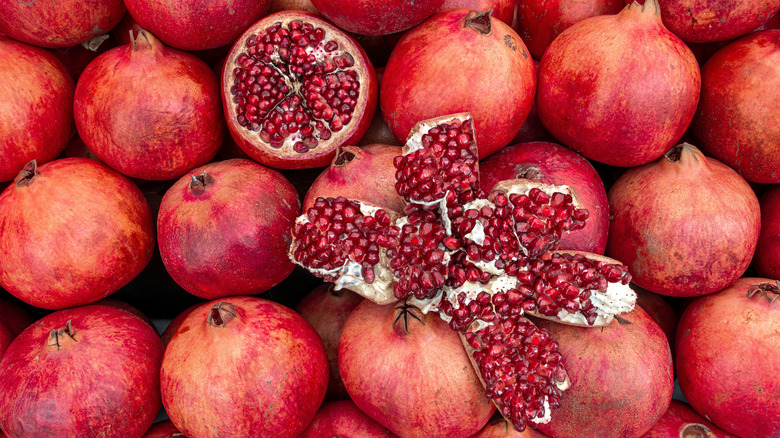
When it comes to the winter wonderland of delicious seasonal produce, pomegranates are a bit of an underdog, perhaps because they're still something of an enigma in the United States. There's also the issue of how to eat a pomegranate without making a giant mess, which, it turns out, is a simple matter of scoring along this wintry fruit's natural ridges to create five tidy sections, which contain dozens of delightfully tart and slightly sweet seeds called arils.
This delicious flavor profile, along with pomegranates' many health benefits (hello fiber, antioxidants, and vitamin C) make them an excellent addition to any holiday feast, or really any meal you consume while they're in season. Plus, they're fairly easy to store and stay fresh for quite some time — provided, of course, you make sure that you're purchasing pomegranates at peak ripeness, as pomegranates don't continue to ripen after they're picked.
When storing them whole, pomegranates' thick skin helps keep the interior arils fresh and plump, provided they're in a cool, dark place. They'll last for about two weeks in your pantry or a ventilated drawer, and up to two months in the refrigerator. Once opened, the arils become more prone to spoilage and must be stored in the fridge in an airtight container, where they'll stay fresh for a little less than a week. If you're concerned about them going bad, you can put them in a tightly sealed freezer bag or vacuum-seal them in the freezer for up to a year.
Signs of ripeness, detecting spoilage, and the best places to store your pomegranates
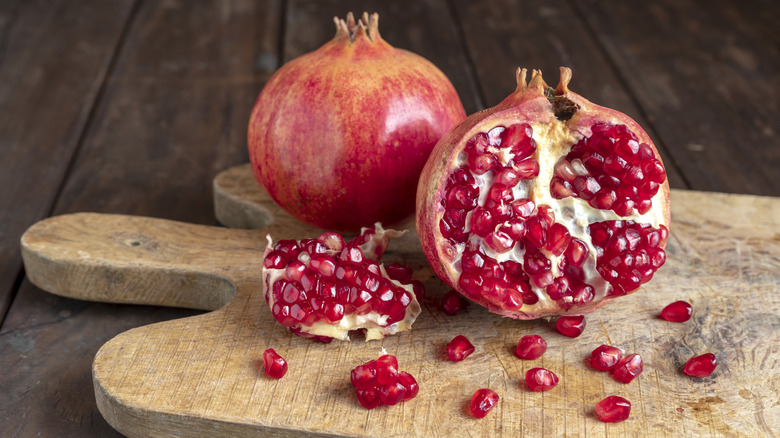
As mentioned, the best way to ensure your pomegranates remain fresh for as long as possible is to choose a nice, ripe fruit. While many grocery stores sell arils separately in containers, these won't be as fresh as those you harvest yourself, and will likely become desiccated or slimy fairly quickly, even in the fridge. Instead, choose a whole fruit with a uniform light red to garnet color that feels heavier than it looks.
The skin should be taut with a light sheen, and free of green spots. Brown spots, a spongy skin texture, splits, or mold are all telltale signs that your pomegranate has gone bad and needs to be discarded. To avoid early spoilage, keep your pomegranates away from sunlight and hot spots in your kitchen, such as next to appliances or on a window sill. Instead, choose a cool and dark shelf inside a convenient cabinet, or at the back of your pantry. Kitchen drawers also offer a clever place to store your fresh produce, especially those modified for such storage with metal latticework on the drawer fronts to promote airflow.
If you have a pomegranate or arils on hand that need to be used ASAP, don't worry — you can literally enjoy them for breakfast, lunch, and dinner. These tangy, crunchy little seeds are delicious in yogurt parfaits and oatmeal, add crunch to salads and grain bowls, and make a perfect glaze for salmon, chicken, or pork.