

How Old Potatoes Can Help You Get Even Crispier French Fries
We may receive a commission on purchases made from links.
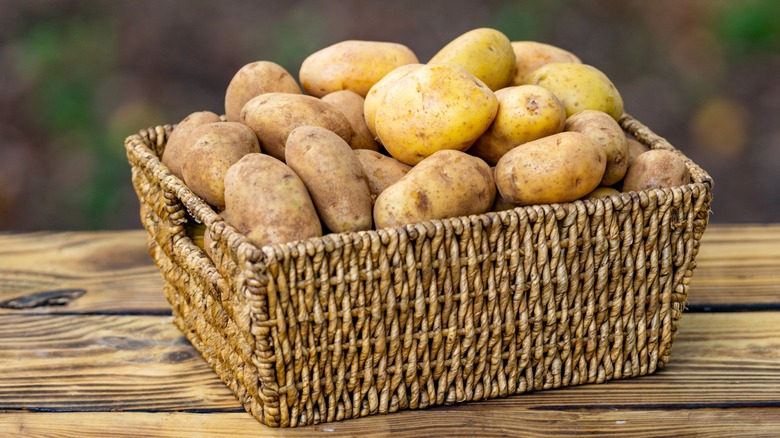
Got a bag of old potatoes lying around? According to food scientist Wendy Luong, the creator of Wendy the Food Scientist, a platform dedicated to tasty plant-based eats made from scratch, those old potatoes are the key to even crispier french fries. Luong explains exclusively to Chowhound that crispy fries require low moisture and high starch. Describing the role of moisture when making fries, she says "moisture inside the potato turns into steam during frying, creating internal pressure that puffs the interior and forms micro-bubbles in the crust. Too much water delays crust formation and causes the fry to steam and soften, while too little water produces weak steam pressure, leaving the interior dense and compact." What you want is a sweet spot wherein you have the right amount of moisture to create steam for the optimum aeration without steaming the fries instead.
So what does this have to do with old potatoes? Luong explains that as potatoes age, their water content decreases, which further increases the percentage of dry matter and the concentration of starch. Luong also recommends high-starch varieties like russet, Maris Piper, or Agria. That's a recipe for crispy fries with a fluffy core. So if you're looking to make a batch of legitimately crispy french fries at home, reach for some old taters, but not ones on the verge of going bad. They should be firm, have a smooth surface with minimal defects, and be heavy for their size, which indicates they're denser and have more starch. To pick out the high-density taters, Luong suggests mixing a 12% salt brine and dropping whole potatoes into it. The potatoes that sink are denser.
Storing and preparing potatoes for the perfect fries
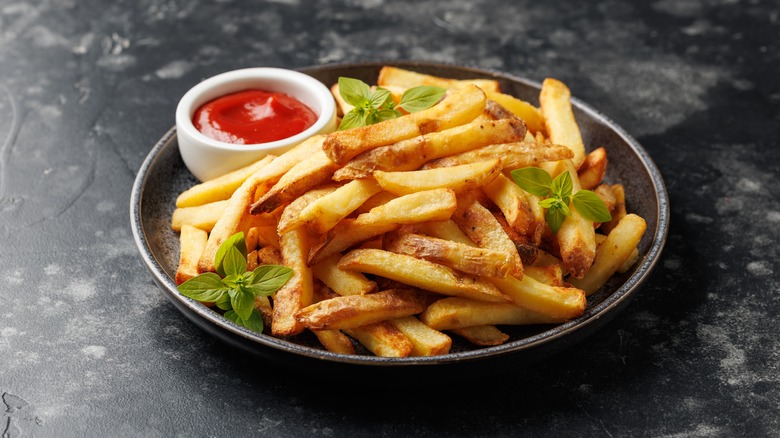
Luong warns that slightly older potatoes only help when they've been stored cool and dry but not cold. When potatoes are kept in low temperatures, like in a refrigerator, some starches get converted into sugars. Increased sugar content means the exterior of the fries will brown quickly while the insides remain incompletely cooked. So keep those tubers stored in a cool (not cold), dry place, like the pantry. If your sunny kitchen doesn't have a good spot, consider investing in special storage containers. For example, you can pick up washable drawstring potato and onion storage sacks on Amazon for around $2.50 each.
Adding to the list of handy hacks, Luong also discusses how soaking the cut fries in cold water for at least 30 minutes or overnight in the fridge before frying them is a helpful tip. Soaking removes surface starches and sugars like glucose and fructose, which, while beneficial for developing a desired golden-brown color and adding depth of flavor through the Maillard reaction, can, when present in excess, make fries brown too quickly on the outside before the inside is fully cooked, leading to a slightly bitter taste. With these science-backed tips up your sleeves, it's time to get creative for the flavor. There's a simple salt trick that makes your fries taste like fast food if that's your thing. Or you can step outside the box with a spicy, Korean-inspired fry seasoning trick by sprinkling gochugaru (Korean red pepper flakes) on your fries. Whatever flavor you choose, you end up with super-crispy fries cooked to perfection.