

If Your Kitchen Has This Type Of Flooring Never Use A Swiffer Sweeper To Clean It
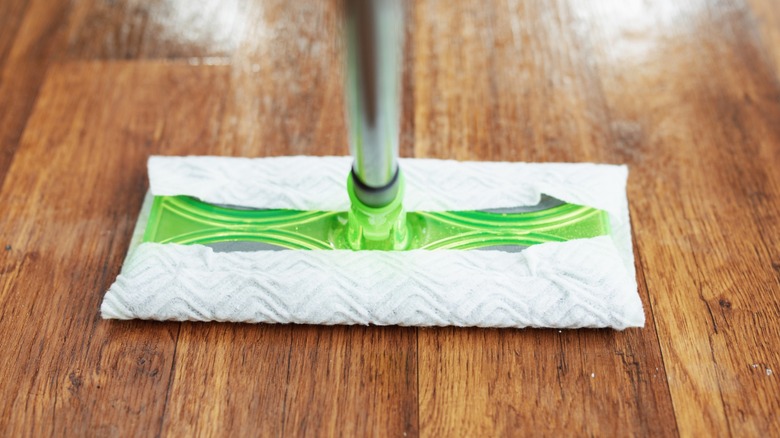
The Swiffer Sweeper became a household staple in 2001, and it remains prevalent today. And of course it does. The combination sweeper/mop can use both dry and wet pads, making it an easy way to keep kitchens clean by both clearing floors of debris and sanitizing. But don't jump on the bandwagon without making sure that the Swiffer Sweeper is compatible with your type of flooring. As per the product's own packaging, the Swiffer Sweeper wet pads are meant for finished floors. Any porous material is already known to be the worst kind of kitchen flooring for multiple reasons, but if your kitchen floor is unfinished wood, non-sealed tile, or other unprotected surface, using a Swiffer could cause more damage than sparkle.
Even so, just because you don't see anything on the Swiffer packaging that explicitly excludes your type of kitchen flooring does not necessarily mean you're in the clear. You also typically want to avoid using a Swiffer WetJet on vinyl plank flooring. Dry pads, on the other hand, can generally be used on most kitchen floors, though you'll still want to change them out often to avoid spreading dirt and debris.
Other things to consider before cleaning your floor with a Swiffer
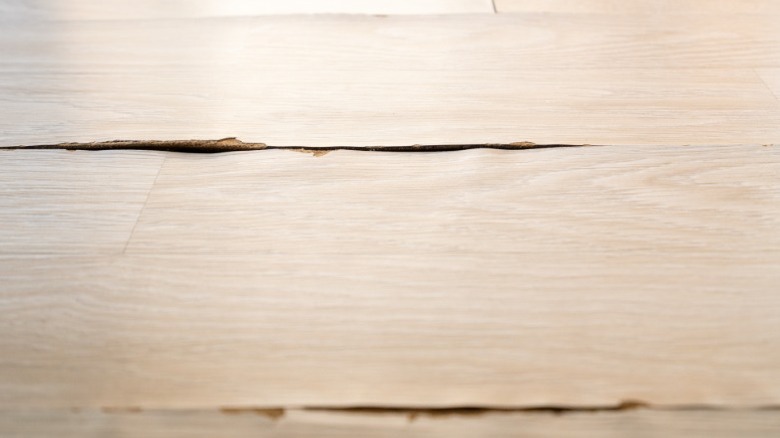
Although Swiffer Sweepers are meant for all finished floors, this isn't necessarily all-inclusive. Look closer, and the fine print makes it clear that the product (the wet pads version, anyway) should not be used on oiled or waxed wooden floors either, as these can be water-sensitive. With that in mind, though, there are other things you should be on the lookout for before deciding to run a Swiffer over your kitchen floor.
If you have vinyl or any kind of laminate, for instance, take a close look for cracks and peeling areas. Look along the edges and panel seams. Spot anything coming up or separating? Don't run a Swiffer Sweeper over it unless you want to risk getting moisture trapped in there and making things worse. And, when you do use a wet Swiffer pad, make sure no lingering moisture is left behind (this may mean having to run over your floor afterward with a dry pad or a cloth). The same rules apply for engineered hardwood too, which have become a popular alternative to traditional hardwood floors in kitchens. The cool thing about this type of flooring is that it is more moisture-resistant than its traditional predecessor, but it is not waterproof; it is still at risk of damage if it remains too wet for too long. So, with a little TLC and understanding of your floor's material, you'll know whether a wet Swiffer is right for the job or not.