

The Country That Produces The Absolute Most Pistachios
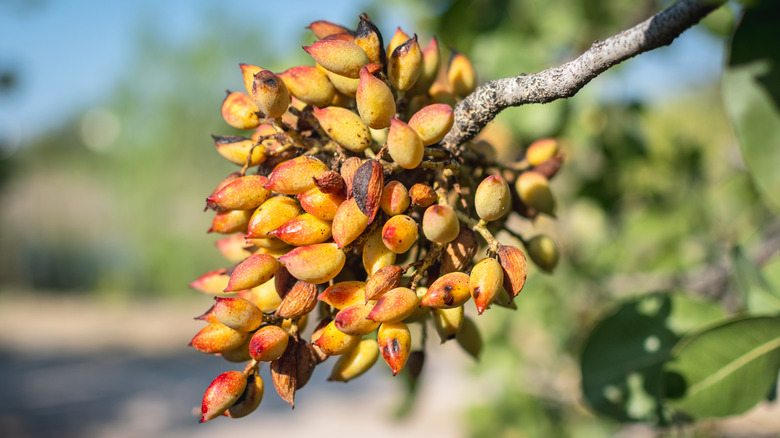
Pistachios are a popular nut to incorporate into your next dessert. They're pricey, have a unique green hue, and are featured prominently in Middle Eastern and Mediterranean cuisines. As you might expect, pistachios originated in the Middle East, and for a long time were most associated with countries like Iran and Turkey, where they were a popular crop and central ingredient in many dishes. Today, these two nations are still two of the top three producers of pistachios in the world, but neither holds the top spot. Surprisingly, that honor goes to the United States of America.
According to the World Population Review, the U.S. was responsible for about 67% of pistachios produced in the world between 2021 and 2022, followed distantly by Iran at 17% and Turkey at 11%. Within the U.S., California accounts for 99% of pistachio growth, most of which takes place in the southern half of the Central Valley. California's pistachio output now fuels a multi-billion-dollar industry, which is only increasing with the viral popularity of Dubai chocolate bars.
The history of American pistachios
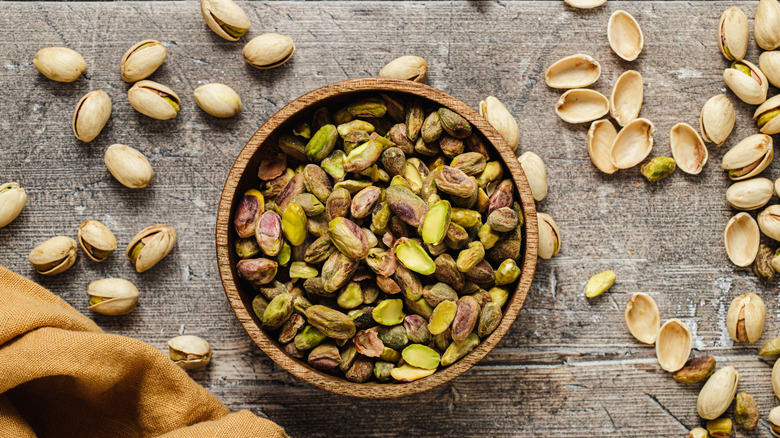
Though the United States produces the majority of the world's pistachios today, that's a relatively new development. Pistachio trees are native to Central Asia, and before the 1970s, the vast majority of pistachios in the U.S. were imported from Iran and other Middle Eastern countries (which led to an odd reason why pistachios were dyed red). A few major developments had to occur for the U.S. to become a pistachio superpower.
One was that American farmers had to find a way to actually grow pistachio trees at scale. Botanists first brought pistachio seeds to California in the 1850s, but it would be another 80 years before the nut thrived enough to yield a significant harvest. By the 1970s, large-scale commercial pistachio production was underway in California and surrounding states, but the U.S. still trailed far behind Iran in the market.
That all changed with the Iranian Revolution in 1979. In response to the Iran hostage crisis, the U.S. embargoed imports from Iran — including pistachios — leaving room for American farmers to get their foot in the pistachio market. Though the ban was lifted two years later after hostages were released, California growers successfully lobbied for the U.S. to impose a 241% tariff on pistachios from Iran, cementing their newfound dominance. Between 1976 and 2016, American commercial pistachio production went from 1.5 million pounds to over 900 million, and as of 2023, the U.S. produced 675,850 tons of pistachios.