

The Premium Dumpling Brand Hiding At Dollar Tree
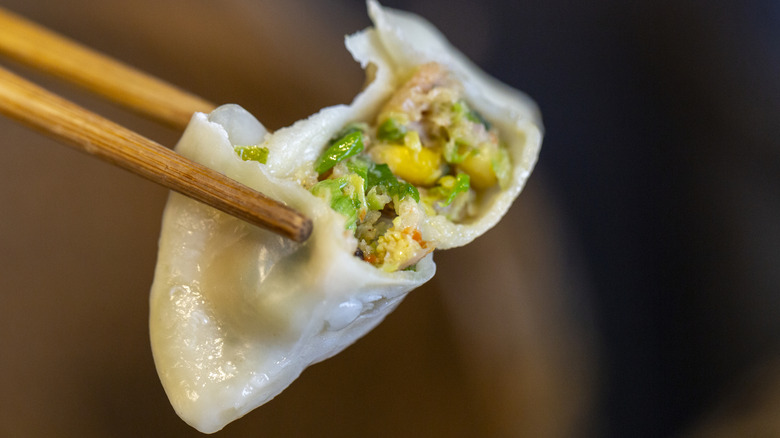
There are few things more suspicious than good food with excellent packaging at low rates. Yet there it sits, behind frosted glass at Dollar Tree: Bibigo steamed dumplings. The kind of glossy, plump little parcels that look like they belong in a Seoul food court rather than a discount store chain. These are some of the best store-bought frozen dumplings out there. Their glossy sheen and carefully folded edges hint at a level of care usually reserved for specialty markets. At around $3 for a pack, the value borders on surreal. You get soft wrappers that do not dry out under heat, fillings that taste freshly minced, and a portion size that feels like a treat, not a compromise. Microwave them for two minutes, and the kitchen fills with that unmistakable steamed-dough perfume — the one that smells faintly of sesame, garlic, and something a little daring.
These dumplings are not cheap miracles; they are the product of a global operation fine-tuned to industrial perfection. Bibigo, owned by Korean food conglomerate CJ CheilJedang, uses a steaming process that seals in flavor and moisture before freezing. Each dumpling is steamed first, then flash-frozen — a method that keeps them fully cooked yet astonishingly fresh, ready to be reheated by steaming, microwaving, or pan-frying. It is the same process that helped Bibigo become Korea's top frozen dumpling brand and a billion-dollar export hit. It is a small wonder that the same industrial know-how behind a billion-dollar Korean dumpling empire now powers a frozen aisle in a store that may be more usually associated with knockoff dish soaps and peanut butter candies.
Best way to enjoy your dumplings
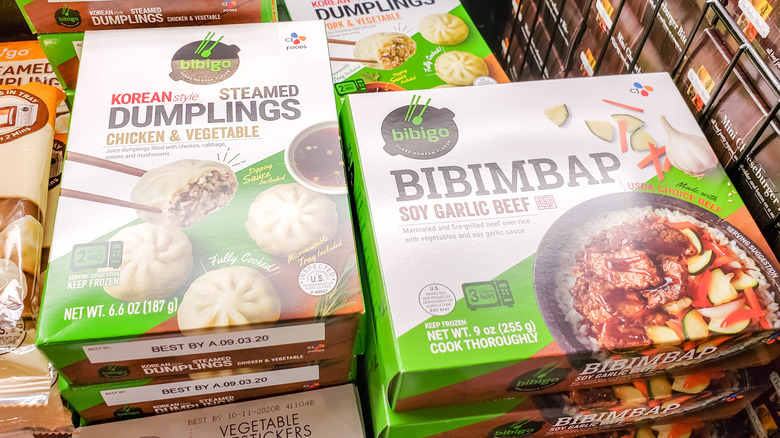
The shock of finding this fancy food at a Dollar Tree is not just about price, but about context. The store's freezer section has quietly evolved into a portal of culinary globalization, and Bibigo's appearance there is like a symbol of how Korean food, once a niche in the West, is now fully mainstream.
The dumplings carry a balance of accessibility and authenticity. The chicken and vegetable filling blends cabbage, spring onion, and glass noodles, bound together with soy and rapeseed oil. Nothing fancy, but the umami payoff is real. In a world where frozen food often signals compromise, these dumplings are proof that convenience can have craft. Each one is shaped to mimic mandu, the traditional Korean dumpling, yet calibrated for modern life: pre-steamed and engineered to deliver instant gratification without shame. The kind of thing a harried office worker or broke student can eat and still feel like they are winning.
For the best results, layer the cooked dumplings atop a simple bed of sesame-soy sautéed greens or tuck them into a porous grain bowl of barley or rice. A drizzle of chili oil or splash of vinegar introduces sharpness and cuts through the richness. For dipping, mix soy sauce with a bit of gochugaru or kimchi juice to echo their Korean roots. The wrapper's soft chew and the dense filling make this bag-to-plate transition seamless — whether you steam them in minutes, air-fry for crisp edges, or pan-fry with a splash of water to get that one-side brown.