

The Nostalgic Canned Meat That's Better Remembered Than Eaten
Some foods are invented at a specific point in time, shaped out of economic and cultural circumstances, and continue through generations as a beloved staple. The modern version of what we knows as meatloaf was popularized during the Great Depression, when meat was scarce and resources had to be stretched. Other foods, such as canned meats, however, are better left in the past. One such case is potted meat.
For many, potted meat is one of those foods that evokes a strong sense of nostalgia, reminding us of weekend visits to grandparents' houses, where cans of the preserved meat spread were set out with a butter knife and a sleeve of crackers. This super-salty, spreadable meat evokes a scrappy, resourceful sense of cuisine that is opaque in origin (no specific "meat" is advertised on the label), and low in price point. Whether used for spreading on crackers or mixing into a salad, potted meat works well for those in need of shelf-stable ingredients.
However, outside of the gauzy lens of memory, potted meat simply doesn't measure up as a meal. Its pasty texture and nonspecific "meat" flavor aren't exactly appealing. On top of this, its vague name does little to conjure a specific dish or taste. All of this to say, what is potted meat, anyway? The answer might do little to rumble your appetite.
Potted meat, past and present
The origins of potted meat are of a food preservation method that is centuries old. Essentially, it is meat that has been cooked until it has broken down into small pieces. Then, the meat is sealed in its container with a layer of fat, such as clarified butter, which keeps out potentially dangerous pollutants. This was a great way of extending the shelf life of meat during a time before fridges, freezers, or industrial canning. Of course, potted meats didn't just go away with the invention of refrigeration and canning. Rather, industrial processes allowed for an adjusted version of potted meat to take over.
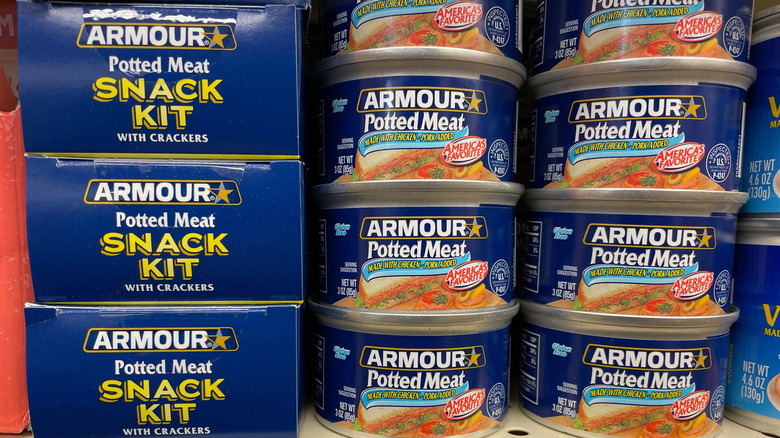
What we now know as potted meat is different from the original, fat-sealed dish. Potted meats you'll find in stores are essentially a slurry of meat, or a mixture of various meats, with preservatives, seasonings, and fillers — making them, for us, a canned food you should avoid. The taste is vaguely savory, but not exactly "meaty," at least not in any specific way.
Brands that sell potted meat include Armour, Libby's, and Goya. Now, there are those who still love their potted meat. And, hey, we're all allowed our druthers on such matters. If it's delicious to you, that's all that really matters.