

Visiting A Food Pantry For The First Time? Here's What You Should Know
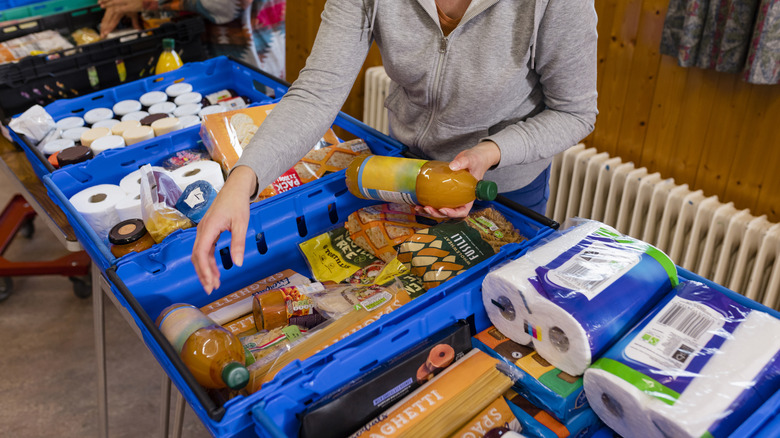
Food pantry demand in the U.S. has increased in the past few years due to inflation, the rising cost of groceries, and the termination of pandemic-era federal hunger-relief programs. According to Feeding America's 2024 annual report, approximately one in seven (47 million) people are experiencing food insecurity in the U.S. Additionally, 53 million people received food from food banks, food pantries, and meal programs in 2021, which was one-third more than before the pandemic. Visiting a food pantry for the first time might feel daunting, however, knowing what to expect can help you feel prepared to acquire safe and healthy food.
To understand how a food pantry works, it helps to know the process of how donated food ultimately gets in people's hands. Hunger relief organizations like Feeding America, the largest food-rescue organization in the U.S., obtain billions of pounds of food annually from federal programs, grocery stores, farmers, food manufacturers, and community members. This food is stored in local food banks where it is inventoried and checked for quality. From there, it gets sent to food pantries in the area that distribute food and goods to the public. Food pantries are often found in churches, schools, and other community buildings. There are also mobile food pantries that travel to rural areas.
To find a food pantry nearby, use Feeding America's Pantry Finder or other web resources like FoodFinder's website or app. You can also dial or text 211 to be connected to community resources, including help identifying a local food pantry.
What to expect at the food pantry
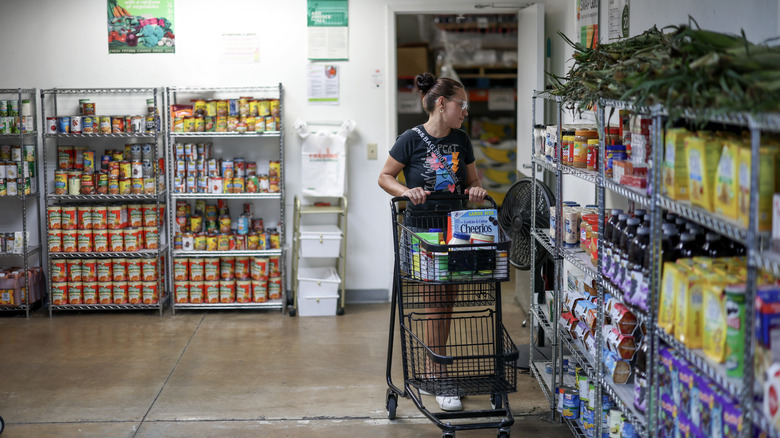
When you've found a food pantry in your area, make sure to verify its hours or make an appointment, which some pantries recommend or require. While some pantries have daily or weekly hours, others may only operate at specific times of year or by request. Some may be drive-thru only, while others operate more like a market with zero-cost items. Many pantries switched from a market/store layout to a drive-thru system during the pandemic, and may still be using this system.
Once at the pantry, you might be asked to fill out a form to help identify your family's needs. In general, anyone experiencing food insecurity can receive food from a food pantry. However, some pantries, particularly those receiving federal aid, may have income limits for individuals and families receiving food. Many food pantries do not require proof of income and instead rely on self-declaration of food need. However, some may require proof of address to verify that you live in the area. Don't forget that regardless of any social stigma attached to food pantries, employees and volunteers working there are eager to help and provide a judgement-free zone.
Some pantries allow you to choose your own items from the shelves, while others have kits prepared in boxes to take home. In addition to non-perishable items, many food pantries offer meat, dairy, fruits, and veggies, as well as non-food commodities like toiletries, diapers, cleaning supplies, pet food, and back to school supplies.