

The One Ingredient That Always Makes My Buttered Noodles So Much Better
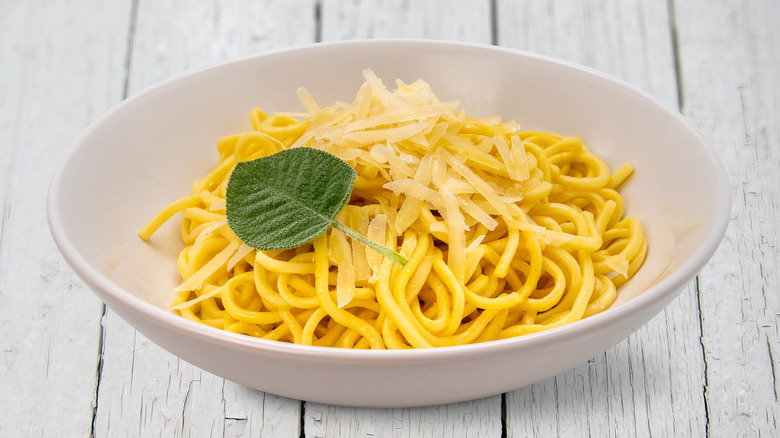
A plate of buttered noodles has to be one of the most comforting things out there. It requires almost no effort to throw together, and pays dividends when it comes to comfort and flavor. In its purest form, the dish requires just two ingredients: pasta and butter. Of course, the better those two ingredients are, the better your meal is going to be. For me, though, there's an easy addition that can take this most simple of pastas to the next level — to make it, for lack of a better way to put it, "restaurant quality." The ingredient in question? Stock. Whether you make it yourself, and regardless of what kind of stock you choose to use, using a good quality stock as the base of your butter sauce is a great way to infuse your sauce with a considerable depth of flavor.
To me, almost every pasta dish is (in some way) a variation on buttered noodles. Their complexity varies, as does the prominence of the butter, but you'd be hard pressed to find a pasta dish that doesn't rely at least partially on the emulsion of fat to bring everything together in the final stages. I almost always finish my pasta sauces with a generous amount of cold butter (along with a splash of pasta water, of course) as the end is actually the best time to add butter to your pasta sauce. This feels more French in spirit than Italian. However, in the north of Italy, it's a common technique in certain pastas, which are finished with butter using a technique called "mantecatura."
How to make butter sauce with stock
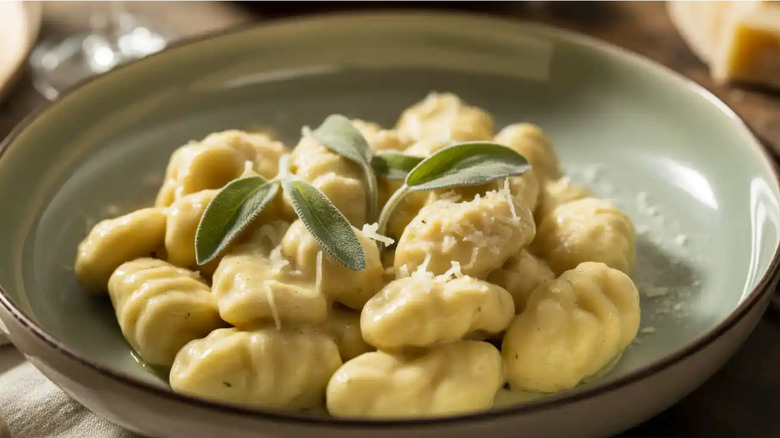
Incorporating stock into your butter sauce relies on a little bit of technique. The beurre monté (which literally translates to "mounted butter") is a wonderful little sauce in equal parts rich, salty, subtly nutty, and silky smooth. From saucing delicate poached fish to providing an elegant accompaniment to roast chicken or even steak, it's an endlessly versatile base. In essence, the beurre monté is a stable emulsion of butter and liquid, which resists splitting even at temperatures that would cause butter alone to separate. While traditionally the beurre monté is made with butter and water, lending it a more neutral, distinctly buttery flavor, replacing the liquid with stock lends a distinct richness and more satisfying mouthfeel.
Making it is simple — start with a ratio of three parts butter to eight parts liquid (or, if you haven't the patience to measure that out, an eyeballed ratio of one to three will also do the job). Heat the liquid gently, bringing it up to temperature without boiling it, before slowly adding in cold cubes of butter, whisking constantly to ensure a stable emulsion. The whisking is crucial here — while you can achieve the same effect by swirling the pan (or indeed by tossing the sauce with your pasta) the added agitation that the whisking provides will help break down the fat molecules in the butter, which will bind to the liquid in the stock, creating a tight, cohesive sauce that will stand up to heat. Then, just toss it through your pasta as you would any other sauce to coat it nicely and voila! The best buttered noodles of your life.
How to use different stock flavors to upgrade your buttered noodles
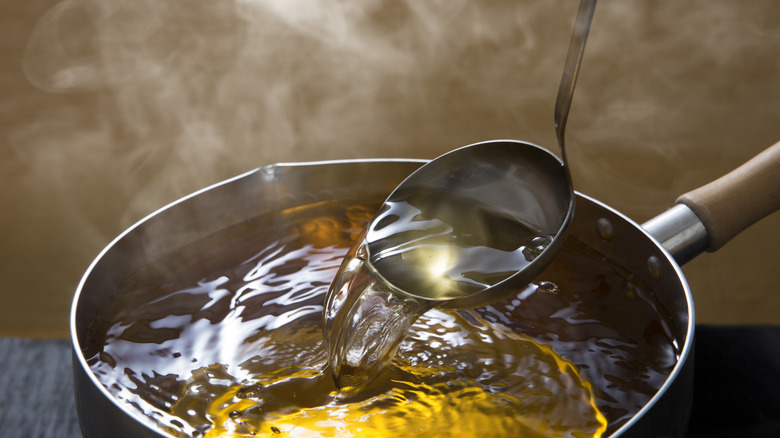
Of course, the type of stock you use is going to have a big impact on the flavor you get out of your final plate of buttered noodles. Chicken stock should really be your go-to here — it's mine, at least, and it's delicious, pairing really nicely with a squeeze of lemon, some freshly cracked black pepper, and a generous portion of grated Parmesan. It's salty and helps boost the flavor of the butter without overpowering it. The butter should still be the star, after all.
Beef or veal stock also works great if you want something even richer, with an intense meatiness that's deeply satisfying. Homemade stock is, obviously, the best way to go if you want deep, complex flavors, so next time you make a batch of chicken stock or demi-glace, be sure to save a few ladles for your dinner. Having said that — the ready made stuff will still work a treat. I make this dish with shop-bought stock at least once a week, and it's the perfect post-service dinner after a long day in the kitchen.
For a more interesting spin on this dish, why not replace the liquid here with fish stock — fish pasta is delicious, and this is, in a way, the purest expression of that idea. I tend to use dashi, the umami-packed Japanese powder that elevates every dish. It has a lovely, subtly sweet flavor to it.