

The Crispy Chicken Thigh Cooking Method That Is Easier Than Pan-Frying
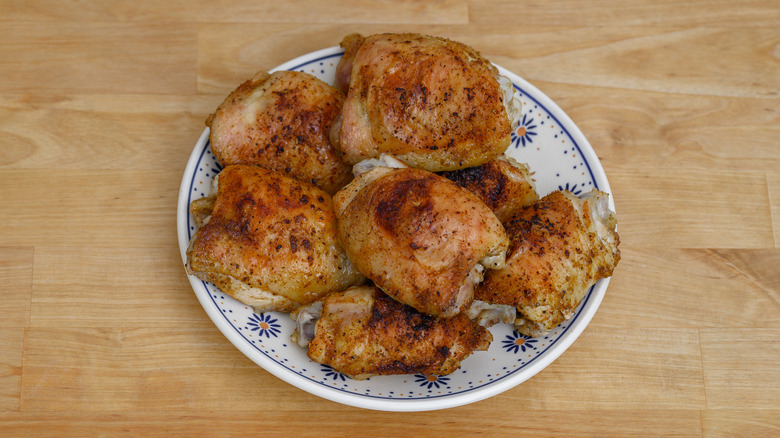
Every home chef has chased the dream of making crispy chicken thighs without having to engage in the splatter war that comes with using frying pans or skillets, or the constant fear that the protein might stick or burn. To uncover a better way, Chowhound spoke exclusively with Kent Rollins — the star of the Outdoor Channel series "Cast Iron Cowboy" and a best-selling author. According to Rollins, the oven can outperform even the best cooking pans, provided one rule is followed: the chicken must be dry.
Moisture, he says, is the enemy of crispiness. When moist skin meets heat, the water turns to steam, and the steam ruins texture. "A sprinkle of cornstarch after they are seasoned sure helps, but make sure you let them set on a wire rack about three minutes before cooking," Rollins says. This short rest lets the skin dry out slightly, giving the fat underneath time to render. The result is that audible crackle every cook secretly measures success by, and science agrees — the Maillard reaction, that golden-brown alchemy of amino acids and sugars, happens best in low-moisture environments.
The real appeal, though, is ease. No sizzling oil, no burned bits. Just chicken on a wire rack, baking at 425 degrees Fahrenheit until the skin shatters at the touch of a fork. It is the kind of cowboy logic that makes sense: a little patience, a little airflow, and a lot of reward.
Why oven heat wins every time
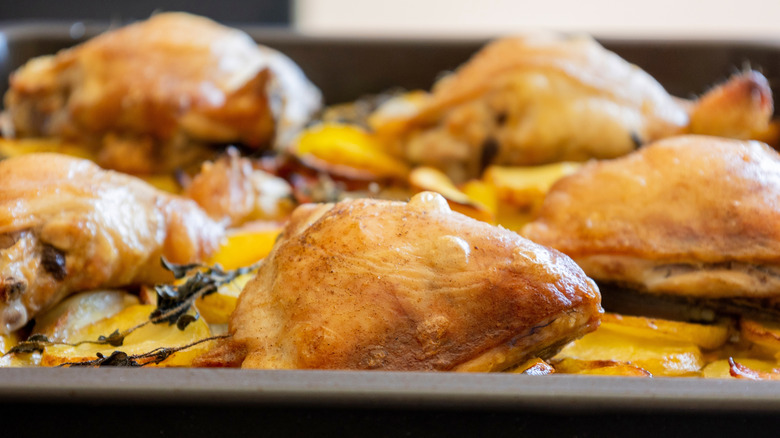
Oven technique is all about patience and physics. Setting seasoned thighs on a rack before baking allows hot air to circulate underneath, ensuring the underside crisps instead of steaming in its own fat. Keep the oven hot and the setup simple: a coat of any neutral oil if you like, plenty of salt and pepper, and zero fuss. "Some folks like to give them a light coat of olive oil before seasoning," Kent Rollins adds, "but make sure you pat them dry with a paper towel."
That dryness is more than aesthetic. The skin acts as its own cooking vessel, sealing in fat and flavor as it crisps. Any lingering moisture sabotages that process. High heat melts the fat layer beneath, which then bastes the meat from the inside while creating that satisfying crunch outside. The key mistake most home cooks make, Rollins warns, is rushing. "Not letting the chicken set after seasoning can make the skin soggy before the oven even does its job," he says.
Once baked, the thighs need a short rest to let juices settle back into the meat. The result is skin so crisp it sounds like applause when sliced. Pan-frying may have theater, but oven-baking has confidence — a slow, steady heat that rewards the patient cook. It is kitchen cowboy wisdom wrapped in golden skin, proof that sometimes the simplest route leads straight to perfection.