

Burnt Rice Isn't A Lost Cause. Here's How To Salvage The Side Dish Using Another Common Carb
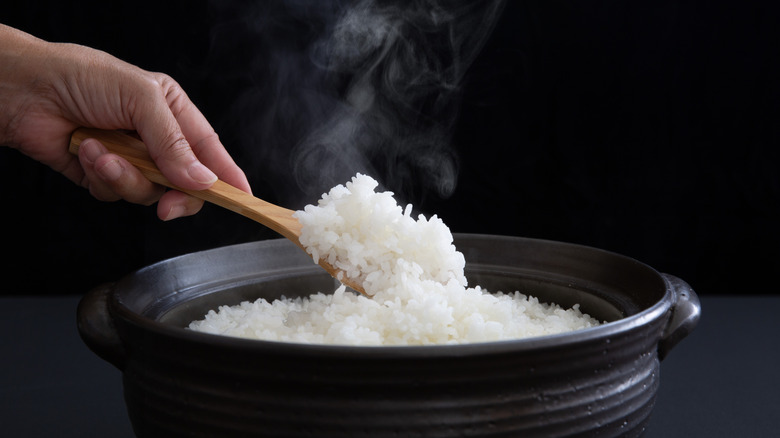
Home cooks know that kitchen mishaps happen, and one of the most common is burning the rice. Maybe you added too little water to your rice cooker or Instant Pot, turned up the heat too high, or forgot about the pot on the stove, only to be met with that distinct burnt smell. It's easy to make mistakes when cooking rice, but luckily there's a simple trick to salvage the properly cooked grains from the burnt layer underneath so the bitter, smoky flavor doesn't linger.
This is where a slice of bread comes in handy. Remove the pot of rice from the heat, place a slice of bread on top, cover it, and let it rest for about 15 minutes. Thanks to its porous, sponge-like texture, the bread will absorb the burnt smell. We suggest using a basic sandwich slice or roll instead of an expensive, artisanal loaf because at this point, you'll discard the soggy bread and carefully separate the unburned rice from the scorched layer on the bottom. The salvaged rice should be mostly free of any lingering burnt flavor and you can serve it as intended.
Can you eat burnt rice?
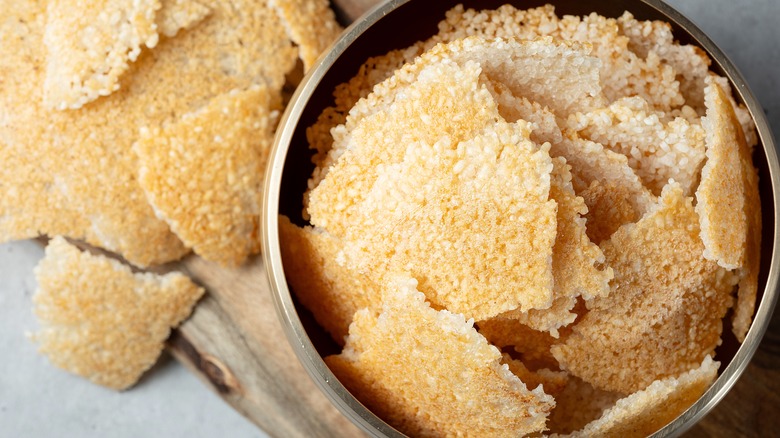
Most of the time, you want a bowl of fluffy white rice, but some dishes, like paella, actually taste better with a bit of char. Still, there's ongoing debate about the safety of eating burnt foods because of concerns over potential carcinogenic compounds like acrylamide, which can form in burnt rice. Research in humans, however, has found no strong evidence that typical dietary levels of acrylamide significantly increase cancer risk. As long as it's not completely blackened, feel free to eat the crunchy, overcooked bits of rice at the bottom of the pot. In fact, scorched rice is intentionally prepared and highly valued in some cuisines.
In Korean kitchens, for example, the crispy rice at the bottom of the pot, called nurungji, is considered a delicacy. It's so popular that you can even buy snack packets filled with the crispy rice bits at Korean grocery stores. Another traditional way to enjoy nurungji is to soak the layer in hot water and eat it as a quick, affordable meal or use it to make rice tea.