

Why Aluminum Foil Has 2 Different Sides, And When To Use Each
We may receive a commission on purchases made from links.
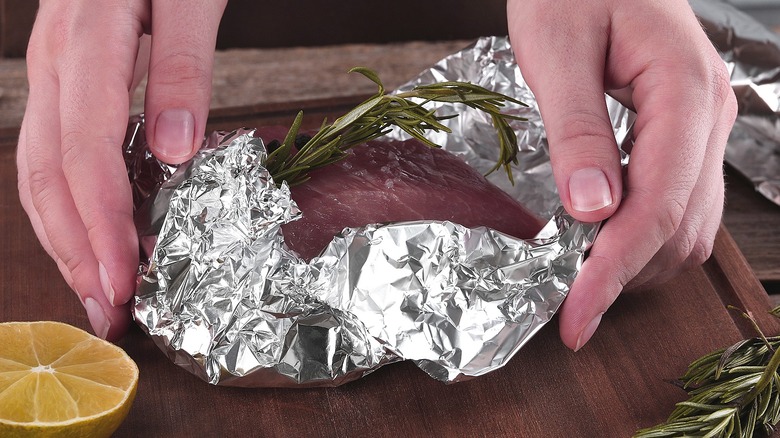
Aluminum foil is a staple in possibly every home kitchen in America. Foil hacks for hassle-free cooking abound, and so long as you don't make foil mistakes that compromise kitchen safety, it's a handy product to have on hand. But many home cooks fail to realize that foil contains multitudes. While it seems like a pretty straightforward product, you may notice that one side of the foil is shiny, while the other side is not so much. The reason for that is actually a straightforward but happy accident.
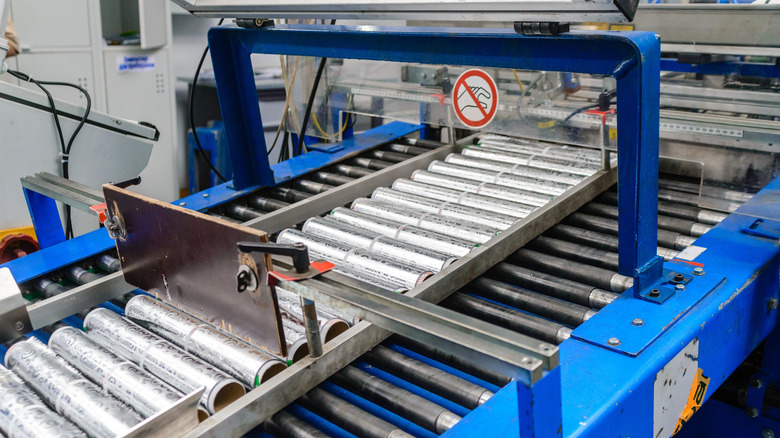
It all starts with how the foil is made in the first place. During the final stages of foil production, the sheets are rolled out super-thin. One of the steel rollers is polished, so the side of the foil that comes into contact with the polished roller emerges with a notable sheen, while the other side comes out dull.
When cooking with standard or heavy-duty foil, it doesn't matter which side faces up. But with nonstick versions, like Reynolds Wrap nonstick aluminum foil, the manufacturer recommends using it dull side up. This has nothing to do with the amount of surface sheen. The dull side is coated with a food-safe, nonstick coating, meaning you don't need added oils. If you're looking to avoid added oils or cooking sprays, it might be worth the additional cost for nonstick foil. Otherwise, the conventional aluminum foil with a spritz of cooking spray would do just fine. But the real benefits of aluminum foil have nothing to do with shiny versus dull sides.
The real benefits of aluminum foil
Before aluminum foil came tin foil, and while some may use the terms interchangeably, aluminum and tin foil have a lot of differences. Tin foil dates to the late 18th and early 19th centuries. Food preservation was only one of its many uses. But it also has a lot of drawbacks.
The melting point of tin foil is only 448 degrees Fahrenheit — hardly ideal for high-heat roasting or barbecue. It also sticks so badly that it was often packaged with cotton sheets to keep the sheets separate and tends to impart a rather metallic flavor to the food it cooks or stores. It's also thicker and less malleable than aluminum, making it less than a joy to work with.
However, the early 20th century welcomed aluminum foil thanks to the ingenuity of Swiss scientist Dr. Robert Victor Neher and his colleagues. Unlike tin, aluminum foil has a melting point of over 1,200 degrees Fahrenheit, doesn't impart a tinny taste to food, and is easy to shape and reshape, making it a preferred option for culinary purposes. But aluminum in its pure form isn't strong enough. Hence, aluminum foil is an alloy of 98.5% aluminum, the rest being iron and silicon, which help strengthen it and make it more puncture-resistant. The durability of the added compounds also allows it to be thinner. All of this means that whether you use the shiny side or dull side, aluminum foil beats tin foil any day.