

Ditch The Food Processor: Tomato Sauce Is Made Better With This Common Kitchen Tool
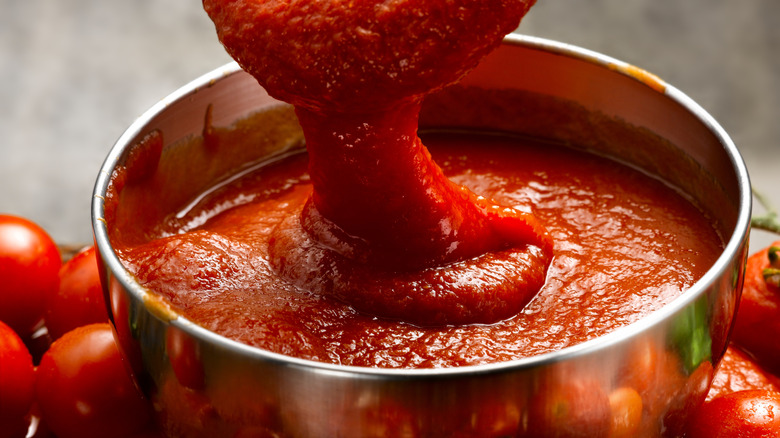
Tomatoes. They are slippery, seedy, and stubborn little orbs that, for many, define comfort food. While some home cooks throw them into a blender or food processor and hit "go," the truth is, the holy grail of that all-purpose tomato sauce lurks in an unlikely ally: the box grater. Yes, the same blocky instrument that normally scrapes curls of Parmesan or raw carrots onto your salad can transform tomatoes into a silky, rustic sauce better than any appliance.
Grating tomatoes by hand releases their natural juices while easily keeping the skins separate. The process itself is oddly satisfying: Fingers sticky with pulp, seeds spilling onto the counter, and a faint squelch as the fruit yields. There is something grounding about working this way. It forces a connection with the tomatoes, a tactile negotiation of flavor, instead of watching a machine reduce them to mush. Many professional chefs swear by this method for its ability to produce a sauce that tastes vibrant and fresh. For best results, slice the tomato horizontally rather than vertically before grating. This exposes more of the seed chambers and pulp, giving you a wider, juicier surface to work with while keeping the stem end out of the way
The key here is control. Unlike with a food processor, you can determine the sauce's texture in a more nuanced way. Want it chunkier? Grate lightly and leave the skins in. Prefer it smooth? After grating, press the pulp through a fine-mesh sieve or with the back of a spoon to remove any remaining fibrous bits and seeds. Bonus: No electricity, no whirring, and almost no cleanup beyond the grater itself. For anyone chasing the illusion of culinary effortlessness while actually enjoying a hands-on process, this is the trick. It's a humble, old school approach with results that feel far fancier than the effort demands.
Skip the motor for once and take your tomato prep manual
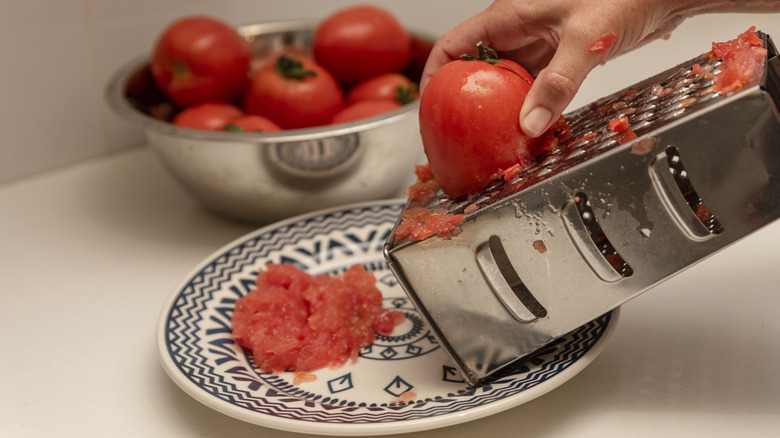
Using a box grater also teaches patience and precision, two forgotten arts of home cooking. The tomatoes break down easily under friction, their flavors concentrating as water escapes. Unlike a blender, which can introduce excess air and turn homemade tomato sauce pale or pink due to aeration, hand-grating keeps the color rich and red, preserving the tomato's natural sweetness and body. Try adding garlic, onion, or fresh herbs directly to the pot as the grated tomatoes simmer.
There are pitfalls, naturally. Overzealous grating can make a watery mess, seeds can get stuck under fingernails, and the occasional tomato explosion is all but guaranteed. However, these minor inconveniences pale in comparison to the flavor payoff. This technique is also central to Spanish "pan con tomate" or Catalan "pa amb tomàquet," where raw grated tomato is rubbed onto toasted bread and drizzled with olive oil for a bright, rustic bite. One can riff endlessly here: Grate heirloom tomatoes for a rustic summer sauce, or roast the grated pulp with olive oil before simmering for depth and smoky notes. Even better, this method works for quick weekday dinners or gourmet weekend feasts alike, scaling effortlessly from two tomatoes to a dozen.
The takeaway is simple: Skip the food processor and embrace your box grater. Each pot of sauce becomes a small triumph and proves that sometimes, manual methods surpass their motorized alternatives. Ultimately, in the world of tomato sauce, patience, friction, and a little pulp under your nails are worth more than any electrical appliance could ever promise.