

Take Chopped Salads Up A Notch By Mastering One Pro Tip
We may receive a commission on purchases made from links.
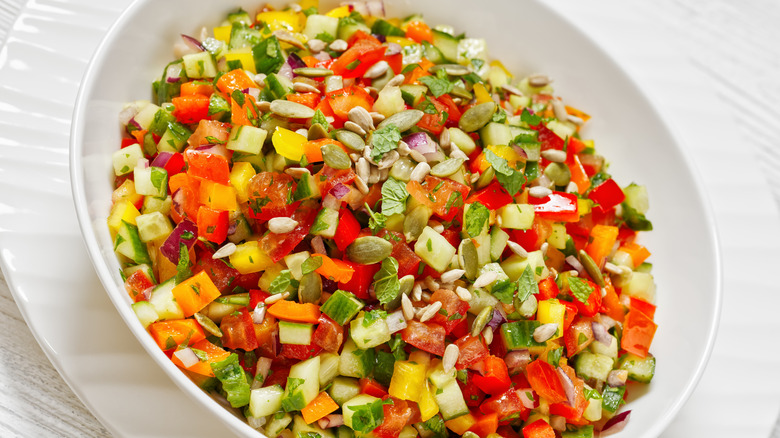
If you're trying to get more veggies in your diet but haven't yet mastered the art of making salads, you may be familiar with the frustration of eating a homemade salad full of awkwardly large greens and an insufficient balance of toppings. You'd think it would be simple: Just toss some ingredients together in a bowl. But if you want a truly enjoyable salad, you may want to put a little more thought into it. One way to improve your salad experience (besides using a using a chilled bowl) is a chopped salad. Clem Haxby, a nutritionist, chef, and culinary director of "The Salad Project," shared some helpful, exclusive advice with Chowhound regarding how to make a top-tier chopped salad.
First, she says, "Texture is everything! A great salad should have contrast — crisp, creamy, chewy, juicy. Without it, even the best ingredients can taste flat." A good ratio to keep in mind (for any salad), Haxby says, is 3:2:1 — three parts crunchy, two parts soft, and one part chewy. Crunchy elements, she explains, include cucumbers and nuts; soft ingredients would be something like avocados and cheese; and chewy items include beans and grains. When it comes to a chopped salad, texture is even more important. "Because everything's the same size, you want bold, distinct textures that still stand out when mixed — crisp veg, creamy dressing, something with bite like toasted seeds or chopped nuts," says Haxby. Our favorite chopped mango chicken avocado salad is a good example of textural balance.
Perfecting your chopped salad
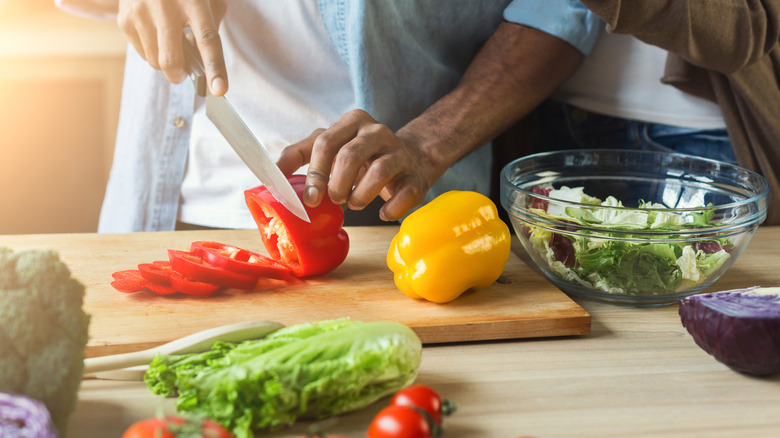
Beyond contrasting textures, another make-or-break element of chopped salads comes down to the chopping itself — no surprise there! "Chop everything roughly the same size so each bite feels balanced — that's the beauty of a chopped salad," says Clem Haxby. "Remember, if you can't fit a bit of everything on one spoon, you need to keep chopping!"
But size is just one consideration. Timing is another. "Keep your greens cold before cutting to help them stay perky," Haxby advises. "And chop right before serving," she continues. "It keeps everything fresh and crunchy." (If your greens or veggies do look a little limp, you can always rejuvenate them in an ice bath.)
Finally, not every salad will benefit from a good chop. "Always chop hearty salads — think kale, cabbage, or grain-based bowls — they benefit from smaller, easier-to-eat pieces," says Haxby. On the other hand, salads that make heavy use of more delicate greens like butter lettuce or fresh herbs should be left alone, as the chopping can negatively impact their texture and cause them to "look a bit tired," she explains, adding, "I love using whole herbs and stems to add texture, interest, and great flavor."