

What Geoffrey Zakarian Thinks About The Dark Brown Buildup On Your Baking Sheets
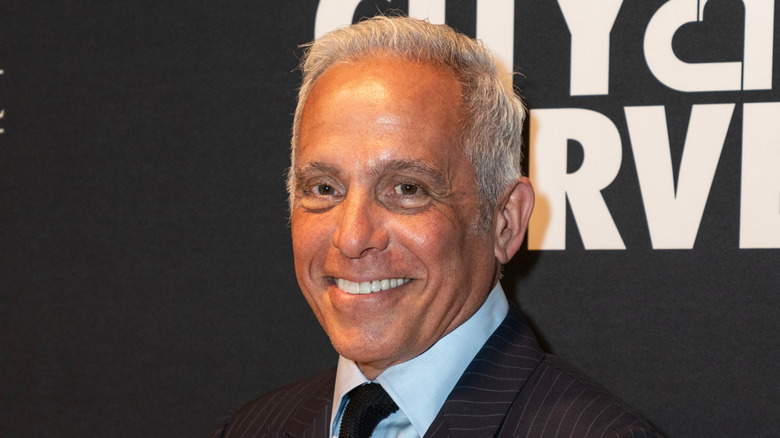
A baking sheet is one of those essential baking tools that everyone should own, but not everyone knows how to preserve one like a pro. Experts are divided on the stubborn buildup,also known as a patina, that accumulates on used pans, but Geoffrey Zakarian has a pretty clear opinion on it. We spoke exclusively with the renowned Food Network chef during the New York City Wine & Food Fest to get his thoughts on the best way to maintain baking tray sheets, and he says chefs should rarely allow this layer to appear on their cooking tools. "A patina is usually not a good thing when you're cooking," he said, referring to this film as "grease."
While it is sometimes mistaken for rust or tarnish, this discolored buildup forms after cooking with fat or oil. The solidified mass on your tray is the result of polymerization, which is when oil heats up, the molecules group together, and eventually create a non-stick surface. Some see this darkened layer as a sign of a well-seasoned pan, and one they don't plan to replace anytime soon, but the acclaimed restaurant owner and restaurateur isn't a fan. Even though fat or oil buildup on your baking sheets is perfectly safe and normal, for Zakarian, it shows a lack of cleanliness.
What to know about avoiding a patina (and when to make an exception)
Geoffrey Zakarian is well-known for his culinary opinions, and his standards are pretty high. (He notably hadn't set foot in a McDonald's until 2015.) It should come as no surprise that the chef is against the presence of a patina. Still, this is a possible exception to his rule. If you're using cookware from Le Creuset, which is made from cast iron, a patina can make it easier to cook, as the layer protects the fragile material underneath from rusting and leaking into food. Otherwise, there isn't much leeway for a patina.
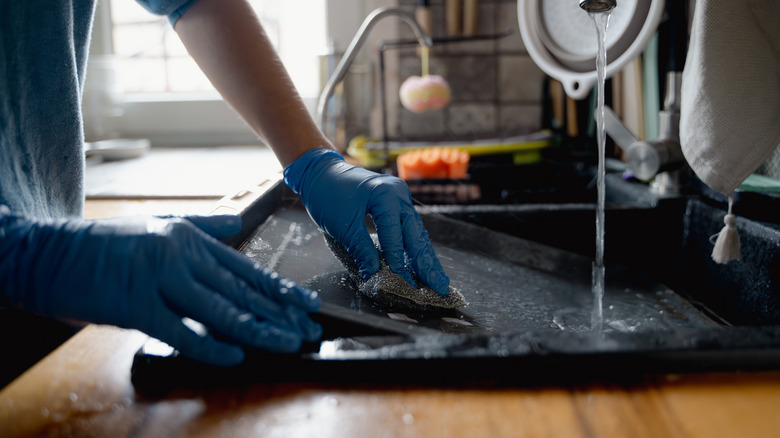
If your baking tray is in need of a deep clean, your best bet is to scrub the pan with warm water and dish soap after preparing food. For a deeper clean, you may want to make use of some baking soda and vinegar, and leave the mixture to soak for at least 30 minutes to an hour. Once the tray is done soaking, you can give it a good rub and rinse with soap and water to keep the smell of vinegar at bay. Remember to dry the tray thoroughly with a towel so that rust is left out of the equation. Then, the next time you cook, make use of parchment paper or aluminum foil to create a barrier between your pan and the food to keep a patina from forming.