

The Best Pizza Dough Flour Isn't Bread Or All Purpose
Pizza is a simple thing, really. Though it has many regional variations around the world, from New York style, to the charred, crispy Connecticut crust, to Tokyo's unexpectedly brilliant indie pizza scene, even the most complex pizzas are defined by their dough. And a huge part of what makes a dough good (or not good, as the case may be) is the flour you use to make it. When it comes to making pizza at home, you might be tempted to use your standard issue AP flour — or even a strong bread flour. And while the latter is great if you want to produce a structurally sound, flavorful crust that can give your pizza some nice body, for the best (and most authentic) results, there's one option that beats the rest. To find out more about the iconic Italian 00 flour, we spoke to chef Agostino Cangiano, of Slicehaus NYC.
"I start with a strong Italian tipo 00 flour as the foundation of my dough," he exclusively told us, "but I also like to layer in character." The best way to do that, he told us, is by creating a bespoke blend of different flours. "I add a small percentage of whole grain flour, which brings aroma, depth of flavor, and a slightly darker color, and I mix in some semolina rimacinata for texture and that subtle crunch that makes every bite more interesting." That semolina will help to provide a bit of textural contrast, helping to really level up your pizza. "These blends allow the dough to express itself differently, lighter and crisp for slices, or richer and more structured for Sicilian pies. For me, flour isn't just a base ingredient. It's the creative tool that shapes the identity of each pizza," he said.
Why using 00 flour can change your pizza
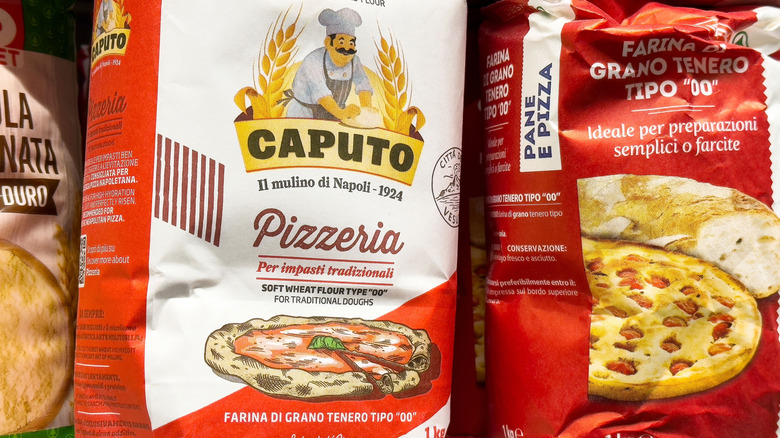
You might think that changing the type of flour you use in your pizza dough would be a relatively minor adjustment, but it can have a big impact on both the taste and texture of your final pie. Italian 00 flour is prized by chefs for both pizza and pasta making — and there are some crucial reasons why. Chief among them is that it's both easier to work with, and results in a much finer, crispier crust. "00 flour is finely milled and lower in protein than bread flour, which makes the dough more extensible and gives the crust a tender, lighter bite," Agostino Cangiano told us. "Bread flour, with its higher protein, produces more chew and structure, while all-purpose sits somewhere in between," he said. So, you absolutely can use other types of flour to make pizza — it just depends on what kind of result you're looking for. "00 creates a smoother texture and a balanced crispness, but less of the dense chew you get from bread flour," he added.
Of course, this ultra fine, airy crust isn't the goal for every type of pizza — classic New York or New Haven style pizza, for example, requires a crust that's a little denser, with more of a chew, that can hold up under its own weight. But for the OG offering — traditional Neapolitan pizza — there's no substitute for 00. "00 flour really shines in Neapolitan-style pizza, where a soft, light, and highly extensible dough is essential," Cangiano said. "Its fine milling and lower protein content allow for quick baking at high heat with a tender, airy crust." It won't get as crispy as other flour types — those east coast pizzas, once again, need a heartier flour to really get crispy, rather than puff up and remain fluffy and tender. "In those cases, the impact of 00 is less noticeable," he said.
How to adjust your technique for the best results with 00 flour
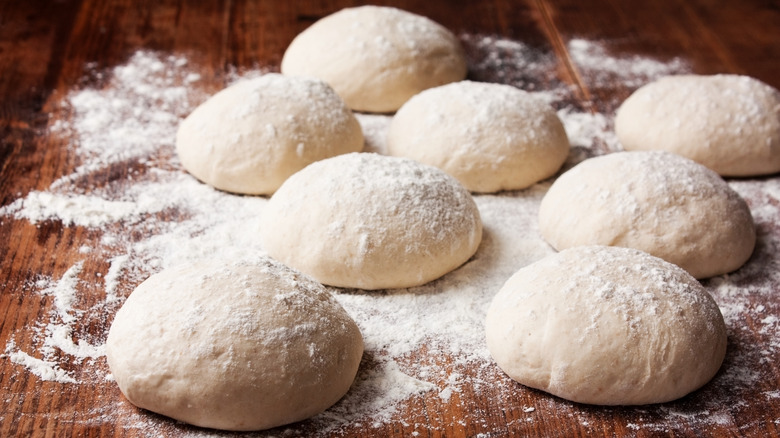
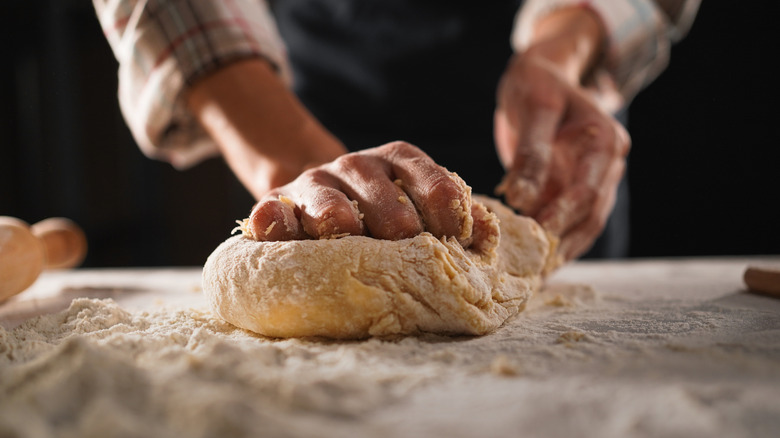
Because 00 flour is so delicate, you'll need to make a couple of adjustments to your usual pizza making technique when you're using it, if you want to get the absolute best results. The first thing to consider is how much water you're using. A huge proportion of any dough is the water, usually referred to as the hydration percentage — and as such, water is a bigger part of your pizza than you might think. "Yes, you usually need to adjust," Agostino Cangiano told us. "Because 00 flour absorbs water differently, the hydration often needs to be slightly lower than with bread flour." It's crucial that you're gentle with 00 dough, since the flour itself is so finely milled. "The dough is more delicate, so mixing and kneading should be gentler to avoid overworking it," he explained. "And since it's made for high heat baking, it performs best in a very hot oven; at lower temperatures, the crust can come out pale or soft." For the best results, use a proper wood-fired pizza oven — and if you don't have access to one (which, let's be honest, is most of us), crank your oven up as high as it will go and use a pizza stone — properly preheated of course.
If you find yourself unable to get your hands on any 00 flour, don't worry — there are plenty of excellent alternatives you can use, and still end up with a fantastic Neapolitan style pizza. "If you can't find 00 flour, bread flour is the best alternative because of its higher protein content, which gives structure and chew," Cangiano said. "All-purpose flour also works and makes the dough a bit softer and less chewy," for a truly satisfying bite. If you're using stronger flour, like bread flour, think about how you can alter the ratios of your recipe to compensate. "If you use bread flour, you may want to increase hydration slightly since it absorbs more water, and give the dough a longer rest so it relaxes and stretches more easily," he said.