

This Common Tomato Pruning Mistake Can Ruin Your Harvest
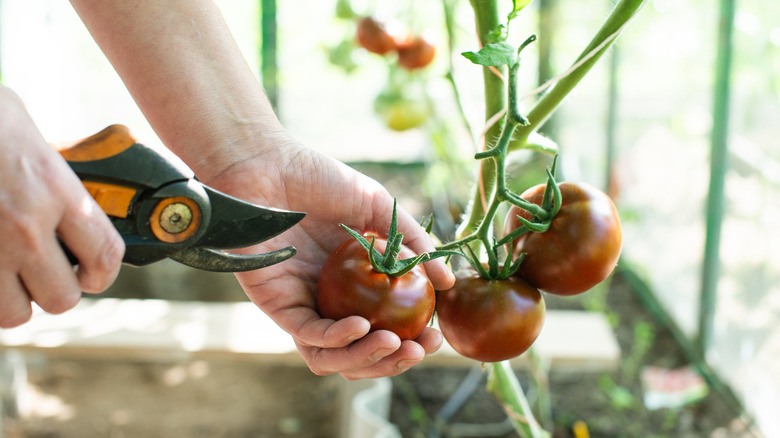
Whether diced into a fresh Greek salad, simmered into a rich lasagna ragù, or even slow-roasted with a drizzle of olive oil and a few fresh garlic cloves, tomatoes never fail to disappoint. If your tomatoes come straight from the garden, a sprinkle of baking soda is all you need to get the sweetest, juiciest home-grown tomatoes ever. However, every gardener knows that true sweetness and healthy growth come down to one basic practice, which is pruning when the time is right.
Pruning is a crucial horticultural practice that involves removing specific parts of the tomato plant to improve fruit quality and increase plant health. However, Erika Nolan, a holistic homestead consultant, educator, and the creator of The Holistic Homestead, which can also be found on Instagram and YouTube, told us in an exclusive conversation that many home-growers continue repeating the same simple mistake when pruning tomato plants in the hopes of harvesting bigger, healthier fruit. "It's risky to prune tomato plants when they're wet, because that is the ideal environment for fungal spores to spread," she said. "Imagine having an open wound and getting your hands dirty."
Trimming wet tomato plants increases the risk of spreading common fungal and bacterial diseases such as early blight, late blight, Septoria leaf spot, and bacterial speck. Instead, Nolan recommends holding off on pruning until the plants are completely dry. "Pruning only when it's not wet or projected to rain is ideal for the open wound on the plant to dry and seal," she said.
Never prune your tomatoes early in the morning
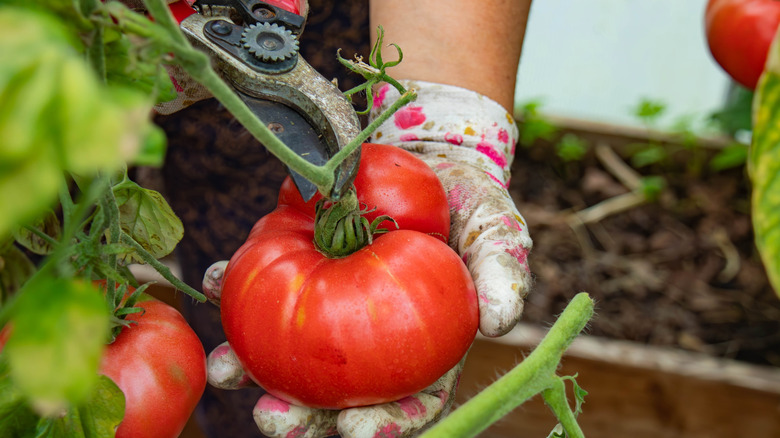
In general, tomato plants should be pruned when their height reaches 2 feet. Once that happens, you can begin trimming every few days (or as often as needed) to remove the suckers. If left unattended, these small, vigorous shoots not only compete for the plant's energy, but can also lead to smaller, less flavorful tomatoes. When asked about the best time of the day to prune tomatoes to avoid moisture, Erika Nolan elaborated that it's better to hold off in the early morning and give the plants some time to completely dry off before making any cuts. "Wait until mid-morning before pruning in order to allow transpiration dew drops from overnight to dry," she said.
Transpiration, which is the release of water vapor mainly through leaf stomata, is a vital mechanism for plant health. "Transpiration is the process of your plant essentially sweating excess moisture overnight, hence the beautiful dew on leaves in the morning," Nolan said. On how to tell if the tomato plants are too wet to prune, Nolan explained that visible water droplets on the leaves are a clear sign to leave it for later. "If you see water droplets, do not prune," she concluded.
For those new to gardening, especially first-time growers, starting with low-maintenance tomato cultivars might be the simplest approach to learning the basics. Cherry tomatoes, for instance, are the easiest tomato variety for beginners to grow. They do, however, require minimal pruning to maintain proper airflow.