

The Best Way To Keep Your Home Bar Stocked On A Budget
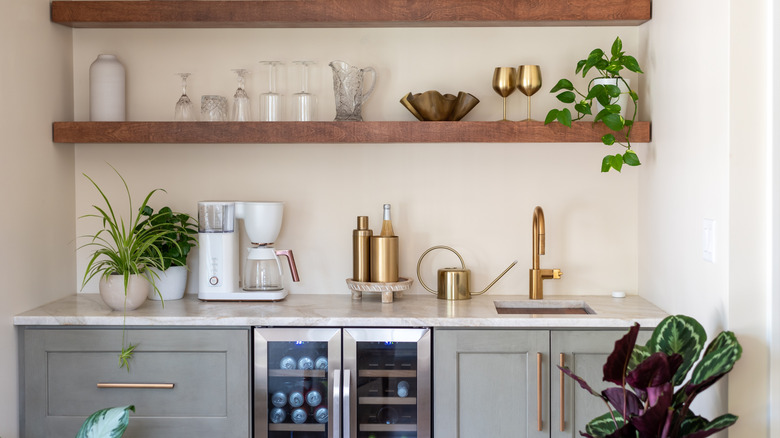
In most bars, you find rows and rows of bottles and mixers glittering behind stacks of glassware and piles of tools. When you're building your own home bar, visions of those overflowing shelves might feel intimidating. The truth is, unless you've got an unlimited budget and a formidable hosting schedule, a home bar doesn't need that many spirits or utensils. You can easily create a practical libation lineup just by choosing the right tools and keeping some essential alcohols stocked. Those essentials, says Derick Washington, assistant general manager at Miami's Level 6, are mostly up to you.
"A home bar should be stocked based on what the bar will be used for," Washington exclusively told Chowhound. Alongside your specific budget, decide whether you'll be hydrating just yourself or a whole host of friends and family, and whether you like your spirits mixed in a cocktail or served straight-up. Both personal preferences and regularity of use inform how much alcohol you need and what bottles and mixers make the initial cut. Your bar doesn't need to be everything to everyone — it's a reflection of your tastes and tendencies. For example, Washington says that "if you don't really drink Scotch, it's not a category you should concern [yourself] with on a budget."
Set a foundation with a few essential alcohols
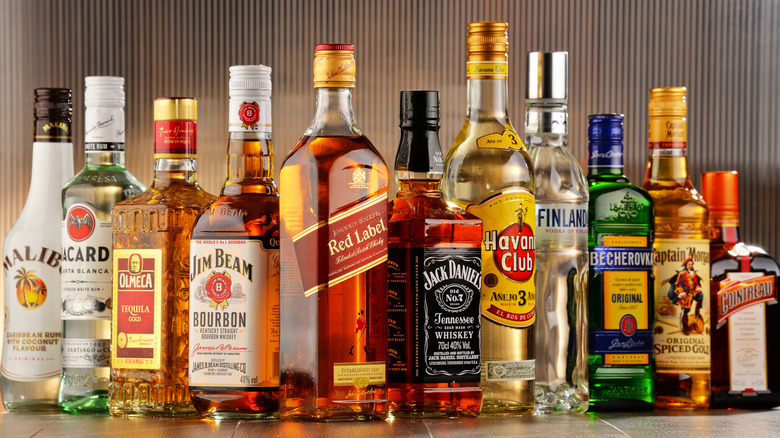
For those with a signature drink or strong cocktail inclinations, the choice of initial spirits and mixers can be simple. If you love a martini, stock vodka or gin and dry vermouth. Margarita aficionados need tequila, triple sec, and lime juice. If you don't have a foundational favorite, or you want your home bar to cater to a crowd, Derick Washington suggests five basic bottles: mid-range vodka, light rum, bourbon, gin (botanical or dry, depending on your tastes), and 100% agave blanco tequila. Then, stock up on some essential mixers, such as tonic water, club soda, Coke, and lemon-lime soda.
Using Washington's basic recipe makes building a home bar easy. Start with those core elements, then take the next steps as you're able. When you've spent some time with that initial bar lineup, Washington advises to "purchase the items that you find yourself using the most and, over time, build your other categories. Once you have a stable core base for your bar, then you can purchase your specialty bottles and 'show-off' bottles." Just avoid the bottles that will only ever collect dust; if no one is going to drink it, or if it's so expensive that you feel guilty when you do, there's no reason to let it take up space on your shelves. You can also level up your mixer selection with simple syrup, bitters, sour mix, and a variety of cocktail garnishes.
Make sure you've got the right tools for mixing
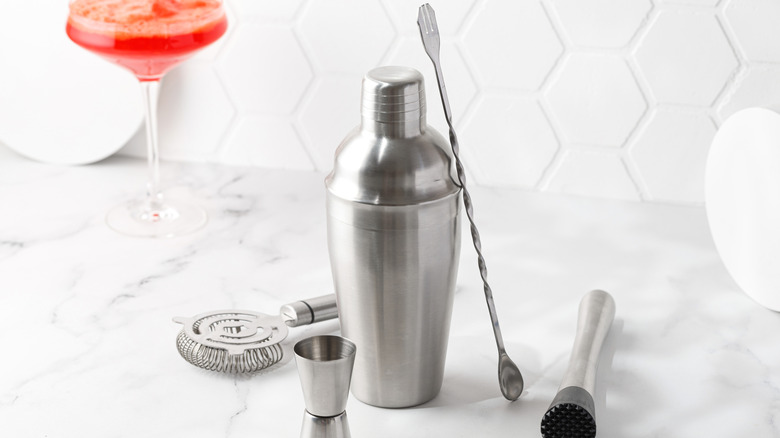
There's more to a home bar than just the bottles, though. You need a couple tools to turn straight spirits into sippable drinks, and those tools change depending on what you plan to make and how you plan to make it. At the very least, says Derick Washington, you should have a jigger (a double-sided cup used for measuring) and you should choose the right kind of cocktail shaker. Budding mixologists might also want to find a long-handled bar spoon for stirring and a Hawthorne strainer that fits into your cocktail shaker.
Then comes glassware, which can get overwhelming because there are many different types of cocktail glasses and a right way to use them — but your basic home bar doesn't need so much drinkware to start out. Washington suggests opting for versatility: "You want to make sure you have glassware that is adequate for cocktails that have multiple ingredients, such as highballs or Collins glasses. You also want to make sure you have your whiskey glasses or rocks glasses for when you just want to have a simple drink or a spirit by itself." These tools and drinkware come in a wide price range, but you don't need the highest end for your budget home bar. Washington says to turn to friends in the service industry to see whether they can get you some gear, or just rely on affordable basics from retailers such as Amazon.