

The Butter Mistake That Could Be Ruining Your Brioche
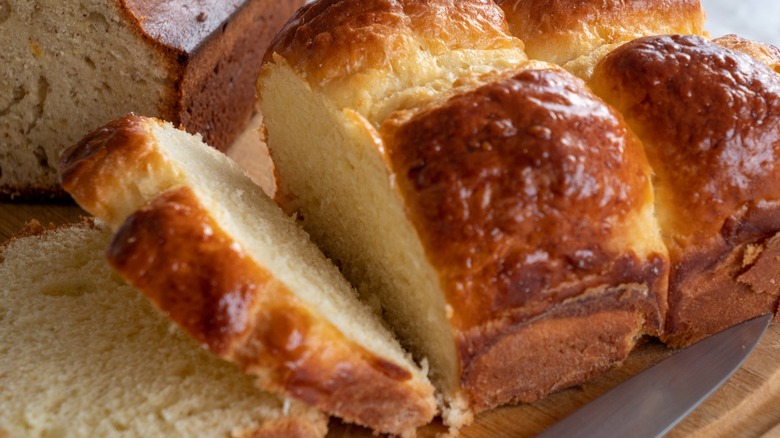
A good brioche can turn an everyday sandwich or burger into something extraordinary. This enriched bread — so called because of the addition of rich ingredients like butter and eggs — has an almost cake-like texture and an even, golden crumb. That rich, tender crumb soaks up liquids and sauces beautifully, including the custard for your favorite French toast recipe, though you shouldn't confuse it with challah, a similarly enriched bread.
It may sound fancy, but the ingredients used to make brioche are straightforward. That said, getting it right takes some practice, and one of the keys is making sure you work with the butter correctly. Chowhound spoke with Nathan Myhrvold, founder of Modernist Cuisine, a collective of people dedicated to thinking about food differently, and co-author of "Modernist Bread" and "Modernist Bread at Home," who warns that adding butter too early is the most common way to ruin your brioche.
"If you add fat too early, the dough will take longer to mix; and if you mix for too long, the dough can get too warm, which causes the emulsion in fats like butter to break," he exclusively told us. If this happens, you may end up with a greasy, stiff dough that isn't easy to work with. He also cautions that the butter should be room temperature and introduced in stages. "Brioche is a technically complex dough," says Myhrvold. "Understanding that [butter] is an emulsion — and that the fat must be soft to be incorporated properly in multiple additions (ideally three, with a minimum of two) — will contribute to a better dough."
How to work with brioche dough
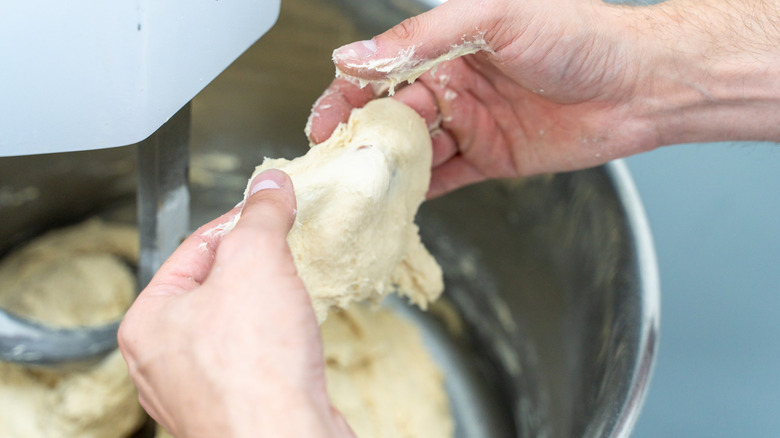
A brioche dough is wet and sticky, and that's normal; it's the result of the butter and eggs working together to create the pillowy soft and pastry-like bread that is brioche. "It's no accident that brioche and many enriched breads contain eggs — they have properties that help pull ingredients together", says Nathan Myhrvold, who explains that the lecithin in egg yolks is an emulsifier that helps keep the fat evenly dispersed throughout the dough when mixed properly. The emulsification is what keeps the fat from separating (breaking the emulsion) and causing a greasy dough.
The large amount of butter is what makes brioche so deliciously rich, but it also can ruin your brioche if you overdo it. "In excess, fat can have a debilitating effect on how bread bakes. Slicked with an excess of fat molecules, the gluten network that forms is weak. Gas escapes from the dough, and as a result, oven spring is minimal." Oven spring is the rapid rise your bread goes through in the first few minutes of baking (before the crust sets). Without it, your bread is ruined.
Myhrvold does offer one last vital piece of advice, though. "The mixing time to reach full gluten development is long, and long mixes create friction, which produces heat," he says. "Elevated heat can break the dough emulsion, causing the butterfat to separate from the bread as it bakes." The solution? Always use cold milk and eggs when making the dough. It's also helpful to chill the dough (overnight if you can) before shaping it and putting it in the oven.