

Which Parts Of A Fennel Plant Can You Eat Raw?
We may receive a commission on purchases made from links.
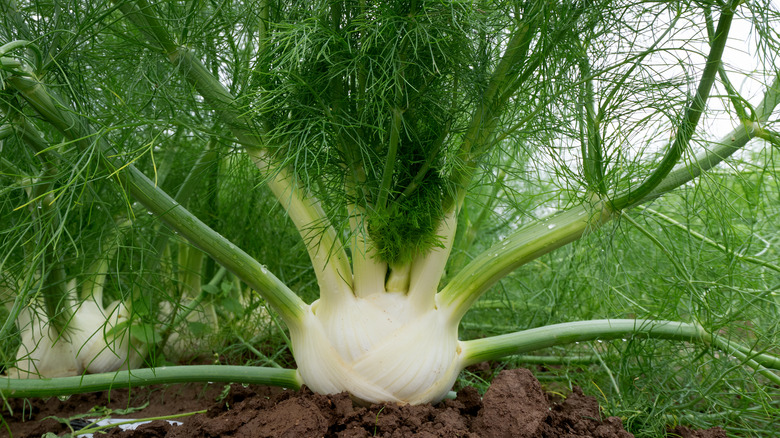
Fennel is a crunchy, fibrous flowering plant, loved for its anise-tinged flavor. Native to the Mediterranean, the vegetable is actually related to the carrot, although its bulbs grow above ground. There's plenty to know about fennel, from fronds to seeds. It's high in fiber and vitamin C, and low in calories, making it a welcome addition to a number of dishes, whether cooked or raw. Fennel can be a great substitute for onion, particularly in cooked recipes, and the seeds are an easily overlooked spice that can boost the flavor of your pizza. But which parts of the vegetable can you eat raw, and how should you use them?
Seeking some fennel assistance, we reached out to author and recipe developer Maxine Sharf for a Chowhound exclusive. Her first cookbook, "Maxi's Kitchen: Easy Go-To Recipes to Make Again and Again," is scheduled for release in March 2026. Sharf tells us, "The bulb and the fronds are the most versatile parts. The bulb can be eaten raw when sliced very thin; it is crisp, refreshing, and slightly sweet. The fronds work best raw as a garnish, almost like an herb, since cooking tends to dull their delicate flavor." She adds that, while edible, the stalks are tough and fibrous, so she generally doesn't use them at all, but she would definitely advise against eating them raw. Compared to the fronds and the bulb, "The stalks do not have the same tender texture, so cooking or flavor-extracting is usually the way to go," she says.
Expert advice on how to prepare raw fennel for delicious results
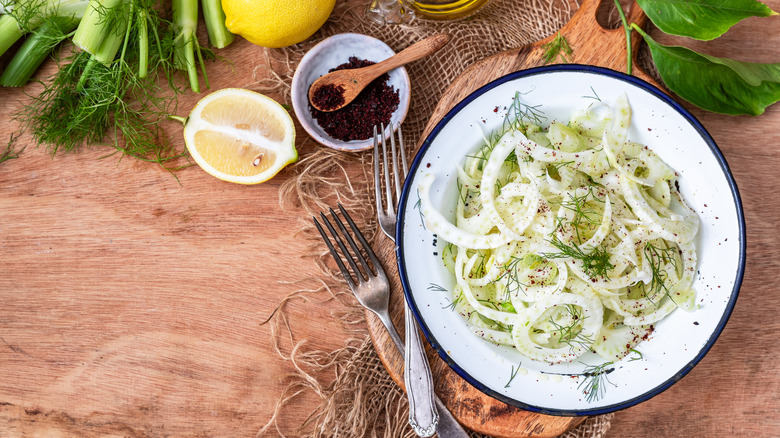
Although it can be delectable when roasted or sauteed, Maxine Sharf notes that "The bulb's crunch and mild anise flavor really shine raw." She says fennel bulbs should be sliced thin as can be and recommends using a mandoline for speed and simplicity. However, you'll need to cut off the stalks first and may want to peel a layer off the bulb if it's dirty or bruised.
Simplicity is fennel's friend. "Raw fennel is great in bright salads. Tossing the slices with dressing or citrus juice helps mellow the sharper notes and enhances the natural sweetness," Sharf says. She adds that you can let the sliced fennel chill in ice water briefly before dressing to increase its crunch.
The fronds can simply be chopped finely and used as a fresh, flavorful topper for salads, seafood, and even eggs. Chopped fennel fronds are often used as a substitute for dill — just be aware that they'll add some significant anise flavor. While the sliced fennel bulb is great simply tossed with lemon juice and olive oil, Sharf says, "I love pairing it with toasted pine nuts, thick shavings of Parmigiano-Reggiano, and citrus segments, such as orange or grapefruit. It is especially beautiful as a side to delicate proteins like fish or scallops." She adds that a dish in her cookbook features the raw vegetable served with scallops. So, you might just have to seek it out to get the full fennel scoop.