

Tempering Eggs Is Easier Than You Think (If You Use A Double Boiler)
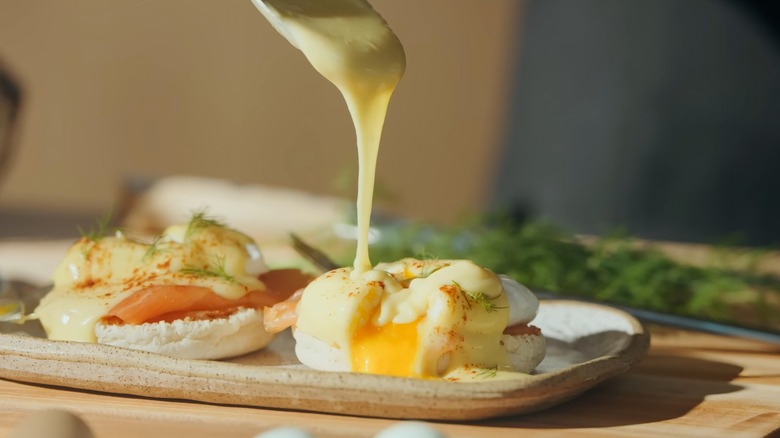
Tempering eggs isn't for the faint of heart, or at least that's what most of us believe. Pouring a raw egg mixture into a hot liquid is a high-risk, high-reward situation with no middle ground. Either you get a silky smooth texture that makes a winning custard or hollandaise, or a lumpy, unevenly cooked mess that's then best turned into scrambled eggs. If the latter occurs, remember there are lots of ways to elevate scrambled eggs, so you can try turning one failed kitchen endeavor into a different successful one. However, tempering eggs doesn't need to be all that daunting. Sure, it's not the easiest process, and there is no escaping the elbow grease that goes into the task, but a double boiler can help get that smooth consistency, provided you stick to a few important guidelines.
Yami Mercado is a pastry chef at the Chicago Athletic Association hotel. Its crown jewel, the rooftop restaurant Cindy's, is situated on the 13th floor inside a glass atrium that offers sweeping views of the city's landmarks. In an exclusive conversation with Chowhound, Mercado gave us insights on how best to temper eggs and the common mistakes to watch for. The secret to getting that perfect texture is controlling how much heat the eggs are exposed to, she explains. "One of the benefits is that the double boiler keeps the eggs from touching direct heat. This means the eggs won't scramble," Mercado says. "Whenever you want to get a silky texture without curdling, a double boiler is very helpful. It's great for delicate recipes."
Tips for tempering eggs perfectly using a double boiler
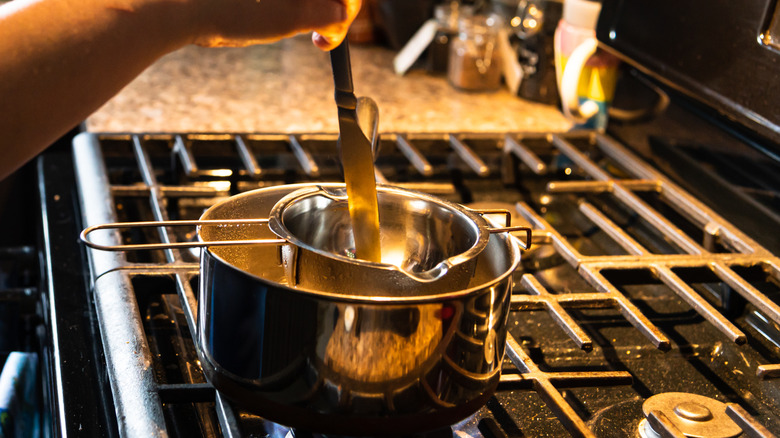
Understanding the science behind tempering eggs can set you up for success when making desserts or sauces. There are two key points to remember when tempering eggs; the first is indirect heat. To achieve this, you must first choose the right bowl for your double boiler, made from a heat-safe material as well as the right size. "Avoid letting the bowl touch the water. You want to make sure the steam is the only heat source," explains Yami Mercado. This also means being careful with how much water you put in the bottom bowl. If there's too much, it'll touch the bottom of the top bowl, transferring direct heat to the tempering eggs.
"Remember to stir constantly so the eggs don't cook around the edges," Mercado adds, drawing attention to the second crucial factor of successful tempering — constant motion. Time is a prerequisite when tempering eggs, she says; this isn't one of those cooking methods you can walk away from or check occasionally. Patience is another must. The indirect heat means that the cooking process takes longer, Mercado warns; the double boiler can take a while before it reaches the proper temperature.
Since tempering eggs isn't the kind of cooking one does every day, it's worth going through the additional effort of using a double boiler to help get better results. While some may consider tempering without a double boiler to be faster or more convenient, the risk of overcooking the eggs and having to start the process from scratch isn't usually worth the time saved.