

What's The Best Cut Of Veal For Cutlets?
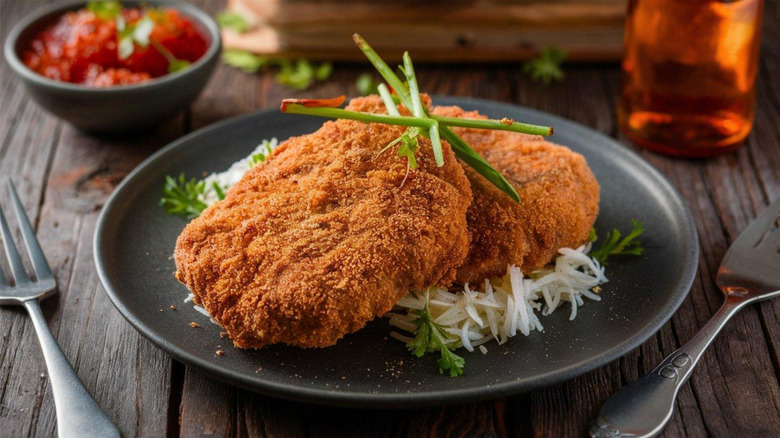
Many foodies prefer veal, as it comes with a succulent bite, complete with a subtle flavor that makes it the perfect canvas for almost any meat-based dish. It also connotes sophistication, often seen in luxurious restaurants with a menu that's hard to pronounce. It can certainly elevate any recipe, and even something as simple as a cutlet can be turned into a refined cuisine worthy of a five-star label. To know which cut is best in this scenario, Chowhound spoke with Pat LaFrieda, renowned fourth-generation butcher and CEO of Pat LaFrieda Meat Purveyors. "If you want to make veal cutlets, go with a leg cut," he exclusively told us, adding that these naturally soft slices are the ideal choice for a fast pan-fry.
"The triangle, the part near the hip, is especially good," he added. The best part is how you can utilize it as several pieces of cutlets, so you'll have a delicious meal that comes in a huge batch. Veal can even be one of the most versatile ingredients for meal prepping if you think about it. Keep in mind, though, that cooking veal isn't the same as cooking beef. To avoid accidentally making a tough and chewy outcome, it's important to take note of the difference.
Cooking veal vs. cooking beef for cutlets — what's the difference?
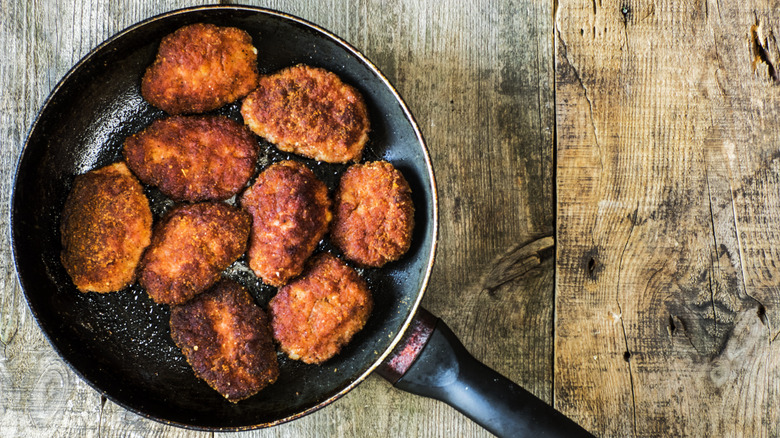
Beef has a bolder taste than veal, so it doesn't need as many layers to help with flavor. As such, sprinkling in some added flavor to veal — spice rubs, glazes, etc. — is much recommended for a more nuanced feel. Pat LaFrieda also mentioned paying close attention to the pan while cooking veal, saying, "It can go from tender to dry in minutes, so don't overcook it — unless you're braising, aim for medium, about 145 degrees Fahrenheit, to keep it juicy." Also make sure to cook the veal for four minutes at most, though you might need to leave it on the pan for a bit longer if it's a thicker cut.
Meanwhile, cooking beef can be done at a higher temperature, depending on the doneness level you want, of course. "While the USDA says 160 degrees Fahrenheit, most chefs cook steaks to medium-rare, around 135 degrees Fahrenheit, to keep them tender and full of flavor," LaFrieda advised. It's a temperature pro tip to cook beef evenly every time, lessening potential mistakes that could result in a chewy texture. Evidently, it's not the easiest thing to do if you're going in blind, so here's where a food thermometer can come in handy. While there are other reasonable ways to check food for doneness, it's one of the most preferred methods for its accuracy.