

The Possible Reasons Your Cake Batter Curdled (And How To Fix It)
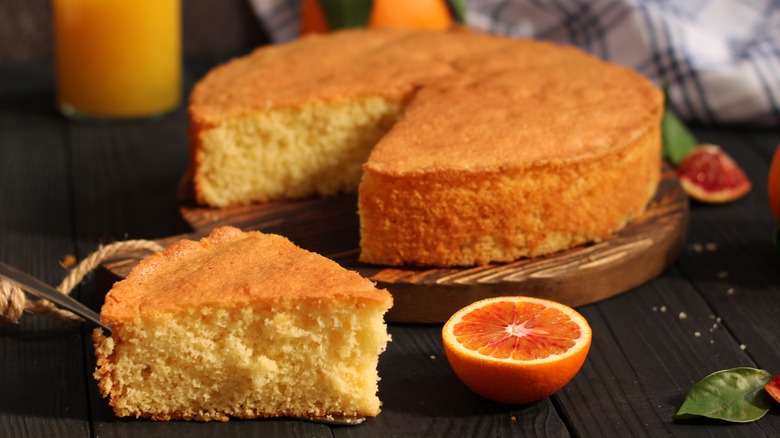
When making cake batter from scratch, it can sometimes be tough to get it just right. If you're not careful, it may end up split or not mixed entirely. Some bakers swear by reverse creaming to improve the crumb or add olive oil to their cake batter for extra moistness. (Even when baking with boxed mix, you don't have to use the bland vegetable oil and water that the box calls for.) However, if you find that your cake batter, boxed or homemade, just isn't turning out right, there are things you can do to fix it.
To get some advice on the subject, we reached out to an expert for a Chowhound exclusive. Eric Lanlard is a baker, pastry chef, author, and host of "Baking Mad with Eric Lanlard" and "Glamour Puds." To tell when your batter isn't quite right, Lanlard says, "You'll notice the batter looking grainy, lumpy, or split instead of smooth and glossy. It may appear watery in some spots with little clumps of fat and liquid separating." He says one of the main issues with improperly mixed batter is not allowing your ingredients to reach room temperature. Using cold ingredients — eggs, milk, or butter — straight out the fridge can leave your batter curdled and lead to cakes that are too dense, flat, and not uniformly light and airy.
How to make a consistent batter for perfectly baked cakes
When it comes to getting your ingredients to room temperature, if you have a bit of time, Eric Lanlard says, "Simply take them out of the fridge about an hour before baking and leave them on the counter." However, if the clock is an issue, you can warm them a bit faster. Submerge eggs in a warm water bath for five to 10 minutes. Heat milk in the microwave at about 20% power in short intervals until it gets to the proper temperature. For butter, you can also grate it or cut it into cubes to make it soften faster.
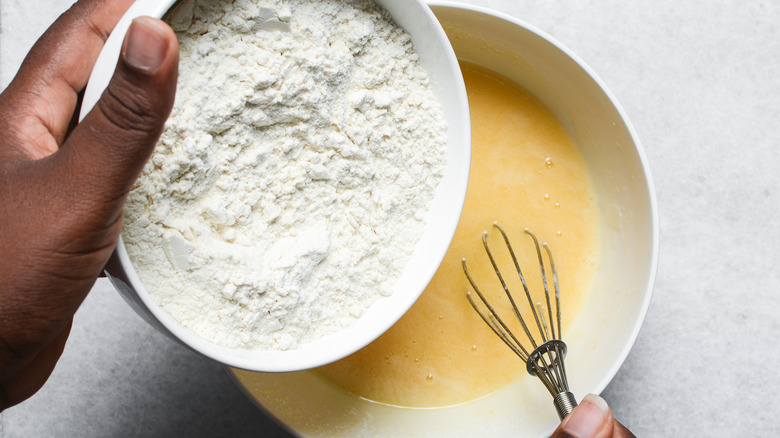
When mixing, Lanlard notes that adding the eggs too quickly or too much liquid at once can also make the batter curdle and go lumpy. "Add eggs one at a time," he says, "and beat well after each addition. If adding liquid (milk, buttermilk, etc.), add gradually and alternate with flour to help the batter." He says you only need to combine the ingredients so the flour is incorporated without overmixing, or your batter could end up too thin and runny — leading to a flat, gummy, lifeless cake.
And if your batter still ends up split, it can luckily still be saved. "The easiest fix is to add a spoonful of flour and beat gently," Lanlard says. "It often helps bring the mixture back together. Alternatively, warming the bowl slightly (placing it briefly over a pan of warm water) can soften the butter and allow the mixture to emulsify again.