

Why It's Best To Avoid Ordering From This Notoriously Slow Food Delivery Service
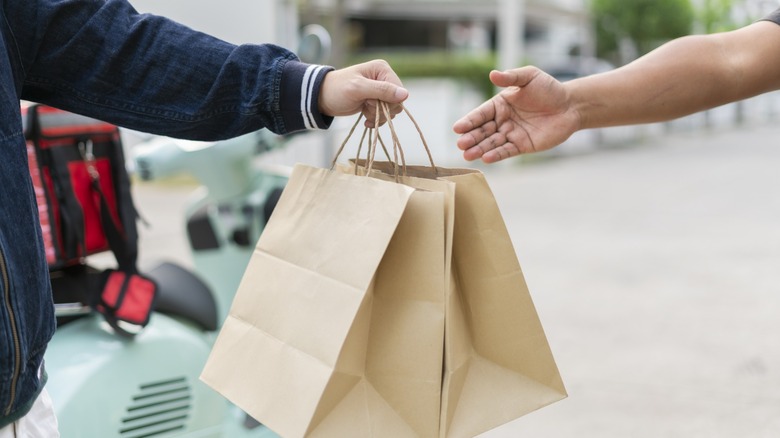
Third-party delivery services just aren't the lifesavers they used to be. While they were extremely helpful at the peak of the pandemic in 2020, fast food delivery might not be worth the extra cost anymore. You're effectively paying extra to have your food come cold, to risk getting someone else's order at your door, and — worst of all — to wait so long for your dinner to arrive that you end up losing your appetite entirely.
On that last point, it looks like Uber Eats might be the worst offender. The 2025 Third-Party Delivery Study by customer experience solutions company Intouch Insight shows that the service is worth avoiding when you're feeling hungry simply because of how slow they are. Compared to DoorDash and Grubhub, Uber Eats had the lowest score in terms of customer satisfaction with speed of service when it comes to restaurant deliveries.
The interesting thing about this, however, is that Uber Eats technically doesn't take the longest to get your food to your door; they're just the worst at managing your expectations. When it comes to average delivery time, Grubhub actually takes about five minutes longer than Uber Eats, clocking in at 40 minutes and 20 seconds to the latter's 35 minutes and 47 second. Grubhub also takes nearly 10 minutes longer than DoorDash. The reason Uber Eats feels like it's the slowest even when it's not is because its deliveries tend to be late more often than everyone else's. And when you're starving, late deliveries are the absolute worst.
When it comes to food delivery, time is relative
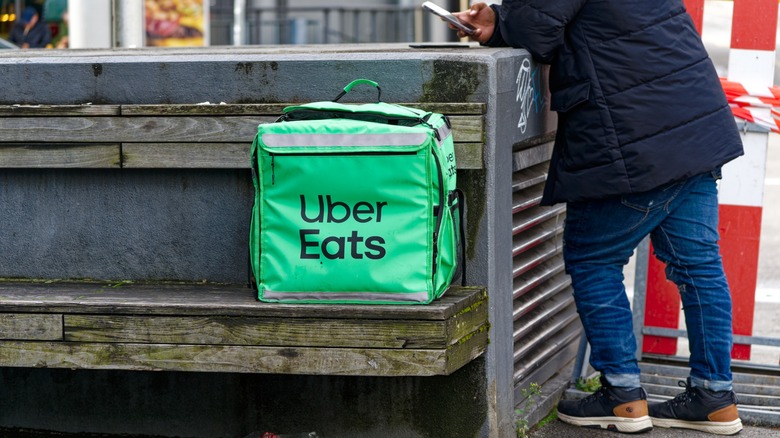
According to Intouch Insight's study, 39% of Uber Eats deliveries come in later than the time promised before you place your order. Making matters even worse is the fact that this number increased from only 27% in 2024. The service has gotten slower even in terms of orders arriving ahead of time — while a whopping 72% of Uber Eats orders arrived earlier than expected in 2024, that number dropped to just 59% in 2025. For comparison, 35% of Grubhub orders arrive late, while 62% arrive early.
Uber Eats also has the largest percentage of deliveries arriving late based on time estimates after orders are placed. Once you lock it in on the app, your food will come in late 45% of the time. DoorDash, on the other hand, is a distant second at 35%, while only 33% of Grubhub deliveries come in later than the time estimated.
Lateness can be a lot more frustrating than something just being slow. The fact that Grubhub scored higher on satisfaction with speed of service despite being five minutes slower than Uber Eats on average proves it. That said, you don't need to avoid using Uber Eats if tardiness doesn't bother you that much; as long as you don't order food that doesn't hold up well during delivery, there's no real harm being done. If you hate waiting, though, it might be worth your time to install a different food delivery app instead.