

How To Grill Elk Without Drying It Out
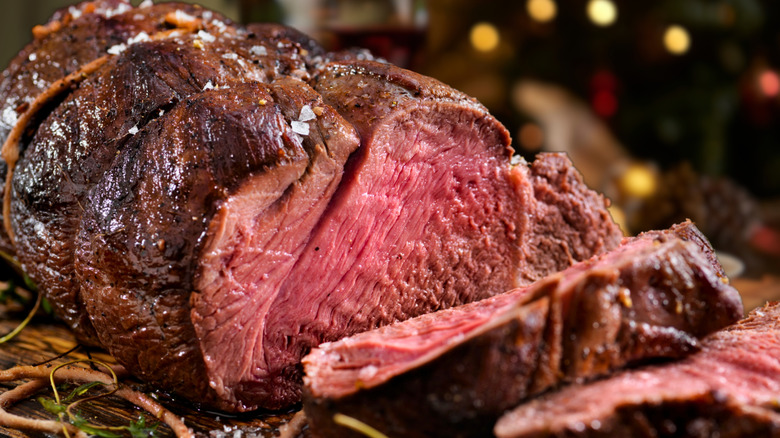
There are a few staple ingredients that you're sure to find on grills all over the world — beef steaks, succulent grilled ribs (made all the better by the 3-2-1 method), even fish with crispy charred skin. But in certain parts of the world, and particularly North America, you might come across a type of meat that you've probably not cooked with before. Elk has been part of the North American diet since time immemorial, but in recent years has been pushed to the periphery by more popular meats like beef and chicken. Elk is technically a type of deer, so cooks similar to venison and has a delicious gamey flavor — but to get the best out of it there's a few things you need to keep in mind. Elk is a very lean meat, so it's at risk of drying out, and fast — a challenge for even the most masterful grillers.
To find out more about how to keep elk juicy on the grill, we spoke to chef Lee Garman, executive chef at Owamni (@owamni on Instagram) in Minneapolis, Minnesota. "For specifically grilling elk, you want to grill it hot and fast," he said. "I try to go for elk loin as it's the most tender." You want a super high heat for the best results. "I'll grill it over a hot grill at 600 degrees," Garman explained. "The less time on the grill, the juicer the elk will be." To help cook the elk quickly, make sure you temper it before cooking. "Getting your elk to room temperature is key," he said.
You can also marinade your meat to improve its texture — or follow chef Garman's advice and use a cure, or dry brine. "Another thing I always do is a dry cure on my leaner cuts. Equal parts maple sugar and salt," he said. "It drives the flavor into the meat and helps keep the cut of elk juicy."
What to look out for when grilling elk
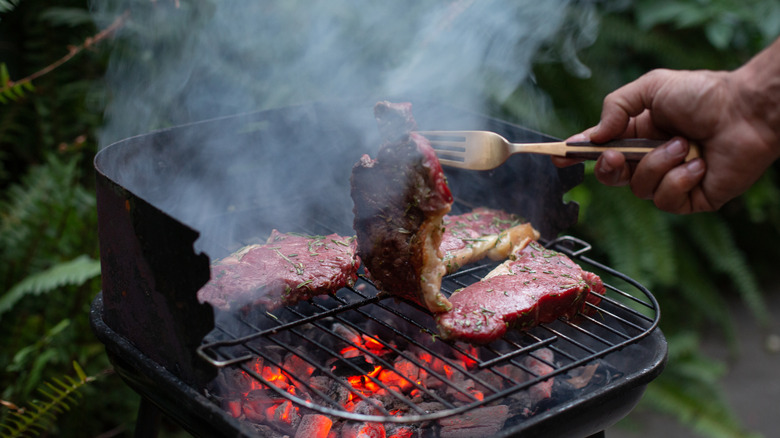
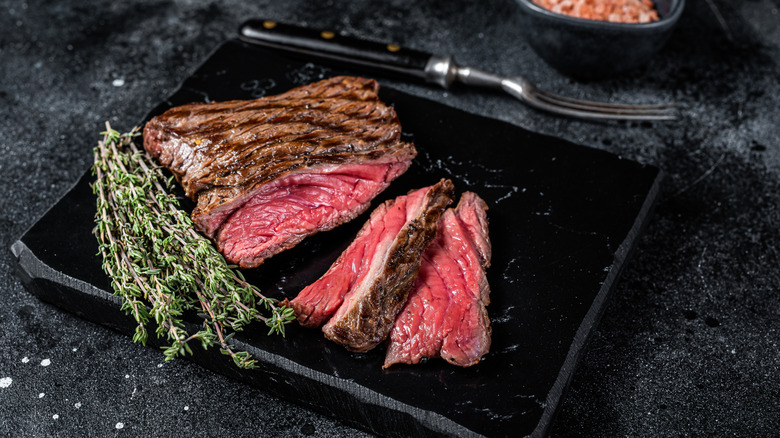
Grilling is a deceptively complicated art, especially when it comes to fickle meats like venison — or indeed elk. Like beef, elk shines at a medium rare cook — and it's more challenging than beef to get the perfect sear on the outside while retaining a moist, tender, blushing pink interior. Internal temperature is crucial here, so keep a close eye on it. "Like every chef in the world I always eat my red meat at medium rare," chef Lee Garman told us. "There's no difference with grilled elk. I will pull the elk at 120 degrees [Fahrenheit] and let it carry over cook." To know when to pull that meat, use a probe thermometer: It's the only truly foolproof way to keep track of the internal temperature of your elk.
The cut of elk you use can also affect the tenderness of the final result, as well as the risk of overcooking it. "The elk loin is the most forgiving," Garman said. "It has the least amount of connective tissue and fat. It's also one of the least used muscles on the animal making it even more tender." The loin responds particularly well to grilling, and really doesn't need much in the way of seasoning or marinating to bring out its best when it comes to flavor. "It is tender and gives you a great elk flavor without being overpowering or too gamey," he said.
Grilling isn't the only way to cook elk
While grilling is a great way to get a balance of flavor, color and tenderness on your elk (when it's done properly, that is), it's far from the only technique available to the would be grill chefs out there. What about if you wanted to, for example, take inspiration from the barbecue masters of the south and cook your elk low and slow, smoking it rather than giving it a flash on the grill? Well, the answer (in short) is yes.
"We do a smoked elk short rib at Owamni," Lee Garman told us. "We start by dry rubbing the elk and letting it sit for two hours. After that we smoke the short rib at 250 [degrees Fahrenheit] until it hits an internal temperature of 195-205 degrees and then we wrap the elk and let it rest for three hours." Proper fall-off-the-bone ribs are a must for any barbecue enthusiast to master, and they're totally achievable with elk meat. Remember — the cut you use matters here. Short ribs work well for low and slow cooking because they're on the bone — which helps keep things moist and extra flavorful. That final rest allows the juices to redistribute throughout the meat, ensuring a perfectly juicy bite every time.
Elk is super flavorful, and smoking imbues a delicious woodsy flavor, whatever you're cooking, so you won't need a whole lot in the way of seasoning — and the same is true for grilling. "Less is more when it comes to spice rubs for grilling," Garman said. "We use just enough to lightly cover and then we let it sit for two hours or so. We find that complex blends or heavy flavors cover the taste of the beautiful elk. We like to showcase the animal and not the spices." Too many spices will just sit on top of the meat and burn, overpowering rather than lifting up your elk's flavor.