

The Telltale Signs Your Pomegranate Has Gone Bad

Pomegranates are more than just large fruits that harbor juicy, ruby-red seeds bursting with sweet and slightly tart flavors; they are also a nutritional powerhouse, packed with antioxidants, gut-friendly probiotics, fiber, and much more. Though native to regions that span from Iran to the northern parts of India, which is also the country that produces the most pomegranates, they flourish in certain dry areas of California and Arizona, too. There are a handful of tips that can help you pick perfectly ripe pomegranate at the store, and similarly, there are distinct signs to look for to tell if that pomegranate is past its prime. To understand what those signs are, Chowhound spoke to homestead consultant and creator, Erika Nolan of Holistic Homestead, a platform for all things homesteading and gardening that also has a notable presence on Instagram, Facebook, and YouTube.
"Pomegranates will share easy to spot signs if they are not in their prime, and overripe pomegranates are very unpleasant," she exclusively explains. Seeds that should have otherwise been bright and juicy turn brown and tasteless. So, before you upset your taste buds with spoiled pomegranate seeds, put the fruit to a quick visual and textural test. As described by Nolan, "you can tell if the pomegranate has gone bad because the skin will be sunken in, soft, and potentially with some darker spots as well. It will literally look dehydrated!" That said, if there are a few sunken spots but the skin is still fairly firm to touch, there might still be enough optimally ripe seeds to make up for the handful of overripe ones you may come across.
Best ways to store and use pomegranate
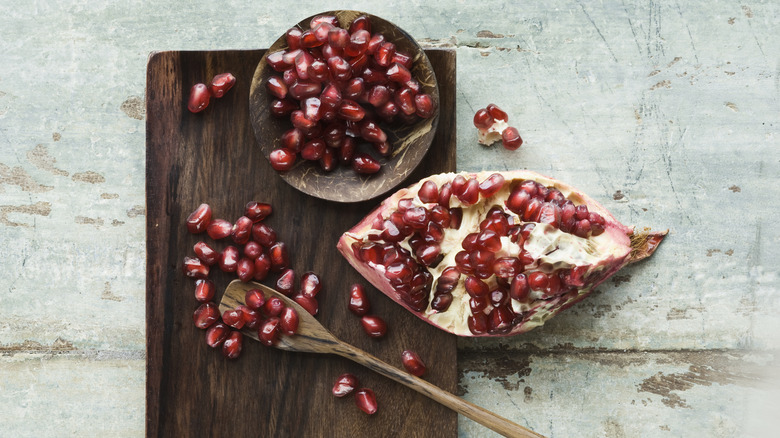
One of the most fundamental ways to prevent produce from spoiling is to store it properly. If storing whole pomegranates, Erika Nolan recommends leaving them on the counter until they're cut open. Since the skin helps protect and preserve the seeds, Nolan prefers to keep the whole fruit intact until she's ready to eat them. A cool and dry place is ideal when storing the entire fruit, as exposure to warmth and sunlight can accelerate the rate of spoilage. Once the fruit has been cut, it should last for about five days in the fridge. Just make sure to separate the seeds from the skin. Soaking the seeds in water can ease the removal of the flimsy membrane from the juicy seeds. Pat them dry before transferring the seeds to an airtight bag or container and storing them in the fridge, or even in the freezer for prolonged freshness.
Pomegranate seeds are delectable when enjoyed on their own or even as a frozen treat, but if you're seeking more delicious ways to use up your supply, there are plenty of ideas. For starters, try adding pomegranate seeds to bring new life to your green beans. It might seem like an unusual pairing, but the sweet and tart notes from the fruit adeptly complement the roasted notes of sautéed green beans. If you sense that the fruit is nearing the overripe stage, make some pomegranate molasses that you can use as a dressing for a fresh fattoush salad. From a juicy breakfast topping and a refreshing snack, to a sweet complement for savory meals and more, pomegranate seeds can upgrade so many meals.