

The Origins Of New Orleans' Creole Cream Cheese
New Orleans is considered by some to be haunted, and it's easy to see why. If you've ever made a trek to the Southern city, you know that it is a place both enmeshed in, and outside of, time. Lace-like ironwork balconies of the French Quarter recall the intricate style of the 19th century, while St. Louis Cathedral, a holdout from the city's 18th century French roots, strikes an imperial presence. Ghost tours can be found a aplenty, toting tourists from one landmark to another, remarking on scandals, crimes, and historic intrigue. Whether these ghosts are actual, phantasmic phenomena is unknown. What we do know is that New Orleans is a city uniquely bound to its own history. This is perhaps best seen in its food.
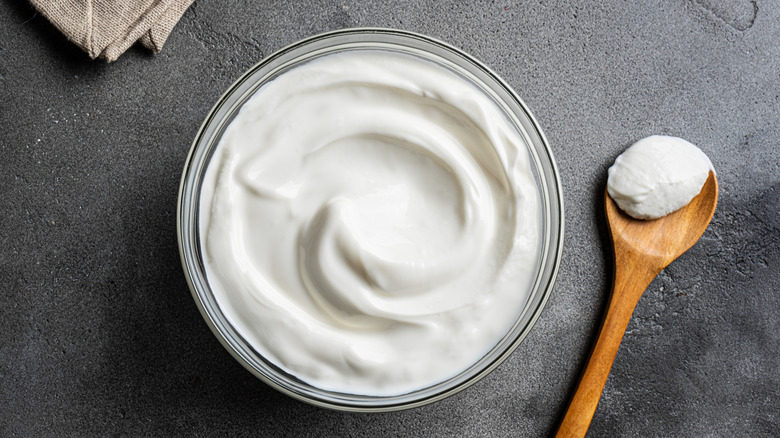
From beignets, Louisiana's state donut with roots in the city's Cajun population, to muffuletta sandwiches, which come from the city's Italian population, New Orleans history is alive and edible. One lesser known food staple is Creole cream cheese, which isn't at all similar to the thick, slightly salty cream cheese you're probably familiar with. It's light, with a texture similar to ricotta or cottage cheese, and slightly sweet. Creole cream cheese was first invented at some point in the 1800s using buttermilk and skim milk and was a popular product of local dairy farms, which used the two ingredients to make the popular spread. After its invention, the cheese became a popular snack and spread around the region. Though it fell out of favor in the late 20th century, it has since seen a resurgence among New Orleans locals.
A clabberful history
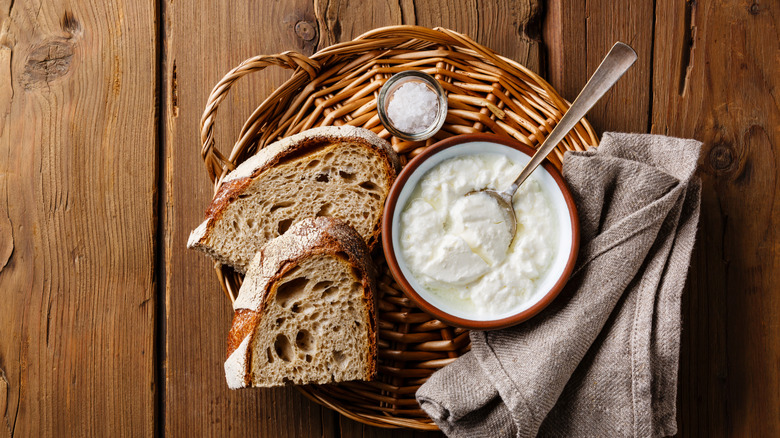
The first mention of Creole cream cheese came in 1896 when a newspaper referenced the dish. Though no exact origin date is known, the dish does predate this mention. A likely predecessor to Creole cream cheese is clabber (essentially milk that has turned sour and thickened). In 1849, a New Orleans newspaper referenced a street vendor who was selling clabber. This dish most likely gave way to what we now know as Creole cream cheese, which became a staple in many New Orleans homes since it can be served several ways. Though it tastes slightly sweet, it can easily be spread onto toast and sprinkled with salt for a savory snack. Sugar is also a popular addition to the cheese, as is fruit.
Its popularity is also likely owed to the numerous dairy farms in the area. Since Creole cream cheese is made from byproducts of the butter-making process, the cheese was a great use of materials. However, the dish dipped in popularity after new regulations were put into place that made making Creole cream cheese more difficult. Additionally, the closure of many of New Orleans dairy farms made Creole cream cheese (which was never a nationwide product) increasingly scarce.
Back from the bread

By the end of the 20th century, Creole cream cheese had almost become a thing of the past (save for a small number of people who made their own). That was until Louisiana food expert Poppy Tooker took matters into her own hands. In 1999, Tooker decided to demonstrate the craft of Creole cream cheese-making at a local farmers' market. Attending this exhibition was one Kenny Mauthe, the owner of a nearby struggling Mississippi dairy farm. Mauthe soon began making Creole cream cheese at his farm with his wife, Jamie. Mauthe Farms continues to make Creole cream cheese to this day. Since its reintroduction in the 21st century, the cheese has once again become a popular presence in New Orleans kitchens.
If you have a hankering for Creole cream cheese, you can order it online, visit the Big Easy, or even make a batch to enjoy for yourself. You can try this cheese as a simple spread, as a fruit dip, or even as a base for a killer cheesecake (which, ironically, is neither a pie nor a cake). Creole cream cheese can also be used in savory dishes; try using it in place of sour cream or cream cheese in beef stroganoff (just make sure to avoid these stroganoff missteps). If you want to double down on your NOLA bona fides, use your Creole cream cheese as a filling for the definitive Mardi Gras treat: king cake.