

Martha Stewart's Simple Trick For Better Fitting Parchment Paper On Your Next Bake

Whether you're baking a pecan pie, an apple pie, or even a chicken pot pie, nailing the crust is key to creating a flaky, buttery base that will keep you coming back for more. Getting it right can be easier said than done, especially if you're making a pie crust from scratch. One of the most common pie crust mistakes: failing to blind-bake pie crusts for certain types of pies (specifically, those that are likely to turn the bottom of the pie soggy due to a high liquid content). To blind bake a pie crust, most home cooks place a piece of parchment paper over the crust, layer dried beans on top of the parchment paper, and toss the crust into the oven for half an hour or so.
One problem: The stiff nature of parchment paper can make it tough for the pie crust to be fully covered, leaving room for air pockets to develop and interfere with the integrity of the crust. Martha Stewart has a super simple solution, which she demonstrated on YouTube: Crumple up the parchment paper before you lay it flat on top of your pie crust. This makes it much easier for the paper to lay flat against the pie crust once it's filled with beans, lessening the likelihood that you'll end up with rising pockets of dough that can crack your crust. Stewart says to keep an eye on your pie crust as it bakes, removing it once it starts to develop some color. At that point, she recommends removing the parchment paper and returning your pie crust to the oven to complete the blind baking process.
More ways to create an award-winning pie crust
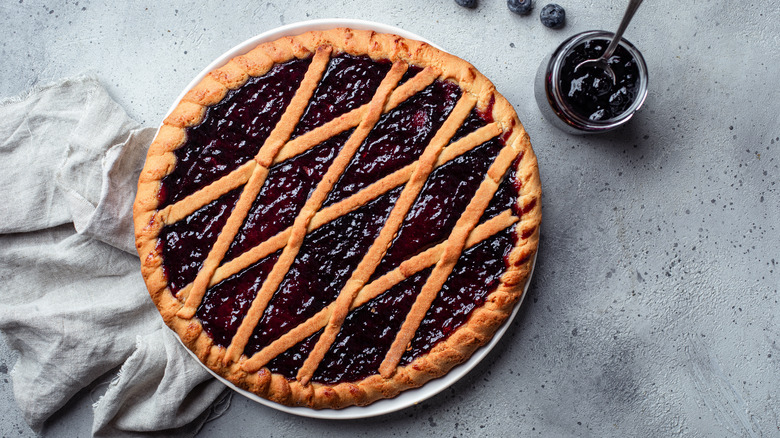
Martha Stewart's tip goes a long way in helping to create a perfectly blind-baked pie crust that's ready to hold up to pumpkin, apple, blueberry, key lime, and other heavy-moisture pie fillings. Another way to increase the likelihood of a fantastic pie crust: Poke some holes with a fork before you begin blind baking. This process — known as docking — allows steam to move away from the crust as it heats. This makes it more likely that your pie crust will lie flat. Most recommend that you poke holes in the pie crust after the weighted portion of the blind baking process is complete.
In addition to nailing the blind baking process, Stewart has a few other baking tips you can use to create pie crusts that are both delicious and provide the structure necessary for a cohesive pie that's easy to slice and serve. She recommends freezing your butter before you start making your pie crust, using a cheese grater to break it apart before you start mixing it into your dough. She also recommends skipping the hard work of using a pastry cutter to blend your pie dough, and says that a food processor does the job just as well.