

The Forgotten Beef Sandwich That Helped Families Stretch Meals For Decades
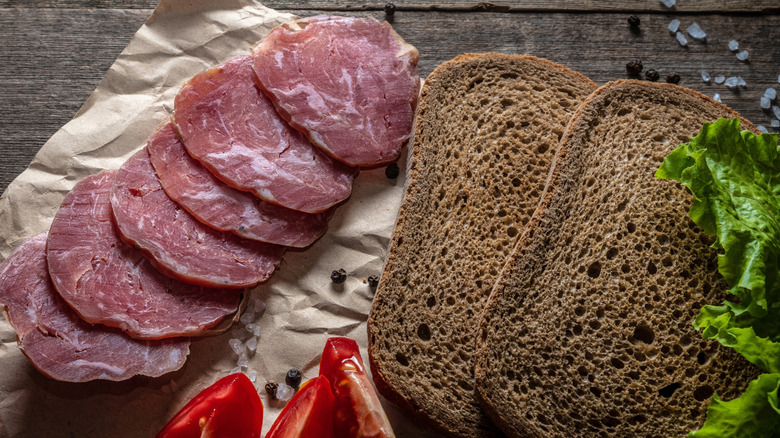
A "beef jelly sandwich" sounds like a bit of a prank, but it was once a practical way to stretch meat in the 1920s. Home cooks simmered beef hearts, pig feet, and beef tongue with salt and pepper, then layered the meats in a loaf pan and poured the collagen-rich broth over the top. Once chilled, the broth set into a firm jelly that could be sliced thin for sandwiches. At the time, it was expected that the concoction would "keep indefinitely," a period-based claim that's best treated with caution, given modern food safety standards.
Families loved the beef jelly sandwich, probably because of thrift and practicality. It was cheap and filling — a boon when you're hungry. Feet and offal are full of natural gelatin, so a small amount of meat became a sliceable block that held together on bread and stayed moist without extra fat. The jelly also slowed spoilage by limiting air exposure, which made sense in the days before the 1930s, when refrigerators became common. That preservation effect is a known feature of aspic and meat jellies in general, not just this loaf.
Now that we've covered the anatomy of the beef jelly sandwich, let's explore its roots, cousins, and eventual fade from fashion. Because, let's face it, this beef jelly sandwich is one of the old school sandwiches we're happy to leave in the past.
The roots of the beef jelly sandwich
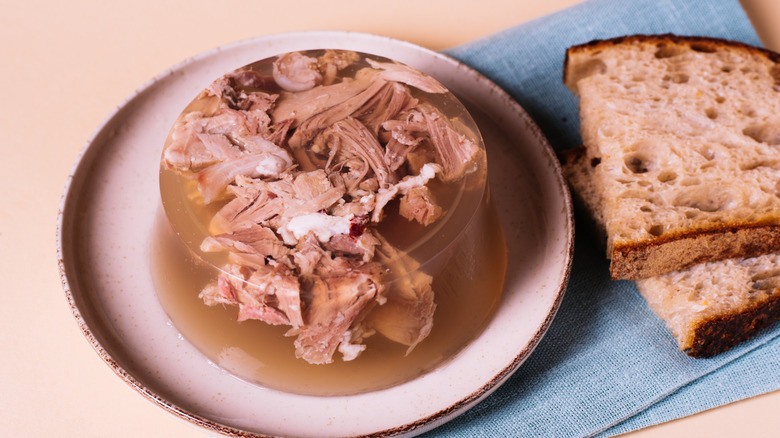
Food history is quite complex, and the beef jelly sandwich sits at a crossroads of several traditions. Meat aspic has medieval European roots, and gelatin-set meats appeared widely, from Czech Republic's tlačenka to Germany's sülze. The beef jelly sandwich is one branch of a larger family that uses gelatin-rich cuts to preserve and portion meat for everyday meals. Think of it as a practical technique that different cultures adapted to local tastes and the availability of animals.
In the United States, the sandwich is lined up with broader habits of stretching meat. Offal and feet were inexpensive, and collagen made the loaf sliceable. The exact origin of the "beef jelly sandwich" name is hard to pin down ("jellied beef" is another common name for the main ingredient itself), and it may be one of many household variations rather than a single inventor or place. During lean years, several sandwich variations emerged, and similar ideas were incorporated into jellied loaves and molded meats, transforming scraps into lunch for a crowd.
So why did it vanish? Refrigeration improved, and tastes probably began to shift. It wasn't an abrupt end, though, especially since the Great Depression soon followed, ushering in even more fascinating, though strange, food options. Nonetheless, if you do try a modern take on the beef jelly sandwich, keep the 1920s spirit alive, but follow current food safety and storage guidance. It will certainly not keep "indefinitely," but the history is worth a curious bite.