

Why Browned Eggs In A Slow Cooker May Still Be Undercooked
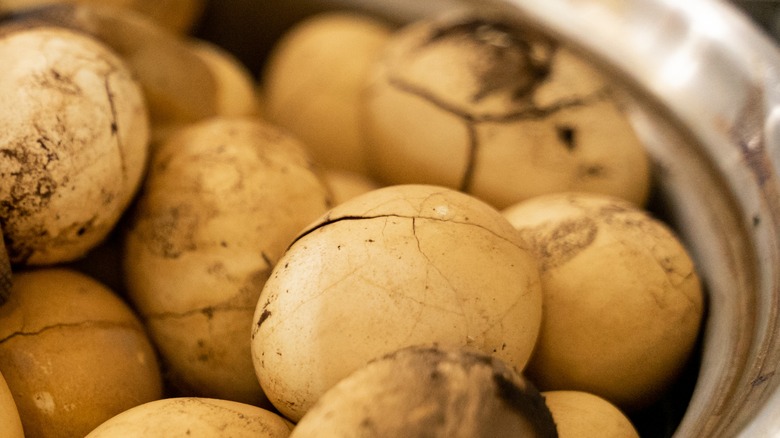
At first glance, browned eggs in a slow cooker look like a win. You lift the lid, see that golden top layer, and assume your casserole or egg bake is cooked through. But browning on top doesn't actually mean the eggs are done. In fact, it's often the opposite. Slow cookers are notorious for heating unevenly, so while the edges and surface may firm up and caramelize, the center can remain a wobbly, undercooked mess. It's a bit like judging a cake by its crust without checking the middle. Sure, it looks baked, but cut into it and you will find it gooey where it matters most.
The issue comes down to how slow cookers distribute heat. Unlike an oven, which surrounds food with even temperatures, slow cookers heat from the sides and bottom. This means the outer edges of your egg dish cook faster, while the center lags behind. Eggs, being delicate, highlight that imbalance. Instead of setting into a uniform custard, they create hot spots: browned, slightly rubbery sides and a suspiciously soft core. And unlike meat stews or chili, which thrive on long simmering, eggs don't forgive inconsistent heat. One part can taste fluffy and perfect while another still drips off your spoon.
It's a common mistake for anyone trying to streamline breakfast prep. You think tossing eggs, cheese, and veggies into a slow cooker overnight means waking up to a flawless casserole. Instead, you wake up to a deceptive brown top and the sinking feeling that you'll need the oven anyway.
How to outsmart the slow cooker egg trap
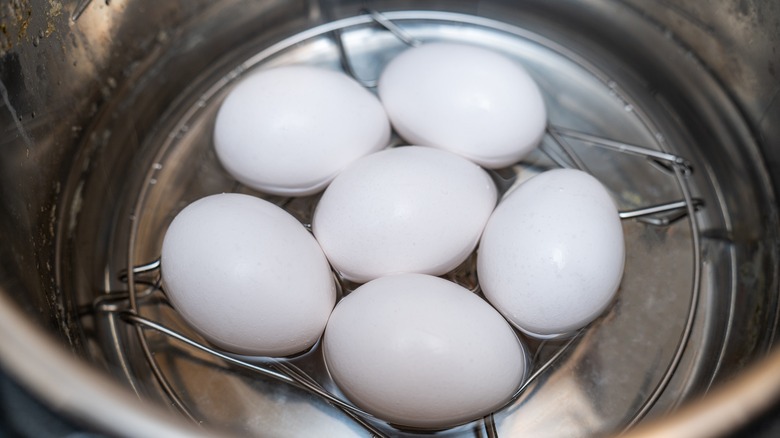
So, how do you avoid the dreaded half-cooked center? The trick is not to treat eggs like stew. For starters, cooking on low and slow is non-negotiable. The mistake of cranking your slow cooker to "high" in hopes of a faster breakfast almost guarantees browned edges and raw middles. Low heat gives the eggs a chance to set more evenly, though you will still want to keep an eye on the clock.
Another hack is using the right vessel. If your slow cooker is deep and narrow, you are stacking the odds against yourself. Eggs in a thick layer will always cook unevenly. Instead, opt for a wider, shallower insert if your model allows, or use a heatproof dish set inside the cooker. That spreads the eggs out, thinning the layer and letting the center cook through before the edges scorch. A liner or parchment can also help prevent sticking and over-browning.
And don't skip the poke test. Just like checking cake with a toothpick, insert a knife into the center of your egg dish. If it comes out clean, you are good. If it comes out wet, give it more time even if the surface looks golden. The browned top is a red herring; what matters is the set texture underneath.
Slow cookers are fantastic for plenty of things — but when it comes to eggs, you need a strategy. With a few tweaks, you can still pull off that dreamy breakfast bake. Just don't let a browned top fool you into thinking your eggs are done.