

The Tempering Advice You Need If You're New To Baking With Chocolate
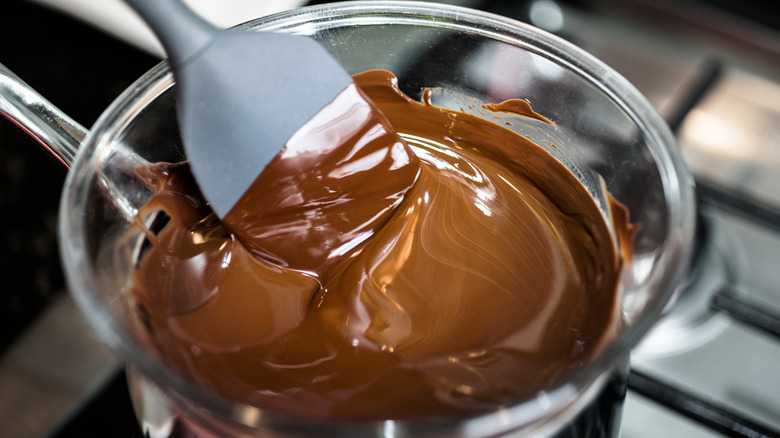
We may receive a commission on purchases made from links.
Making a dessert that requires tempered chocolate can feel intimidating, and following a few simple tips and tricks can make all the difference between a seized, grainy mess and perfectly pourable chocolate that dries to a shiny snap. The tempering process — which involves slowing melting chocolate at a low temperature and then cooling it — helps to create a crackable, smooth end result that's both delicious and aesthetically pleasing. Jerrelle Guy, author of the James Beard Award-nominated cookbook "Black Girl Baking" and the creator of The Dinner Ritual newsletter, spoke exclusively with Chowhound about her must-do tips when tempering chocolate.
First, Guy says that it's key to understand whether you actually need to temper your chocolate to get your desired end result. "It depends on what you're doing with the chocolate. Tempering only matters if you want chocolate to set with that shiny snap, like for dipped truffles or molded bars," says Guy. If you're simply mixing melted chocolate into bakery-worthy chocolate cake batters or even ganaches and sauces, it doesn't necessarily need to be tempered first. Here, Guy says that it makes sense to use baking bars or couverture chocolate (an especially great fit for chocolate-covered strawberries). If you do need that shiny snap but don't want to go through tempering, you can use compound chocolates or candy melts to get the same effect. Compound chocolate doesn't have any cocoa butter (those volatile fat crystals that are unstable without tempering), which makes it easy to work with. If you've decided that you're ready to take on the delicate work of tempering, we've got you — let's take a look at what you need to know.
More chocolate tempering tips
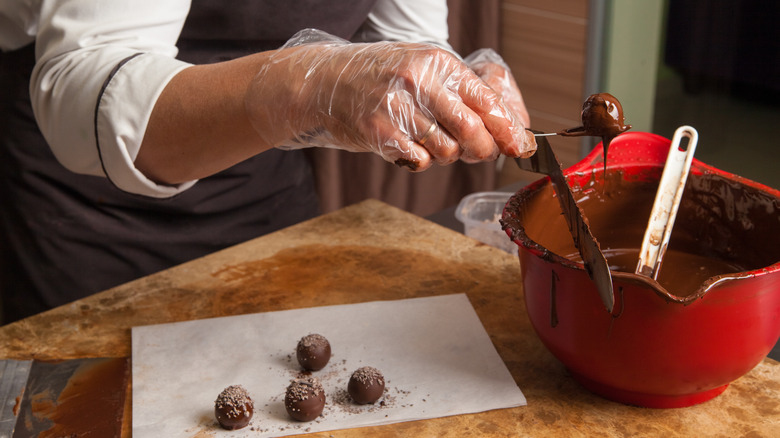
If you've decided that tempering chocolate is essential to your recipe and you're ready to give it a go, following a few easy steps can help you get the end product you're looking for. First, you'll want to make sure you set aside plenty of time to get the tempering process right, allowing your chocolate to melt at a low temperature. "Set up a double boiler to make this failproof," recommends Jerrelle Guy. If you don't have a technical double boiler at home, it's easy to create one yourself for chocolate-tempering purposes. Heat up an inch or so of water in a saucepan, top it with a heatproof bowl or small pot, and you're good to go. If you'd rather not mess with the stovetop, you can also temper chocolate in the microwave — just be sure to take your time, only microwaving for short intervals before removing and stirring the chocolate.
Another important pro tip for tempering chocolate: Water is your mortal enemy. Just a teeny-tiny bit of water can cause beautifully tempered chocolate to become grainy. "Make sure all bowls and tools are completely dry before melting — even a drop of water can seize your chocolate, making it difficult to get a smooth melt," Guy concludes.