

Why Thrifted Cast Iron Skillets Can Be Better Than New
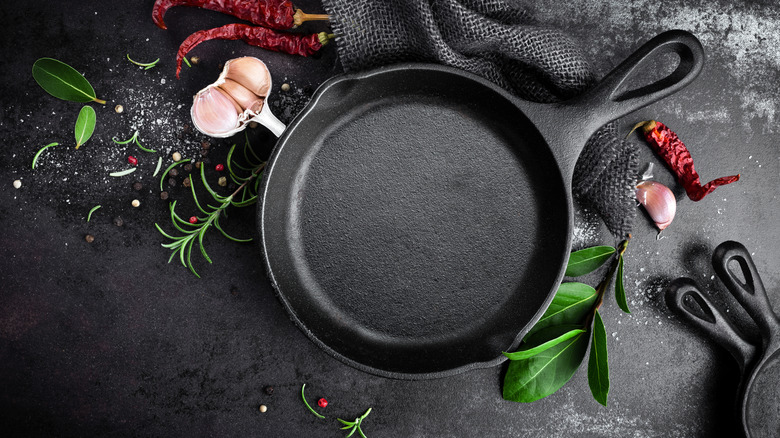
When treated right, cast iron skillets can last for generations. And, for that reason, they're often better purchased at the thrift store than off-the-shelf new, because they will come with years of seasoning. Seasoning of cast iron refers to polymerization — when fatty acids are heated and oxidize to create a nonstick coating on your pan. So, when you purchase a thrifted cast iron skillet, it will have cooked dozens or hundreds of meals that have left a wonderfully thorough (and delicious) seasoning.
Most vintage cast iron pans bought second hand will pretty much be ready to go and can be used to cook right away. While fancier brands like Griswold or Wagner pans may go for high dollar (and you should definitely keep an eye out for them, if they're at a good price), many other, perfectly acceptable, brands can be bought for around $20 or less. More cost-effective brands or even unmarked pans are also great, and are even better thrifted than when purchased new and pre-seasoned. Years of regular kitchen use have given the pans the perfect nonstick coating that you just can't get in new pans.
What to look for in a thrifted cast iron skillet and how to re-season it if needed
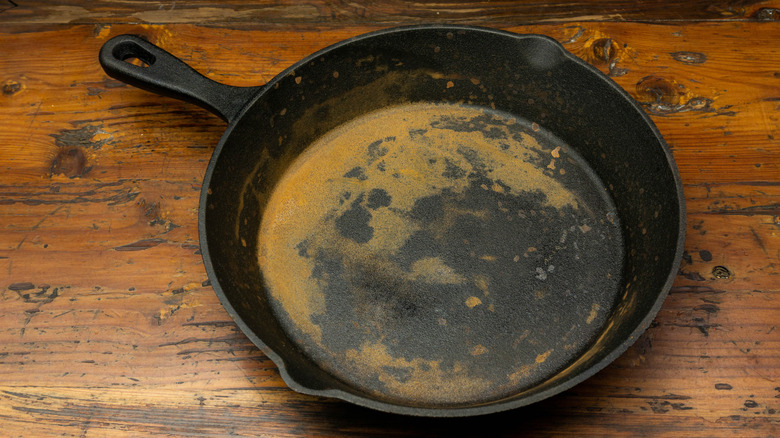
You want something with a smooth surface and devoid of major scratches or marks, which could affect how evenly it cooks. You can, however, purchase something with fairly serious rust damage, and it will be ready to go after a proper wash and a few rounds of seasoning. If you try out your thrifted pan right away and food is still sticking, you may need to do a little extra seasoning.
One of the myths about cast iron is that you can't wash it with soap. It's perfectly fine, just do it on a warm skillet and use a brush or sponge without too much force. To properly season a cast iron pan, there are a few simple steps to take. If it's rusty, you'll need a little coarse salt and steel wool. Simply scrub with salt until the rust is gone.
For a full seasoning, you'll need to coat the pan with a high smoke point oil. Canola oil or regular vegetable oil are good choices, but avocado, peanut, grapeseed, and sunflower oils will all work great. You'll need to coat the interior of the skillet with a thin layer of oil, then heat upside down in the oven. The best temperature for seasoning cast iron is between 450 and 500 degrees Fahrenheit for 30 minutes to an hour. To catch dripping oil, you should place a cookie sheet covered in aluminum foil underneath the pan. Once properly heated, leave it to cool in the oven and repeat a couple more times to get a proper oil coating. Whether ready to cook right from the store, or even if it needs a little love, you should get your cast iron skillet thrifted to save money and pay homage to the generations of cooks that came before you.