

Want Crispy Fish Skin Every Time? Watch For This Cooking Cue
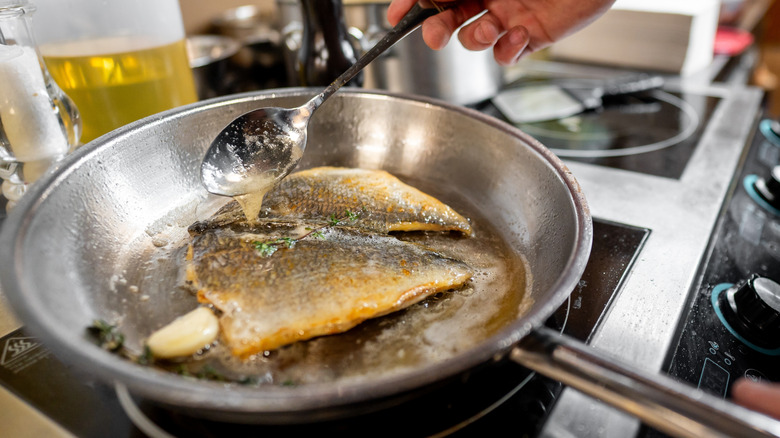
There are a few skills that every home cook needs to master when learning their craft for the first time; how to sear a steak to a perfect medium rare, how to dice an onion like a pro, or how to properly mount a sauce with butter. But one task that proves to be particularly sticky (no pun intended) to many is cooking fish — specifically, how to pan fry a fish fillet with glossy, flaky flesh, and shatteringly crispy skin. It's not the easiest thing in the world (and is particularly tricky to accomplish without that skin sticking to the pan), but it's a real marker of skill for a chef. With a few simple tricks, you can ensure that you get consistently crispy results, every single time.
To find out more about how to achieve this deceptively difficult feat, we spoke to an expert. Chef Kory Foltz is the director of culinary at Sunseeker Resort on the Florida Gulf Coast, and he knows a thing or two when it comes to fish. According to Foltz, there's a simple visual cue that'll tell you when your fish is ready to flip. "In general, the most important cue I look for is the way the oil moves in the pan," he said. "Add a drop of oil, and if it moves quickly and freely when the pan is tilted, it is ready."
What to look for when the fish is still in the pan
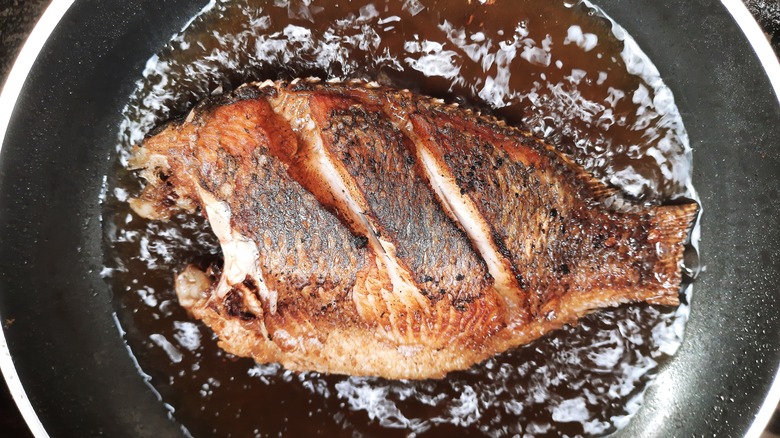
Now you're ready to get your fish in the pan. Once you do, though, how do you know what to watch out for once it's cooking to make sure that you get the perfect cook and the crispiest skin? The fish will tell you when it's ready, so keep a close eye on it. "You'll know the fish is cooking properly when the skin starts turning golden brown," Kory Foltz told us. "It starts to tighten and curl on the edges, and you can see the fish cooking through the sides."
Like when searing other proteins, you shouldn't rush cooking fish. Don't try to scrape it up off the bottom of the pan if it sticks, and give it time to develop some proper color — the Maillard reaction means more flavor! "[The fish] should release easily from the pan when it's ready to flip," Foltz explained. "If it sticks to the pan, it still needs more time." Make sure that you keep a consistent temperature, as well. "If the pan's too hot, the skin can burn and the fish might cook unevenly — definitely not the crispy, golden result you want," Foltz said. "[If it's] too cool, the skin won't crisp up and might get soggy. You need that happy medium where the skin crisps, but the fish cooks evenly without overcooking."
Some common mistakes to avoid when cooking fish
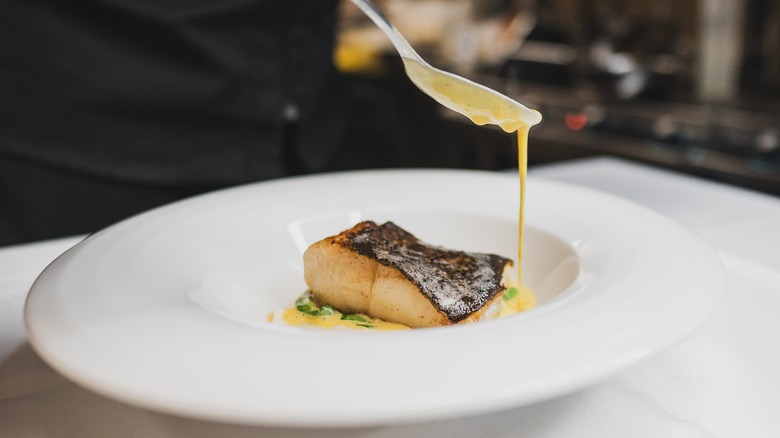
The secret to perfectly crispy skin on your fish isn't as complicated as you might have thought — just make sure your pan is hot, and keep an eye on the fish. There are, however, a few crucial mistakes to watch out for when cooking to make sure you really nail that skin. For one, don't be impatient. Shuffling your fish around in the pan can prevent it from developing the right amount of browning to really crisp up — or worse, cause it to stick. "A lot of people make the mistake of moving the fish around too much in the pan," Kory Foltz told us. "Let it sit and develop that crispy crust."
"Another big one is adding too much oil," he said, as it makes the skin soggy. You want to use a generous amount of oil, but not so much that the fish gets completely swamped — you want to sear the fish, not deep fry it. Moisture is the enemy of crispiness, so make sure that you don't allow too much of it into the pan. "Don't overcrowd the pan," Foltz said. "Work in batches, if needed." Overcrowding can cause the fish to leach moisture rather than get crispy, sealing those juices inside.
It's important to remember that rules may differ depending on the type of fish you're cooking. Some fish get crispier faster, as they can take a super high heat. "Oily fish like salmon can handle a higher heat and have thicker skin, so they'll crisp up more easily," Foltz said. The opposite goes for flaky white fish. "For lean fish with delicate skin, you might want to use a slightly lower temperature and be extra gentle to keep the skin intact."