

This Once-Popular Pizza Is Still Around, But Totally Different

What's not to like about pizza? Spicy, loaded with melted cheese that stretches with every bite, and topped with sweet, tangy tomato sauce, it doesn't come as a surprise that pizza is one of the most popular foods in the world. If you're a true pizza fan who happens to like cooking, you're surely familiar with all the different types of pizza and how they're made. Of course, everyone seems to be obsessed with Neapolitan pizza these days, but have you ever heard of Sicilian-style pizza?
If you're wondering what makes Sicilian pizza different from Neapolitan, the most obvious distinction is its shape. Sicilian-style pizza isn't round; it mirrors the shape of the pan it's baked in, so it's usually served in rectangular slices. This focaccia-style pan pizza made its debut in 19th century Sicily, where, at the time, it was more commonly known as "sfincione" (meaning "thick sponge"). The name was a tribute to its doughy, soft, beautifully airy texture. It often came topped with a rich onion-based sauce, chopped anchovies, and caciocavallo, a cheese that falls somewhere between aged mozzarella and fresh provolone. Recipes changed once Sicilian immigrants in the United States began experimenting with toppings to adapt the pizza to what was locally available.
How Sicilian pizza found a new identity in the US
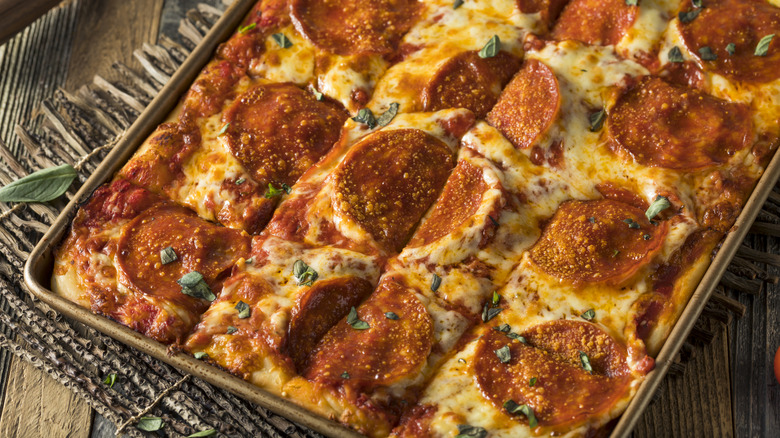
Sicilian pizza made its way to New York when Italians arrived at Ellis Island between the late 1800s and early 1900s. Naturally, they brought their cherished pizza traditions with them. Once settled, they began adapting the recipe to their new environment and soon transformed it into the New York–style Sicilian pizza we know and love today.
They first replaced the traditional onions sautéed in olive oil with a more accessible all-purpose tomato sauce. This small change gave the pizza's base a whole new depth of flavor, making it fresher, lighter, and significantly more acidic. The caciocavallo cheese was the next ingredient that had to go; it was swapped with the locally available mozzarella. Milder, meltier, and much easier to find in markets, fresh mozzarella quickly found its place as the staple cheese for the new, upgraded Sicilian-style recipe. Soon, New York bakers also included oregano in the recipe to better suit customers' tastes.
Ultimately, Sicilian pizza didn't stay in New York. Just like every other pizza type, it surged in popularity after American soldiers serving in Italy during World War II returned home with a newfound craving for the pizza they had tasted abroad. As pizza demand grew during the post-war era, Sicilian-style pizza became a favorite in pizzerias nationwide. It can now be found on menus in every state in the U.S.