

Tomatoes Are Grown Differently In Florida: Try The Easy Weaving Method Anywhere
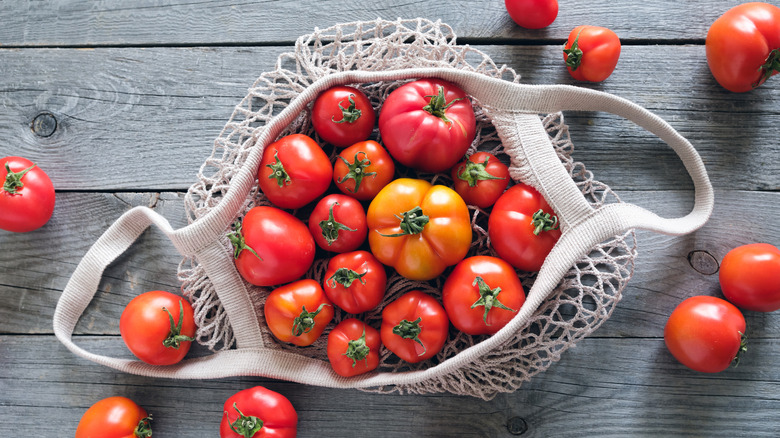
Tomatoes are a well-loved summer botanical that we lean toward for various seasonal dishes like cheesy roasted tomato pie. And for those of us who tend to hop on the gardening trend when the warmer months hit, there's a tomato technique you may not have heard of yet: the Florida weave.
In order to get a fuller picture of what this entails, Chowhound spoke exclusively with Sunshine Chapman, gardening expert and president of Garden Works. It turns out that creating your own version of a Florida weave is relatively simple. "First, drive wood or metal stakes into the ground at regular intervals to create a row," she said. "Next, take some twine and weave it in a figure-eight pattern along one side of the plants and back on the other." This step ensures the plants remain close to one another while remaining structured along a string system that doesn't crush or impede their growth.
This method became popular among Florida growers in particular because it bodes well for larger crop cycles as it's quicker and cheaper. This trellised system also prevents plants from layering over each other and losing good airflow, which reduces the risk of rot, disease, and other negative impacts on your harvest. Additionally, the required materials are affordable and reusable, so why not give it a go?
How to maintain your Florida weave
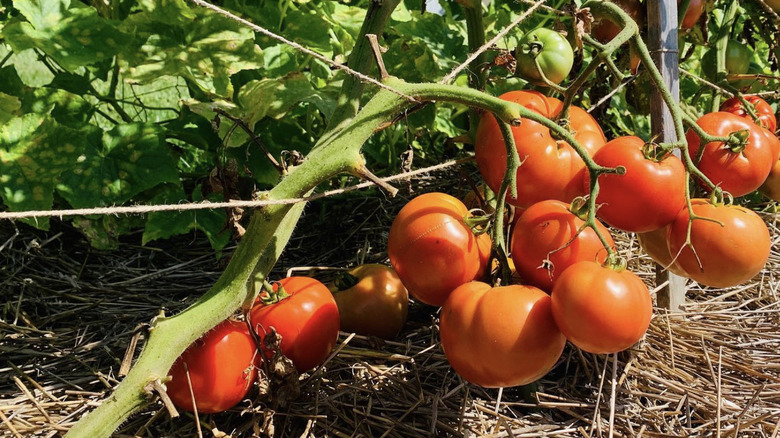
The Florida weave is not a tomato growing method that you can set up and forget about. As Sunshine Chapman said, "[it] does require some maintenance ... As plants grow taller, you'll need to add rows of twine, about every 6-8 inches of vertical growth." This is crucial to complete in a timely manner, as letting your plants grow for too long without reinforcement can risk damage to your crops or stunt their growth.
Chapman also pointed out the importance of using proper tools and methods when setting up the Florida weave. You could find that your plants have uprooted or toppled over if you've not supported them properly, which is why choosing reliable stakes, preferably of metal or thick wood, is very important. It's also imperative that your twine is tightly wound and effectively distanced. These steps will create a system that supports your garden, ultimately leading to a bountiful harvest.
This method, according to Chapman, happens to be more compatible with some types of tomato plant varietals than others, particularly determinates, which are more compact and bush-like, and semi-determinates, a type that provides a larger harvest but remains smaller than indeterminates (and thus less likely to outgrow your Florida weave). Ultimately, you'll want to consider how best to alter the weave system to fit your specific needs for the season. You'll also want to think about the best plants to grow alongside your tomatoes (like basil, for one), which can help keep your garden robust and resilient. Finally, don't forget to water your plants in the early morning rather than midday (the worst time to water your vegetable garden).