

How To Properly Freeze Fresh Cranberries For Later
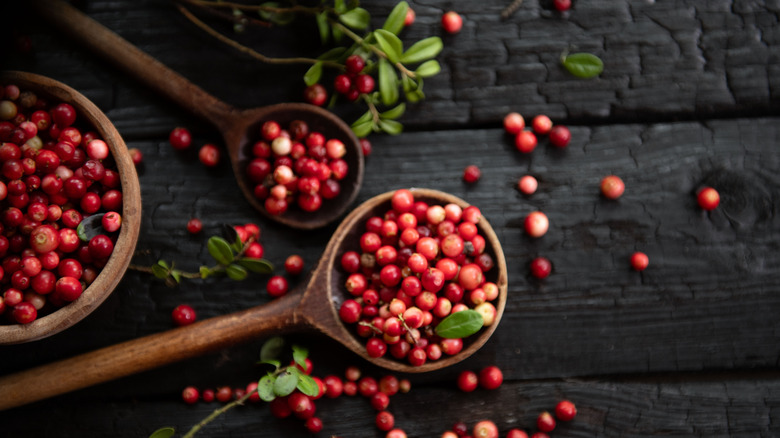
When the days grow shorter and cool autumnal winds replace hot summer breezes, cranberry farmers throughout the Northern U.S. and lower Canada prepare for the annual harvest by flooding the bogs. From there, bags of fresh fruit hit grocery store shelves just in time for us to enjoy cranberries in acknowledgment of Indigenous Peoples' Day, begin drying them for nutritious homemade granola, or simply stock up on them in preparation for the holiday season.
Planning ahead not only ensures you have the supplies you need to make delicious, wintry mixed berry scones and cinnamon-rich cranberry sauce for the holidays, it also helps guarantee you get the freshest possible product. Of course, buying early also has its downside, as even marble-hard, pectin-rich cranberries won't stay fresh for long, even in the fridge. Fortunately, freezing raw cranberries not only keeps them fresh for up to a year, and it's also ridiculously easy to do.
Since cranberries have enough structural integrity that they'll remain fairly firm, even after thawing, they need very little processing before they go into the freezer. Simply spread the washed and dried berries out in a single layer on a parchment-lined baking sheet and freeze for about two to eight hours. After that, transfer them into a freezer-safe container with about an inch of room between the berries and the container's lid to accommodate the little fruits if they expand as ice continues to form inside them. To thaw, run the amount of berries you need under cool water in a colander.
Proper preservation technique for fresh cranberries year-round
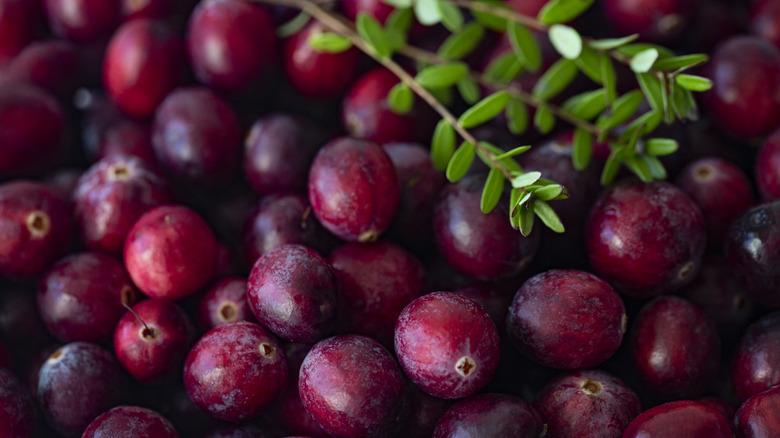
Successfully freezing cranberries to use in delicious homemade cranberry lemonade and fruity cranberry relish during the warmer months actually starts in the grocery store. Freezing won't improve the quality of your berries, it will only preserve the state they were in when frozen. That means it's crucial to inspect the bags at the grocery store to find the best possible product. When choosing your fruit, check the packaging for excessive moisture (especially if it's a little slimy), signs of mold, or an odd smell — all of which indicate spoilage, meaning you should give the product a pass.
Ideally, most of the berries in the bag will be firm with glossy, taut, bright red (or dark pink) skins. Once you get the cranberries home, give them a healthy rinse under cool water to remove any travel grime, and pick through them to discard berries that are discolored, mushy, or squashed. You'll also want to remove leaves and stems that snuck into the bag. The next step is to pat them dry, then transfer them to a clean, folded tea towel to air dry.
Ensuring your berries are completely dry before freezing is crucial, as any moisture left on the outside of the fruit will cause ice crystals to form, which will lead to freezer burn. While it's not dangerous to consumer freezer burned food, the additional ice crystals will change the berries' taste and texture, leaving you with disappointingly bland cranberry sauce or unpleasantly soggy scones.