

What Makes Restaurant-Style Salsa So Good?
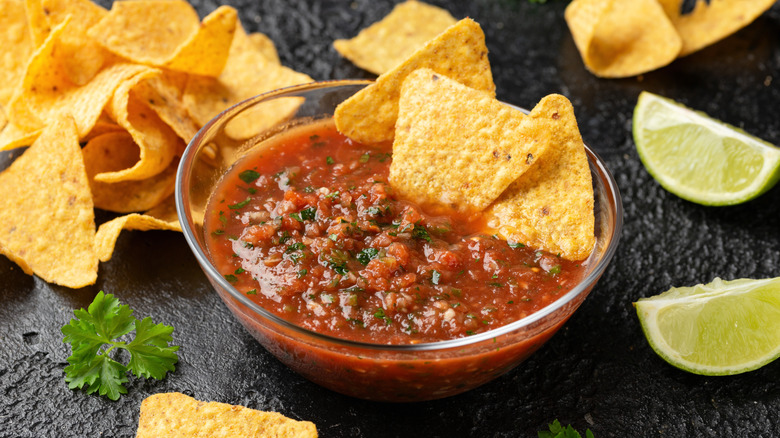
There's a reason we have to restrain ourselves from filling up on chips and salsa at restaurants. The stuff is good; like, irresistibly good. You can buy restaurant-style salsa in the grocery store, but it just doesn't taste the same. So what makes this tomato-based mixture taste so good? Rest assured, there is no magic trick involved or life-altering secret that restaurant chefs use, though they do have some core knowledge that makes their salsa something you continue to eat as long as the server brings you more. No, the reason your favorite Mexican restaurant's salsa is so good is because the best salsas are made from fresh, high-quality ingredients: juicy, ripe tomatoes, jalapeños with just the right amount of heat, and cilantro with just the right kick.
While each restaurant has its own recipe, the ingredients are fairly straightforward: tomatoes, onions, garlic, jalapeños, and cilantro, along with just enough seasonings to complement the ingredients and bring out the flavor. It's similar to a classic pico de gallo, but with extra flavor, finesse, and a smooth texture that is perfectly scoopable and tastes incredible with every bite. Sure, there are secret recipes handed down from generation to generation, but the bottom line is that the ingredients in salsa should be of the highest quality.
Tips for making salsa like a pro
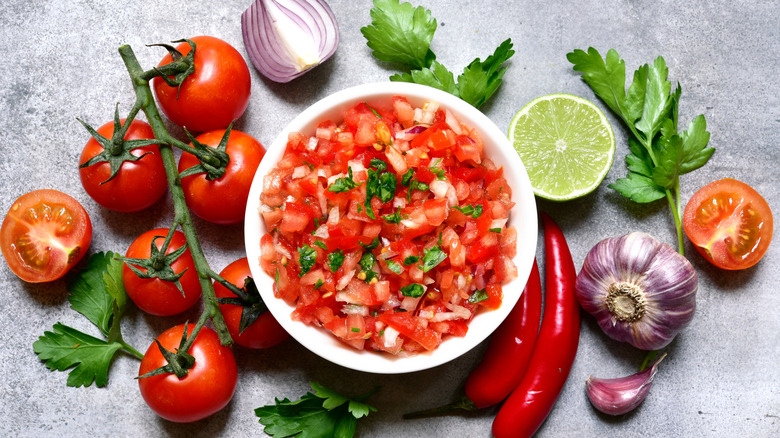
Once you have a handle on settling for nothing but the best-and-freshest ingredients, it's time to nail down some tips for making your salsa the best around. For starters, nail down the consistency. A good restaurant salsa is smooth so each bite is a perfectly balanced blend of ingredients that neither under- or overwhelm the taste buds. For this reason, reach for your kitchen's secret weapons for a perfect salsa: the blender or food processor. Simply add all your ingredients and get to blending until you've got the ideal consistency.
When it comes to flavor, let your ingredients do their job. In other words, don't overdo it on spices and seasonings. Remember that working with fresh ingredients means you're getting the benefit of their full flavor. If you add too much seasoning from the start, you can overpower the freshness of the tomatoes, jalapeños, garlic, and cilantro. A little seasoning is necessary, but start slow and build your flavors as needed to complement each other. It's also important to give your salsa time to rest before you serve it since the heat from jalapeños intensifies as it sits. If you're worried it isn't spicy enough, give it some time and taste it before adding more. The same goes for salt; it's always easy to add more heat or more salt, but you can't take them away once you've overdone it.